MURFREESBORO, Tenn. — Inside the Middle Tennessee State University Horse Science Center, the sound of horses shifting and chuffing in their stalls sets the tone for a different kind of classroom experience — one where healing begins with connection.
For military veterans working through trauma, that environment is part of a unique, hands-on therapy program that blends mental health support with equine science.
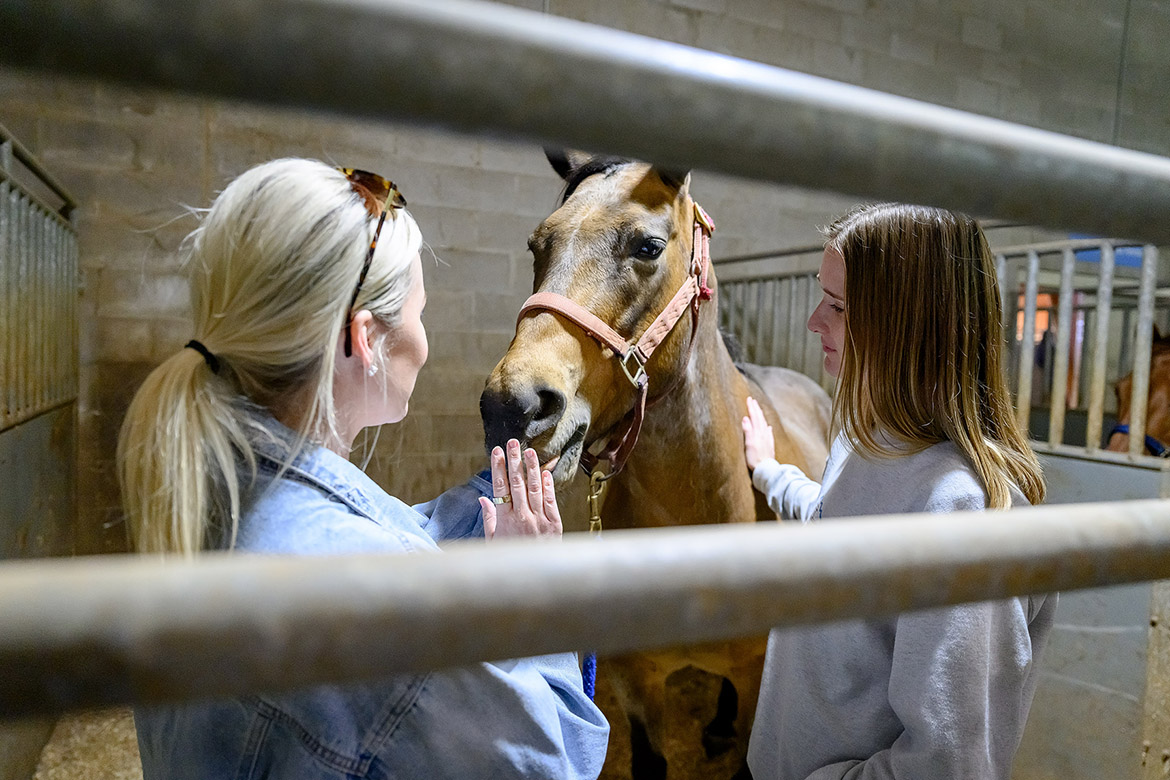
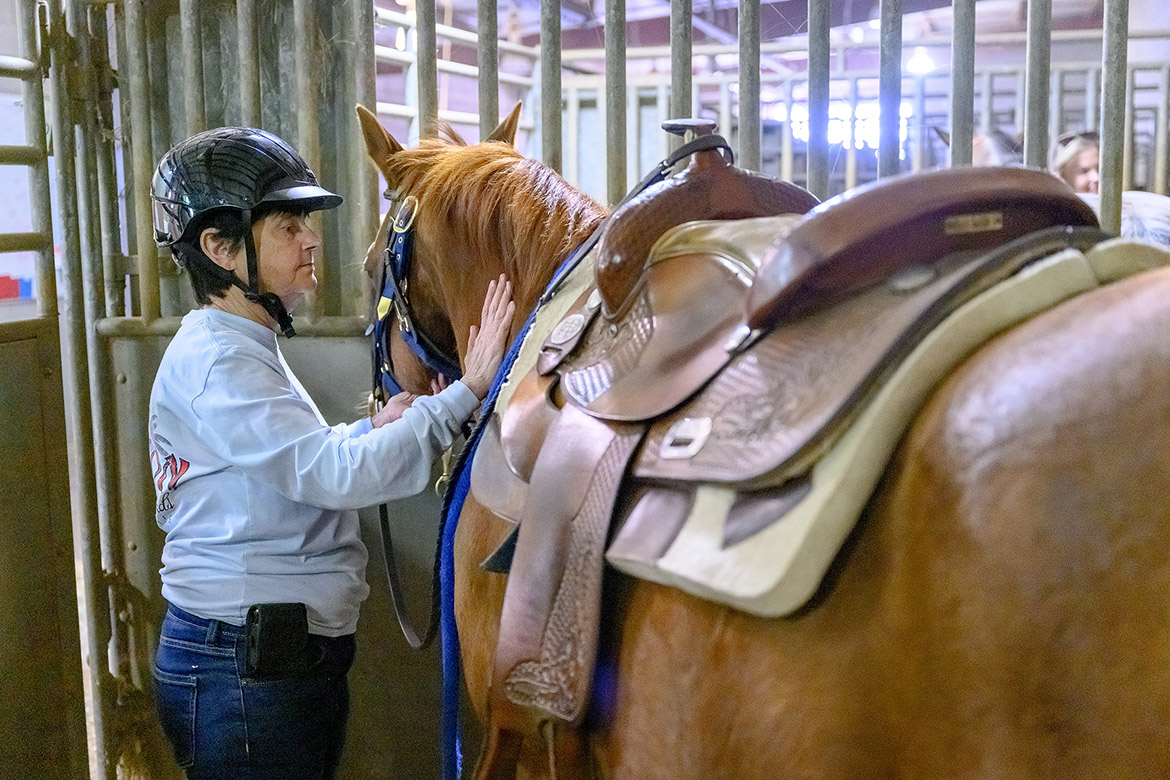
Emily Jensen, right, a Marine Corps veteran from Spring Hill, Tenn., and Middle Tennessee State University horse science major Lauren Mabry from Nolensville, Tenn., work with Jetta, a 24-year-old horse that is part of the herd at the Middle Tennessee State University Horse Science Center in Murfreesboro, Tenn. Jensen is a participant in the MTSU Center for Equine Recovery for Veterans, better known as CERV, and Mabry is a student in the equine therapy course that is made possible through MTSU’s partnership with the VA Tennessee Valley Healthcare System to help veterans in their recovery journeys. (MTSU photo by J. Intintoli)
“This has been extremely helpful and calms me down,” said Marine Corps veteran Emily Jensen of Spring Hill, who is a participant in the university’s Center for Equine Recovery for Veterans program, or CERV, developed in partnership with the VA Tennessee Valley Healthcare System.
The public is invited to watch the horse training prowess of Jensen and other veterans in CERV participate in the Tri Star Open Horse Show at 10:30 a.m. Saturday, April 11, at the Tennessee Miller Coliseum, 314 W. Thompson Lane.
Unique partnership between MTSU, VA
CERV helps veterans on their recovery journeys by offering opportunities to spend time learning about caring for horses as part of an unconventional therapy. Since its start in 2014, CERV has served 195 veterans through the structured program.
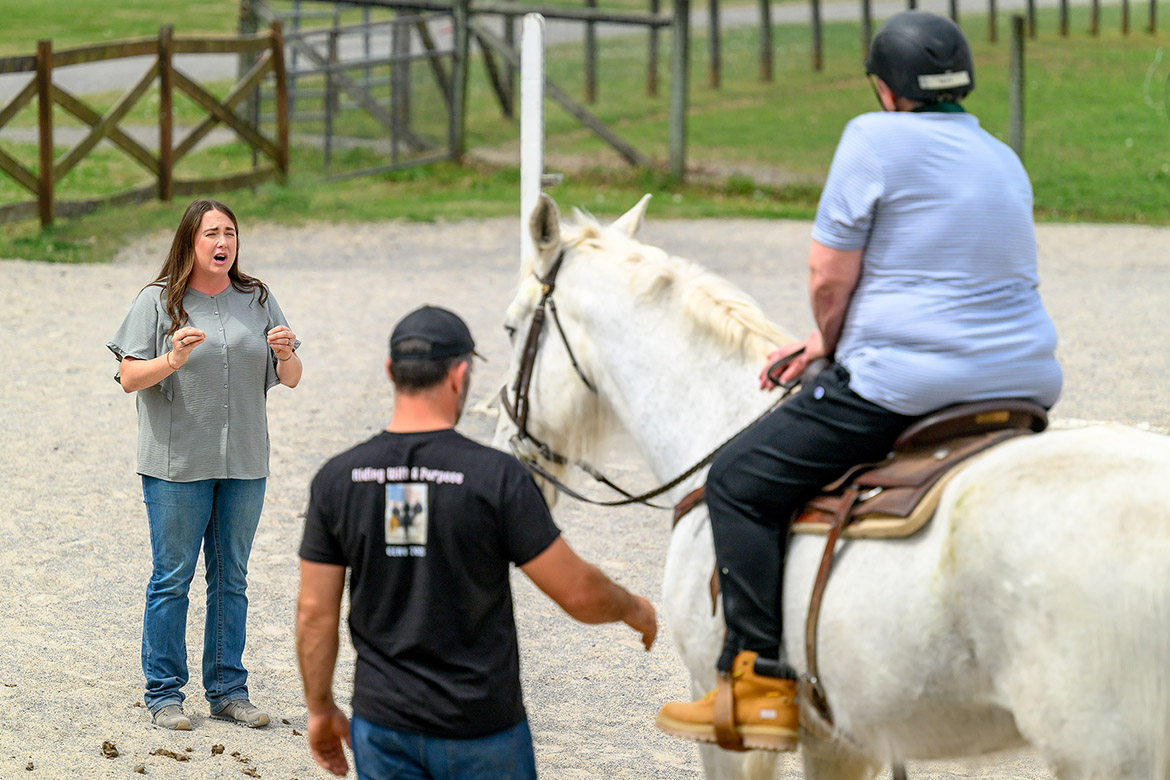
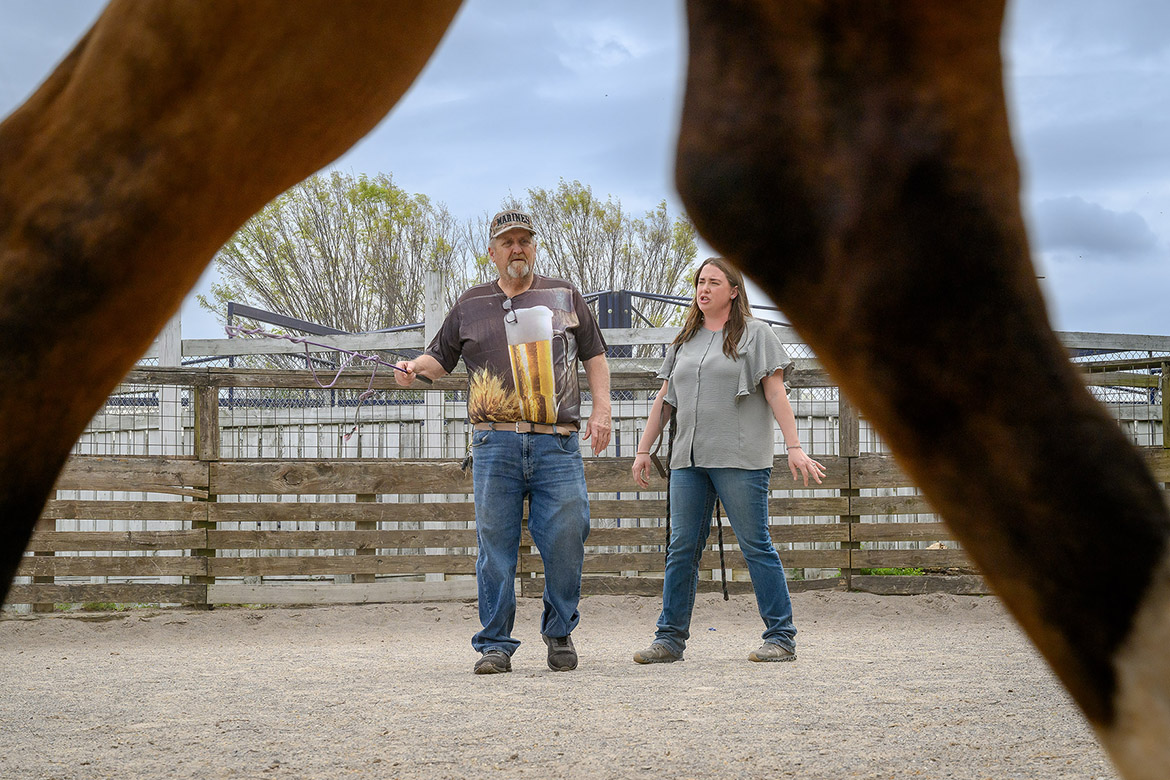
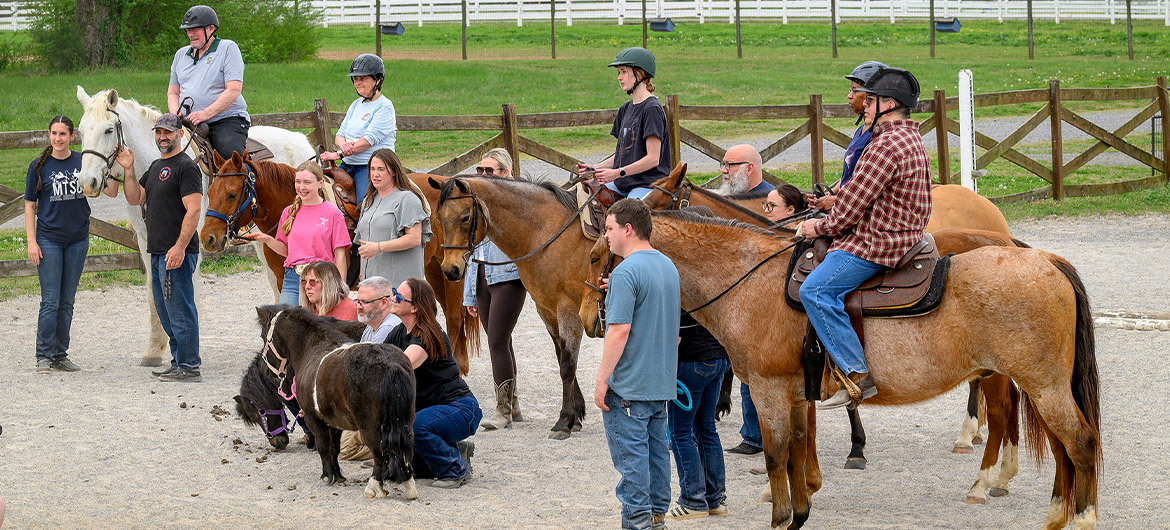
Andrea Rego, left, coordinator of the Center for Equine Recovery for Veterans, or CERV, and a senior instructor in the School of Agriculture at Middle Tennessee State University in Murfreesboro, Tenn., gives instructions to participants in the equine therapy program during a recent session. The 10-week program is possible through a partnership with MTSU and the VA Tennessee Valley Healthcare System to help veterans in their recovery journeys. (MTSU photo by J. Intintoli)
While traditional therapy that Jensen is undergoing can bring up painful memories, she said time with the horses helps her stay grounded and allows her to “feel more at ease” as she recovers from post-traumatic stress challenges.
That sort of connection is intentional, said Andrea Rego, CERV coordinator and a senior horse science instructor in MTSU’s School of Agriculture. Each fall and spring, MTSU offers Equine Assisted Therapies and Activities courses that pair each veteran with the same horse and student mentor throughout the 10-week course to build trust and consistency.
“We want them at their worst to help with coping strategies and work through symptoms,” Rego said.
Participants learn foundational skills such as grooming, haltering and leading horses while also developing emotional regulation techniques. Over time, sessions shift toward deeper conversations about purpose, goal-setting and finding joy.
MTSU students, veterans benefit from the program
Students like Becca Leavy, a senior horse science major from Thompson Station, also play a key role in the program and the experience bolsters their academics.
Becca Leavy
“I’m doing it because I want to get into equine-assisted therapy in the future,” Leavy explained.
Leavy said she’s seen the positive effect of the horses on veterans in real time. During one session, a regularly scheduled tornado siren was activated and visibly triggered some of the participants who have post-traumatic stress disorder, or PTSD. “You could feel the energy. People were on edge,” Leavy recalled.
The group was ushered into the facility’s barn area, and Sarah Howard, a certified therapeutic recreation specialist who helps lead the program, led the participants in breathing exercises, using the horses to help calm their emotions.
“It made an immediate difference just getting to be with the horses, just slowing down and being grounded,” Leavy explained.
The science behind the approach is rooted in the horses themselves, Howard said.
“Horses are big biofeedback machines,” Howard said. “They can sense your heartbeat and respond to your emotional state.”
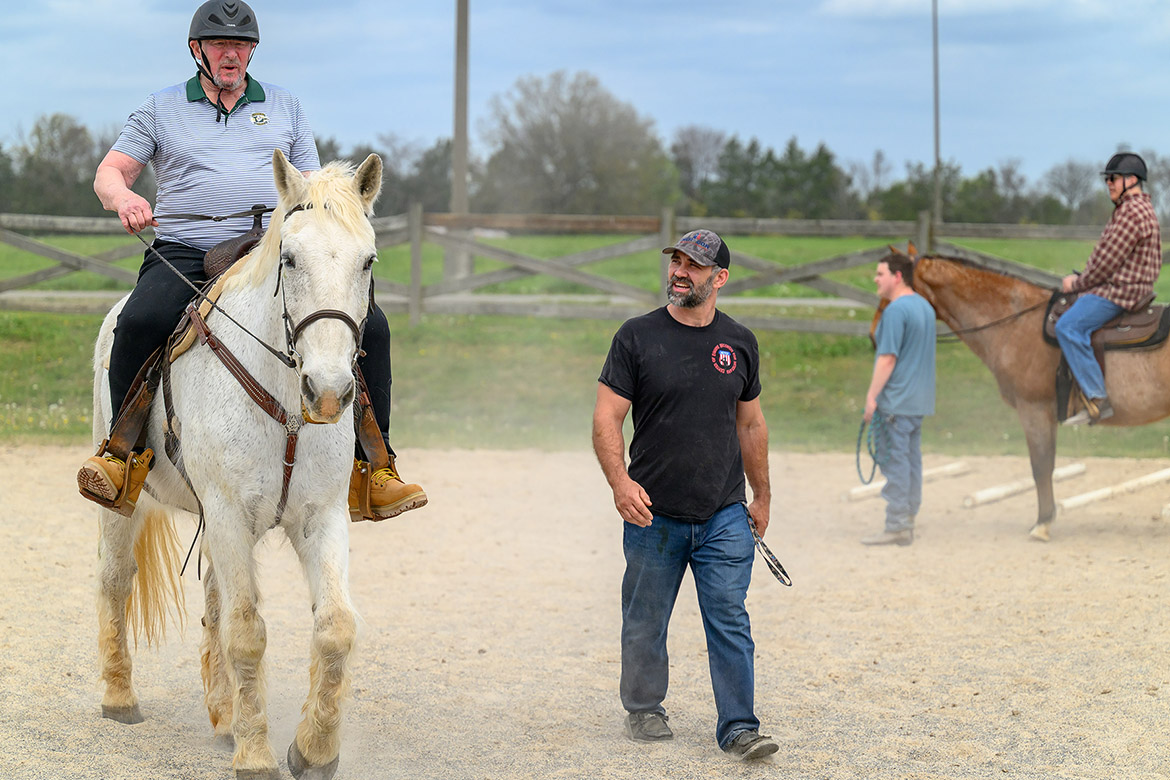
Bruce, a participant in the Middle Tennessee State University Center for Equine Recovery for Veterans, works with volunteer peer mentor Dan Tibitoski, a U.S. Navy veteran and program graduate, during a recent therapy session at the MTSU Horse Science Center in Murfreesboro, Tenn. The 10-week program is made possible through a partnership with MTSU and the VA Tennessee Valley Healthcare System to help veterans in their recovery journeys. (MTSU photo by J. Intintoli)
Helping veterans find joy again
By pairing veterans with specific horses — sometimes matching personalities intentionally — the program helps participants build trust, communication skills and self-awareness.
“It’s a judgment-free zone,” Howard said. “Our goal is to help veterans find joy in life again.”
For Margaret Kelley, a U.S. Navy veteran who served 21 years, the program initially felt intimidating. A drowning survivor, she had long avoided both water and unfamiliar situations — including horses.
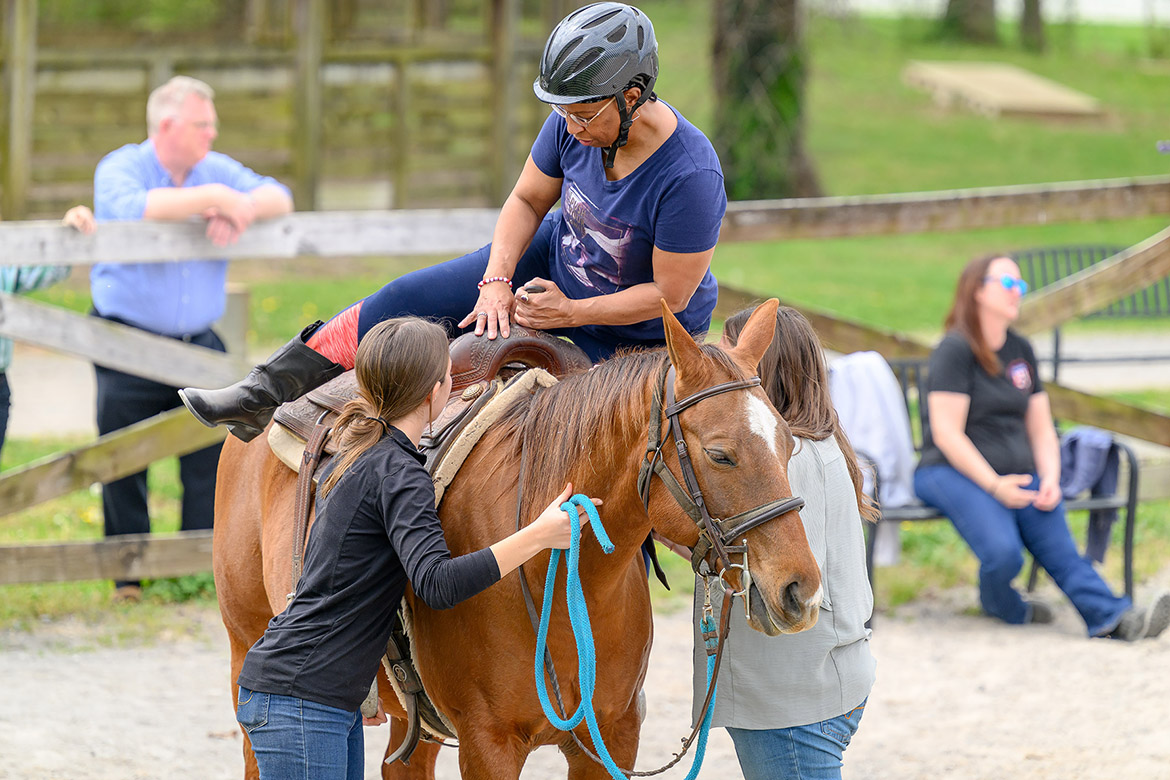
Margaret Kelley, a 21-year veteran of the U.S. Navy, dismounts a horse during an equine therapy session as part of the Middle Tennessee State University Center for Equine Recovery for Veterans program. Kelley overcame her fear of horses during the 10-week program that is made possible through a partnership with MTSU and the VA Tennessee Valley Healthcare System to help veterans in their recovery journeys. (MTSU photo by J. Intintoli)
“I’d never been close to a horse and never really wanted to,” said Kelley, who was encouraged by her therapist to join the program and discovered how closely horses respond to human emotions.
Now, Kelley looks forward to each weekly session, describing a growing sense of awareness and anticipation.
“From one Monday to the next, I miss (my horse),” Kelley said. “It makes me more aware of how to bring myself down and be calm.”
The spring semester’s work will culminate in the April 11 horse show, when veterans will demonstrate the skills they’ve learned — a milestone that reflects both progress and possibility — and participate in a horse show class in the Tri Star Open Horse Show at the Tennessee Miller Coliseum.The CERV horse show class will take place around 10:30 a.m. Spectator admission is free.
If you are a veteran interested in participating in CERV, email Sarah Howard at Sarah.Howard@va.gov.
For more information on MTSU’s Equine Assisted Services classes, email Andrea Rego at Andrea.Rego@mtsu.edu.
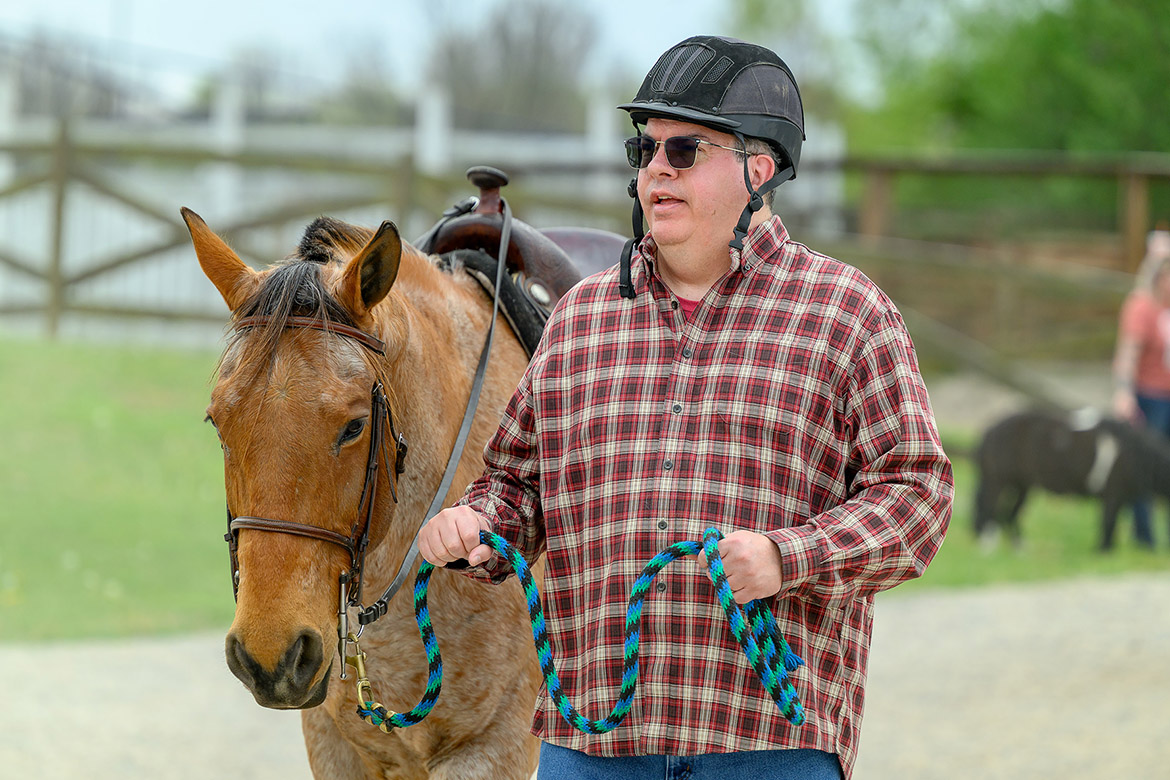
Andrea Rego, left, coordinator of the Center for Equine Recovery for Veterans, or CERV, and a senior instructor in the School of Agriculture at Middle Tennessee State University in Murfreesboro, Tenn., gives instructions to participants in the equine therapy program during a recent session. The 10-week program is possible through a partnership with MTSU and the VA Tennessee Valley Healthcare System to help veterans in their recovery journeys. (MTSU photo by J. Intintoli)Margaret Kelley, a 21-year veteran of the U.S. Navy, dismounts a horse during an equine therapy session as part of the Middle Tennessee State University Center for Equine Recovery for Veterans program. Kelley overcame her fear of horses during the 10-week program that is made possible through a partnership with MTSU and the VA Tennessee Valley Healthcare System to help veterans in their recovery journeys. (MTSU photo by J. Intintoli)Steve, a participant in the Middle Tennessee State University Center for Equine Recovery for Veterans, holds lead rope of his horse during a therapy session held recently at the MTSU Horse Science Center in Murfreesboro, Tenn. The 10-week program is made possible through a partnership with MTSU and the VA Tennessee Valley Healthcare System to help veterans in their recovery journeys. (MTSU photo by J. Intintoli)Emily Jensen, right, a Marine Corps veteran from Spring Hill, Tenn., and Middle Tennessee State University horse science major Lauren Mabry from Nolensville, Tenn., work with Jetta, a 24-year-old horse that is part of the herd at the Middle Tennessee State University Horse Science Center in Murfreesboro, Tenn. Jensen is a participant in the MTSU Center for Equine Recovery for Veterans, better known as CERV, and Mabry is a student in the equine therapy course that is made possible through MTSU’s partnership with the VA Tennessee Valley Healthcare System to help veterans in their recovery journeys. (MTSU photo by J. Intintoli)Bruce, a participant in the Middle Tennessee State University Center for Equine Recovery for Veterans, works with volunteer peer mentor Dan Tibitoski, a U.S. Navy veteran and program graduate, during a recent therapy session at the MTSU Horse Science Center in Murfreesboro, Tenn. The 10-week program is made possible through a partnership with MTSU and the VA Tennessee Valley Healthcare System to help veterans in their recovery journeys. (MTSU photo by J. Intintoli)Andrea Rego, right, coordinator of the Center for Equine Recovery for Veterans, or CERV, and a senior instructor in the School of Agriculture at Middle Tennessee State University in Murfreesboro, Tenn., and peer mentor Wade Hinson with the VA Tennessee Valley Healthcare System give instructions to participants in the MTSU Center for Equine Recovery for Veterans program during a recent session. The 10-week program is possible through a partnership with MTSU and the VA to help veterans in their recovery journeys. (MTSU photo by J. Intintoli)Sharon, a participant in the Center for Equine Recovery for Veterans at Middle Tennessee State University in Murfreesboro, Tenn., pats one of the horses she’s riding throughout the 10-week program. The equine therapy program is possible through a partnership between MTSU and the VA Tennessee Valley Healthcare System to help veterans in their recovery journeys. (MTSU photo by J. Intintoli)Middle Tennessee State University’s Center for Equine Recovery for Veterans, or CERV, is the only of its kind, thanks to a partnership between the university and the VA Tennessee Valley Healthcare System that helps veterans in their recovery journeys by giving them opportunities to spend time and learn about caring for horses as part of a unique therapy. MTSU students power the program under the instruction of Andrea Rego, coordinator of CERV and a senior instructor in MTSU’s School of Agriculture, and Sarah Howard, Department of Veterans Affairs recreation therapist. (MTSU photo by J. Intintoli)
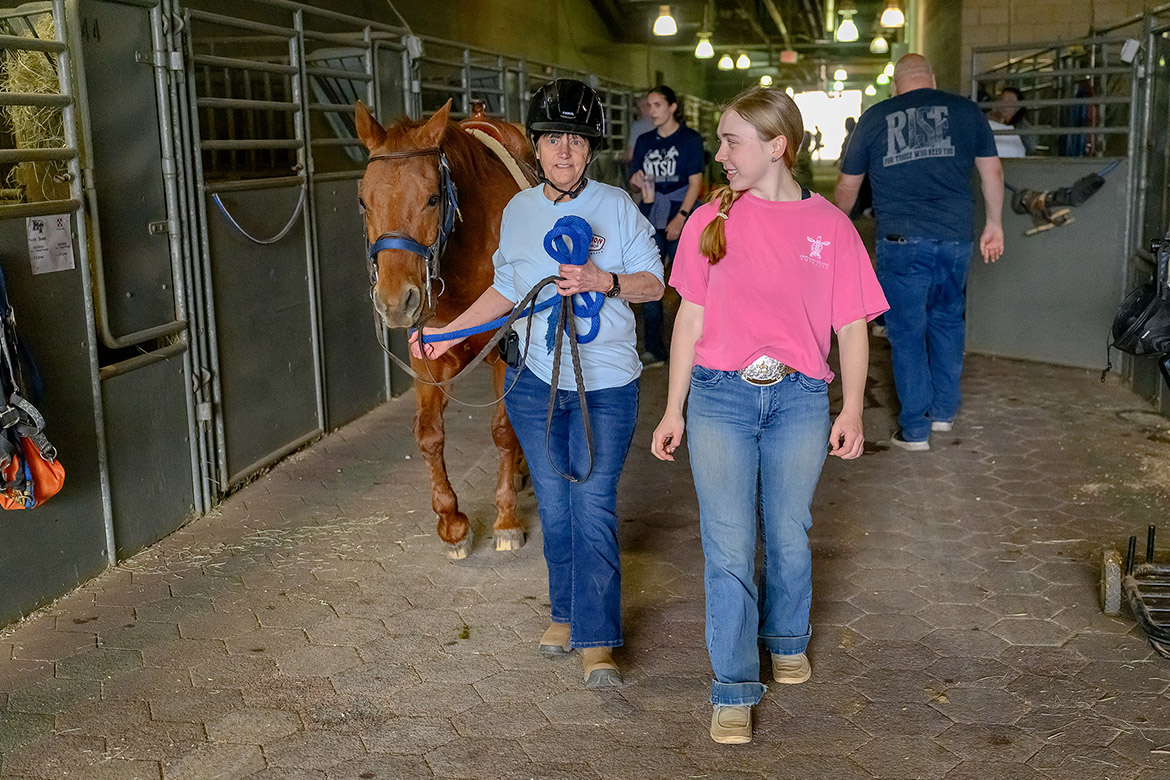
Middle Tennessee State University animal science major Marci Leath from Columbia, S.C., right, talks with Sharon, a participant in the MTSU Center for Equine Recovery for Veterans program, as they walk through the horse barn at the MTSU Horse Science Center located in Murfreesboro, Tenn. The CERV program is made possible through a partnership between MTSU and the VA Tennessee Valley Healthcare System to support veterans on their recovery journeys. (MTSU photo by J. Intintoli)





COMMENTS ARE OFF THIS POST