
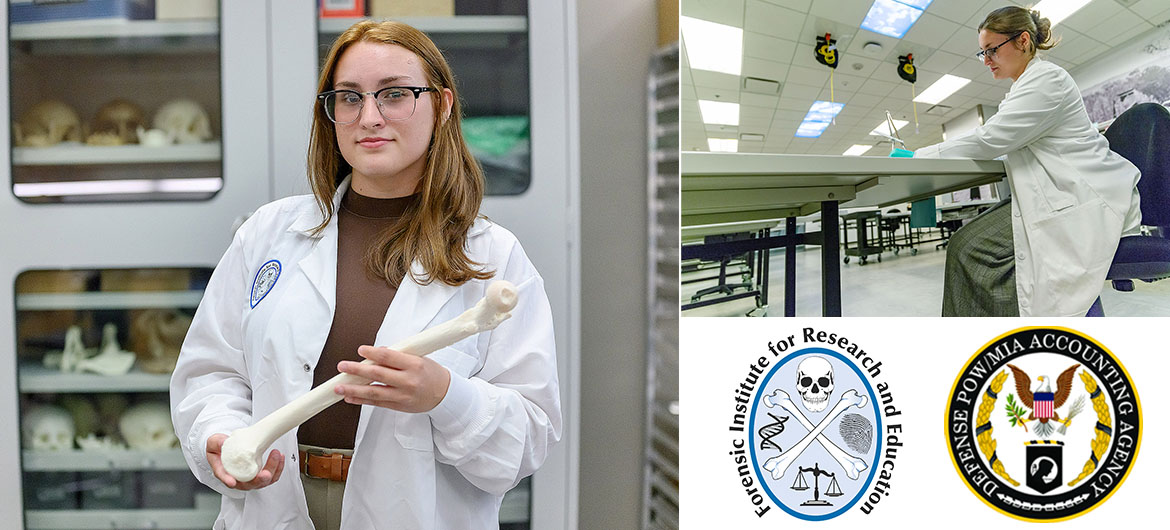
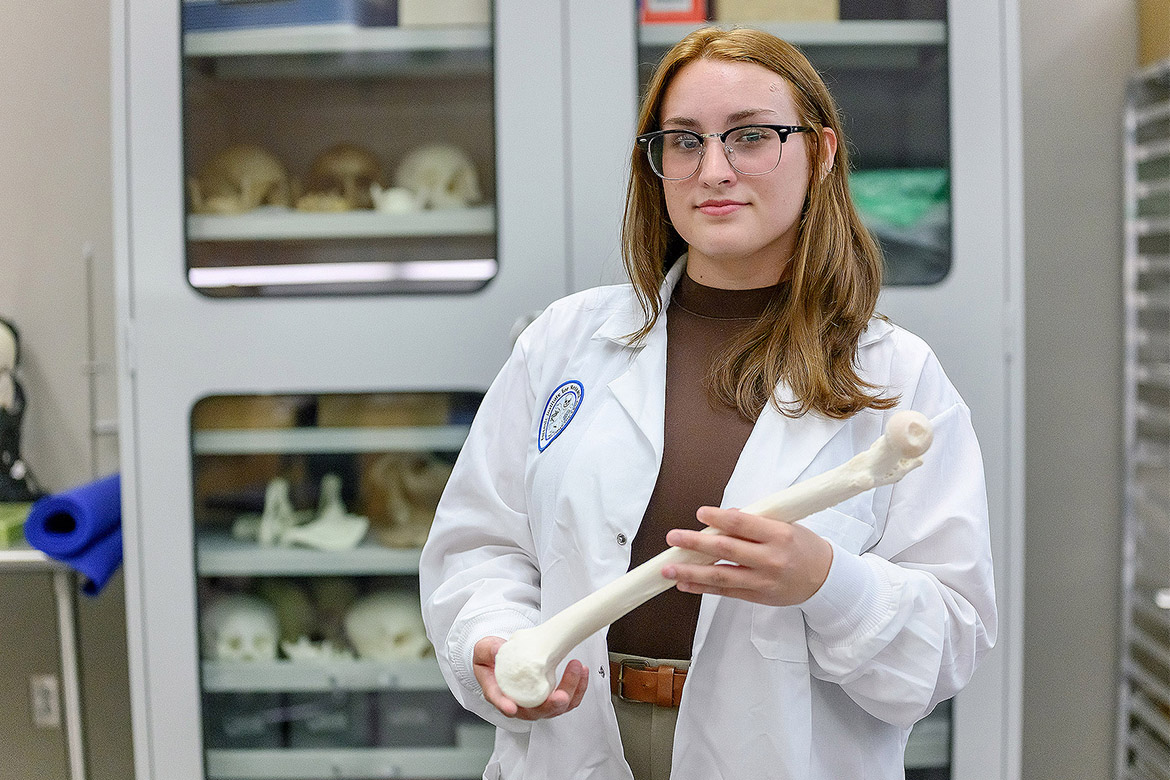
MURFREESBORO, Tenn. — As Middle Tennessee State University senior Rose Raymer of Dickson prepares to graduate Dec. 13, she’s already carrying professional experience that most students in her field won’t see until graduate school.

The anthropology major was one of six students selected from a pool of over 130 applicants for an internship with the Defense POW/MIA Accounting Agency, or DPAA, through the competitive Naval Research Enterprise Internship Program.
Raymer spent 10 weeks over the summer assisting DPAA anthropologists on a World War II disinterment to remove a casket buried since the late 1940s and analyze the remains inside.
“It was a unique opportunity, and it showed me exactly what I want to do as a career,” Raymer said. “People help the living all the time, but the dead also need help, especially in disasters. People need to be identified, and not a lot of people can assist with skeletal remains. I am glad to be able to help.”
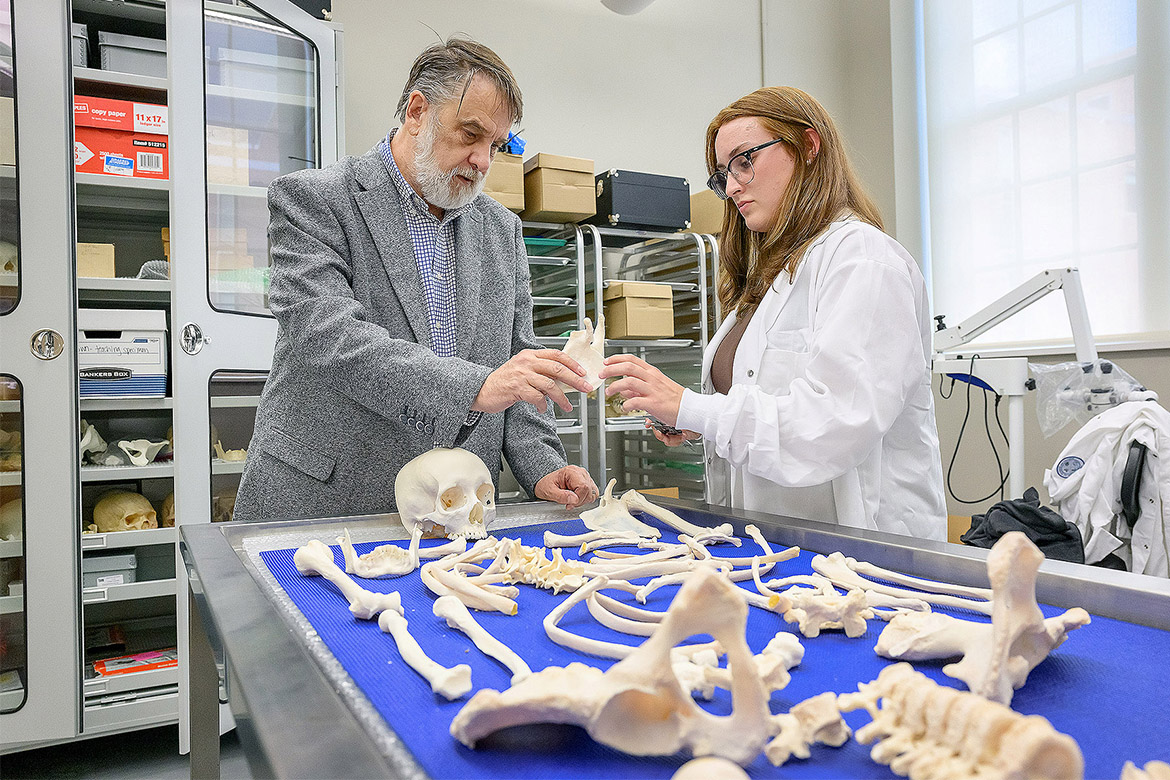
Her favorite part of the internship was watching the casket removal and assisting with laying out remains for analysis.

“Nothing prepares you for the mud, the fragmentation, or the moment you’re asking yourself, ‘Is this a clavicle or a humerus fragment?’ So it was a good training experience, and I’m glad that I was able to see that before going more into the field to prepare myself and set a standard for what it’s going to be like in the real world,” she said.
Raymer has quickly built a resume uncommon for an undergraduate, said MTSU anthropology professor Thomas Holland, who previously served as scientific director of the Joint POW/MIA Accounting Command’s Central Identification Laboratory in Honolulu, Hawaii, before taking the helm at MTSU’s Forensic Institute for Research and Education.
“The U.S. Department of Defense POW/MIA Accounting Agency has the most exacting standards of any forensic laboratory in the world. That it accepted Rose as an intern came as no surprise to me. She’s one of those students that makes you proud to be a teacher,” Holland said.
Hands-on learning rooted in MTSU’s program
Raymer credits MTSU’s Forensic Anthropology Search and Recovery (FASR) Team with providing hands-on experience. She also lauded MTSU’s anthropology program, located in the College of Liberal Arts, as well as the university’s strong laboratory courses and faculty mentorship that prepared her to step confidently into one of the nation’s most specialized forensic environments.
“MTSU has a pretty foundational program for forensic anthropology,” Raymer said. “Using those resources — the search-and-recovery team, the field school partnerships, and the connections our professors bring — really shaped me into a strong candidate for DPAA.”
Raymer first connected with the agency in 2023, when she traveled with MTSU faculty and students to France for an archaeological field school partnered with DPAA. The group helped recover remains from a World War II plane crash site. That experience led her to seek additional opportunities, including working closely with Holland.
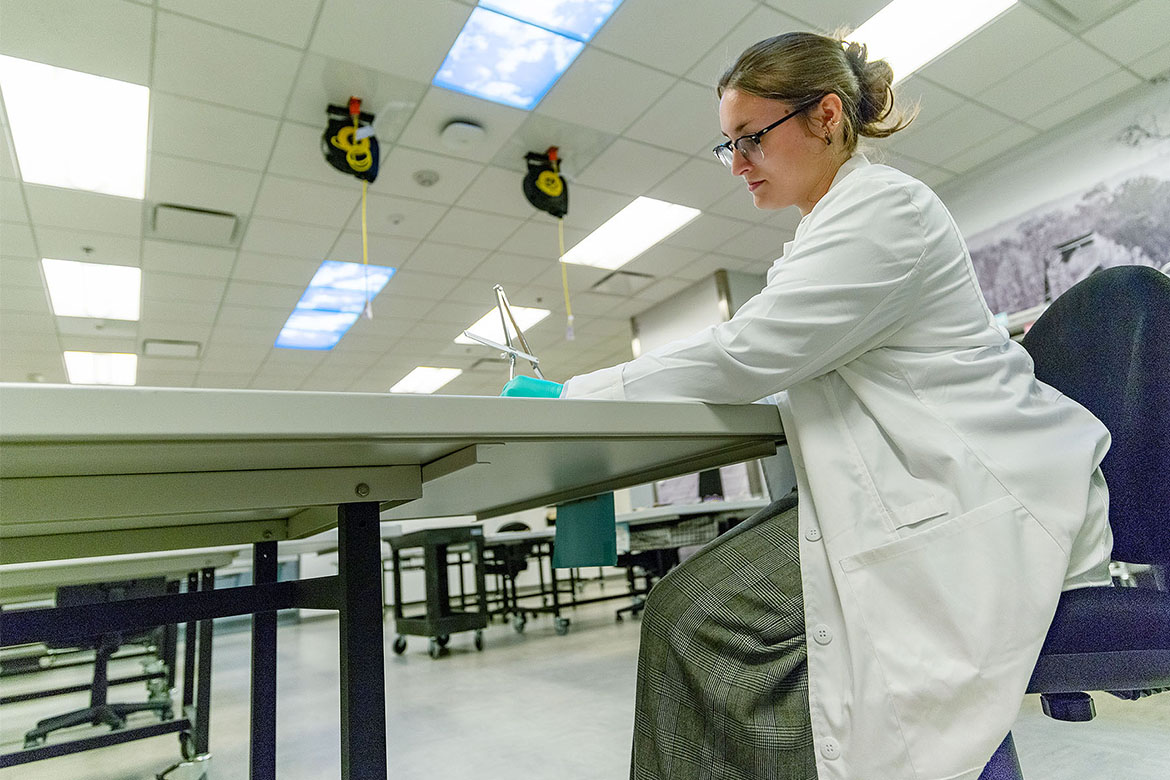
“The identification of American war dead is not only one of the most noble endeavors, it’s also one of the most complex and difficult forensic jobs in the world,” Holland said. “Rose was one of only two undergraduates selected by the Department of Defense to intern at the lab this year — that tells you all you need to know about her and the quality of MTSU students.”
Raymer has also assisted local law enforcement through the FASR Team, including aiding Metro Nashville Police earlier this year on a skeletal recovery in a missing-person investigation.
High-impact internship experience
At the DPAA laboratory, Raymer trained in skeletal analysis, radiography, DNA sampling procedures, and military-specific anthropological methods. She also completed an independent research project using micro-CT imaging — her first full research study from start to finish.
“This was my first full immersion in the lab side of forensic anthropology,” she said. “I got to learn directly from some of the best anthropologists in the country, using methods you won’t see anywhere else.”
After graduation, Raymer plans to take the spring semester to prepare graduate school applications.
She hopes to focus on thermal trauma, wildfire recovery, and search-and-recovery work — areas where anthropologists contribute to disaster response and humanitarian identification efforts.
“I really want a career that helps families get answers,” she said. “Whether it’s through DPAA or organizations like the International Committee of the Red Cross, I hope to be able to serve in that way.”
As she prepares to cross the graduation stage, Raymer said she feels ready for the next steps in her academic and professional journey.
“MTSU prepared me well,” she said. “Having this internship so early in my career shaped me into a better forensic anthropology student — and hopefully a strong graduate school candidate.”
— Nancy DeGennaro (Nancy.DeGennaro@mtsu.edu)




COMMENTS ARE OFF THIS POST