
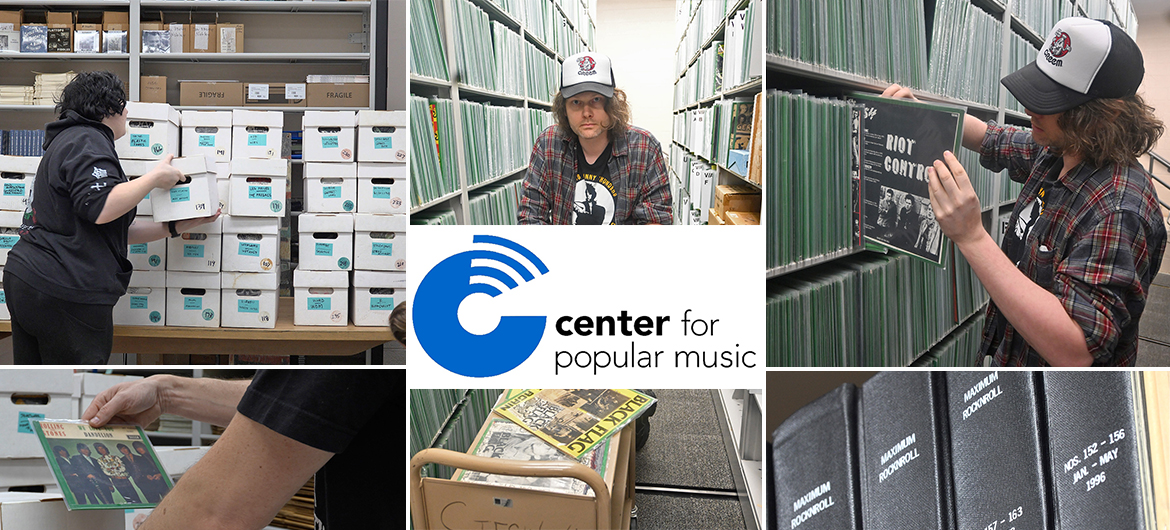
MURFREESBORO, Tenn. — The world’s largest collection of punk records has officially arrived at Middle Tennessee State University, marking the beginning of a major archival project at the university’s Center for Popular Music that will take quite some time to organize before becoming available to researchers or the general public.
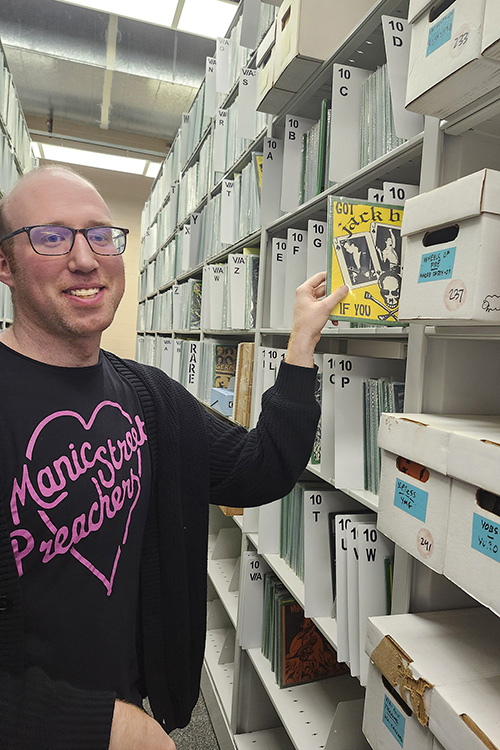
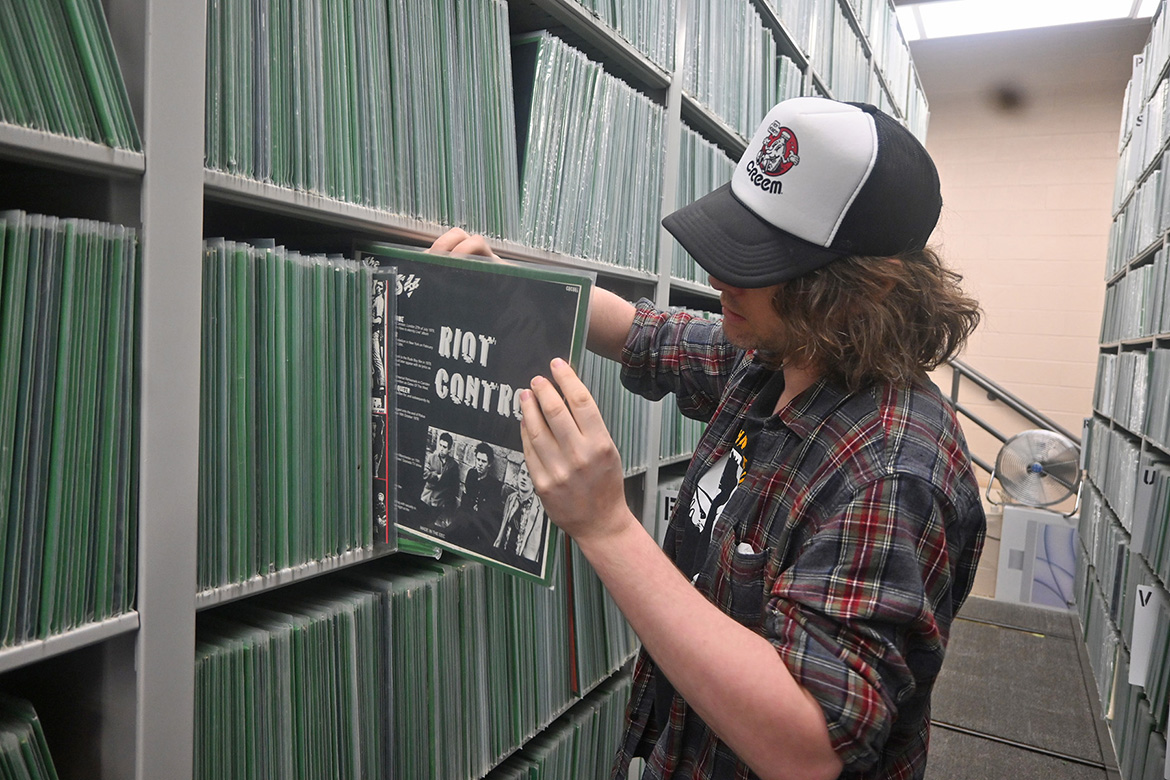
The Maximum Rocknroll archive, long associated with the influential underground punk magazine of the same name, has been relocated from California to Murfreesboro and is now housed inside the Center for Popular Music within MTSU’s Scott Borchetta College of Media and Entertainment. The massive archive includes more than 50,000 vinyl records along with business papers and other ephemera documenting punk’s evolution.
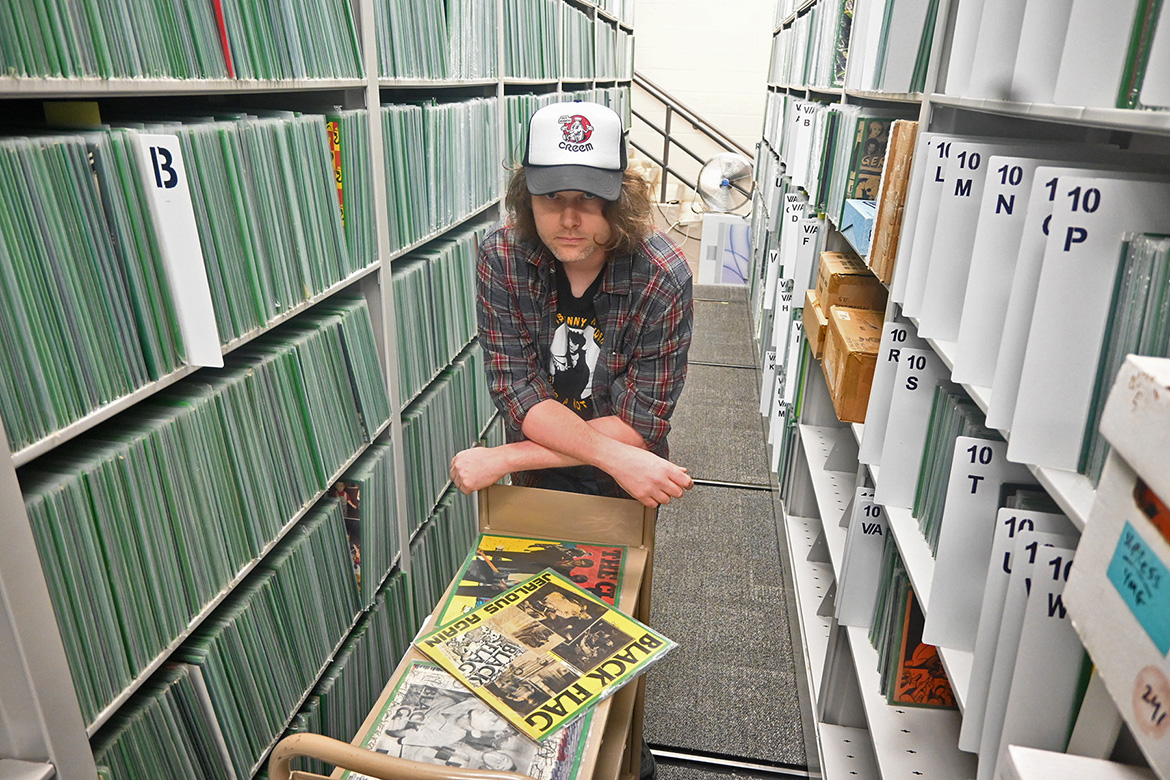
“The Maximum Rocknroll collection represents a cultural force as beloved as it is controversial,” said archival assistant Harlow Crandall, who helped organize the materials after they arrived in early February. “It provided underground bands with unprecedented access to a national stage while also acting as a kind of gatekeeper for the movement.”
Crandall said the collection charts punk’s growth from its early emergence in underground clubs like New York’s CBGB into an international network of local scenes connected by shared ideas and aesthetics.

“It’s not just an impressive assortment of vinyl,” Crandall said. “It represents punk’s expansive international discourse and preserves the work of small labels and local scenes that kept the movement alive for decades.”
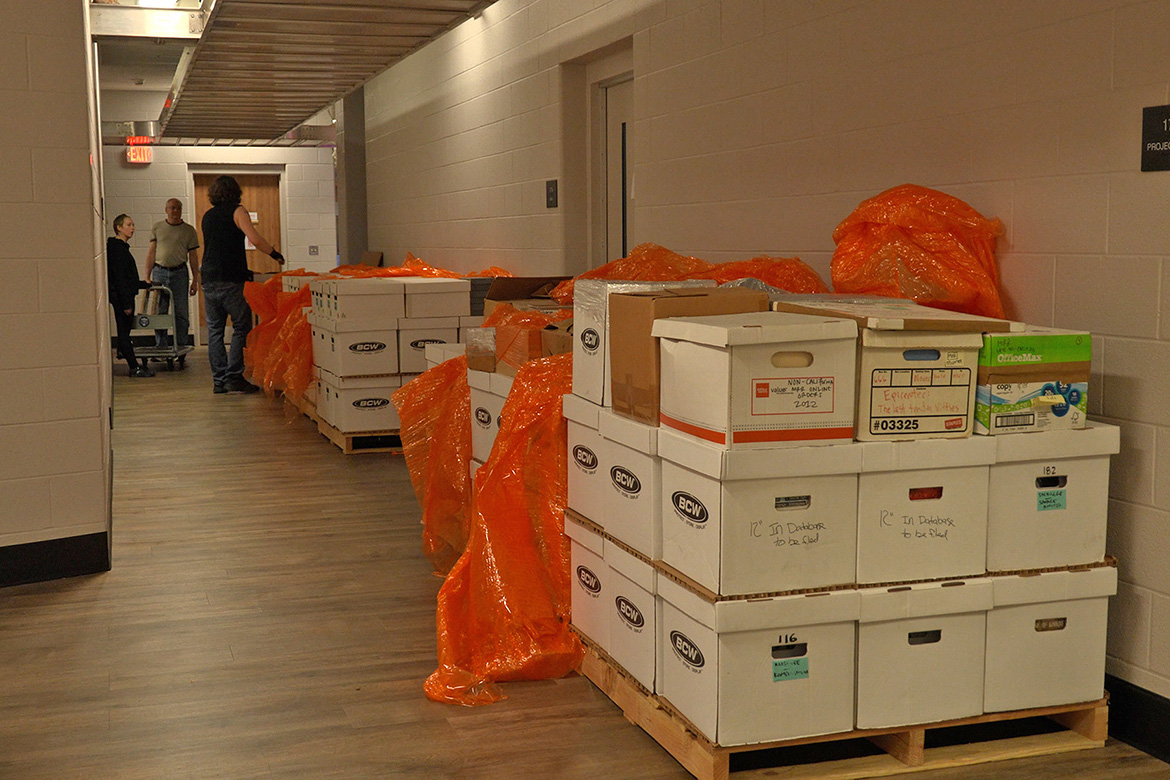
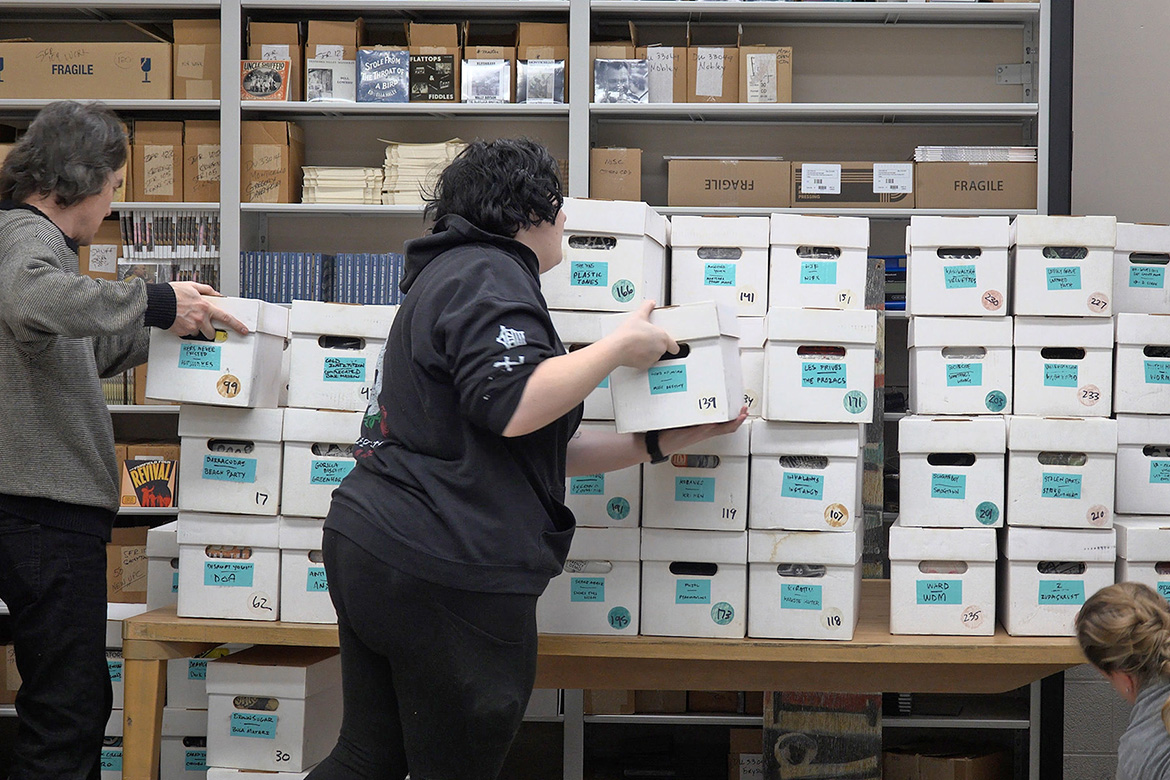
Although the collection has now reached its new home at MTSU, making the materials available to researchers will take significant time and careful archival work. The Center for Popular Music team has spent the last few weeks unpacking and shelving thousands of records, with the project still in its early stages.
Once the records are fully shelved, archivists will begin sorting through business documents and other materials in the archive. The scope of the project is considerable.
“The biggest logistical challenge is the sheer scale and size of the collection,” Crandall said.
Public will have to wait a while
Because of that scale, the archive must undergo formal archival processing and cataloging before it can be accessed by researchers or the public. Archivists must organize the materials, create detailed catalog records, and ensure the items are preserved properly before they can be safely handled. According to Center for Popular Music staff, the work will require hundreds of hours of professional archival processing before the materials can be made available.

“The collection still needs to be processed before it is accessible in any way to researchers,” said Rachel Morris, interim director of the Center for Popular Music. “We do not have a timeframe for when the collection will be available at this moment.”
Morris noted that the center’s professional archivists will carry out the work to ensure the materials are handled according to archival standards.
“We are excited about the enthusiasm and interest in the collection,” Morris said. “We have already heard from researchers, institutions and members of the public who are eager to learn more, but we cannot provide access to the materials until the processing work is complete.”
‘Rare and unique’ collection
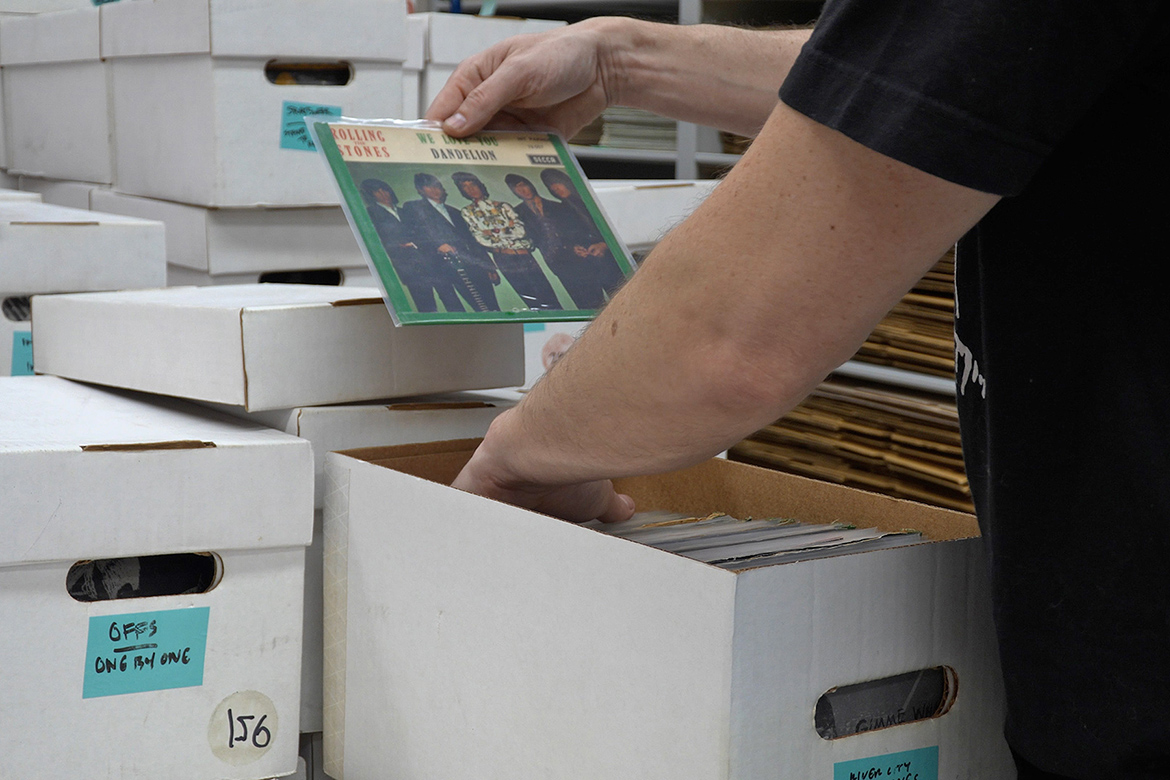
Even in the early stages of sorting the collection, archivists have already identified historically significant items. Librarian Logan Dalton said much of the archive contains rare or extremely limited-run recordings from independent bands around the world.
“Most of the collection is rare and unique,” Dalton said. “Many of the records were produced in very small numbers and document local scenes that might otherwise have been lost to time.”
Among the notable finds so far is the 1982 compilation LP “New York Thrash,” which captured the early New York hardcore scene and includes the first recording by the Beastie Boys, who were teenagers at the time.
Dalton also discovered a rare 8-inch recording by the Los Angeles death rock band Christian Death covering songs by The Germs, as well as a limited promotional release distributed at a 1996 Less Than Jake show in Madison, Wisconsin. It has songs by Less than Jake, Boris the Sprinkler, Sonic Dolls, and Mulligan Stu and was the third-ever release from record label Fueled by Ramen, which later became home to artists like Paramore, Fall Out Boy, Panic! At the Disco, and Twenty-One Pilots.
“These independent and local releases offer a special glimpse into how punk evolved and was interpreted differently across scenes over its 50-year history,” Dalton said.
In the future, the archive could support collaborations with punk historians, oral history projects and other research initiatives connected to the global punk community. For students at MTSU, the archive will offer access to a vast set of primary source materials documenting one of the most influential cultural movements in modern music. Once fully processed, the Maximum Rocknroll archive will become part of the Center for Popular Music’s extensive research holdings.
Founded in 1985, the center is one of the world’s largest repositories devoted to the study of American folk and popular music, housing more than one million items of music-related materials. For now, the arrival of the Maximum Rocknroll archive marks the start of a long but significant preservation effort, one that will ultimately safeguard decades of punk history for future researchers, musicians, and fans.
— Stacey Tadlock (stacey.tadlock@mtsu.edu)




COMMENTS ARE OFF THIS POST