MURFREESBORO, Tenn. — In less than an hour, Middle Tennessee State University students and staff within the College of Behavioral and Health Sciences experienced a first-hand look at realities low-income families face — a lesson that transforms classroom training into real-world application.
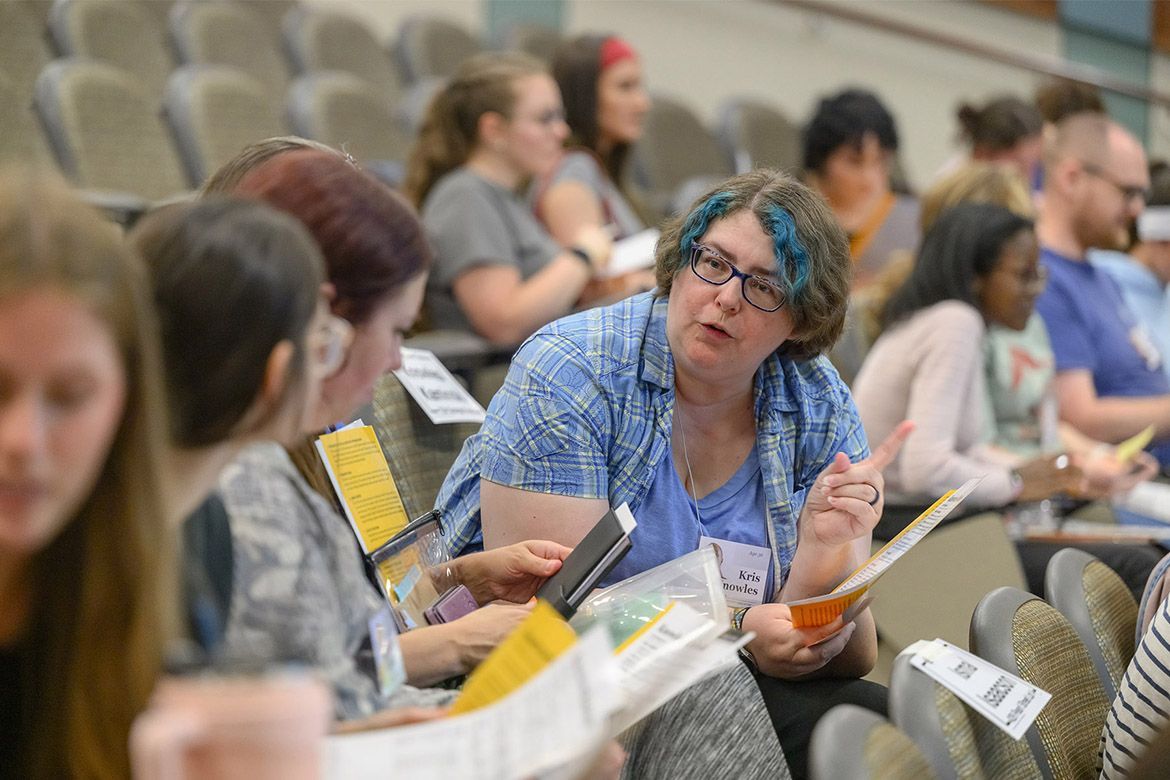
Bonny McCarty, an advisor in the College of Behavioral and Health Sciences at Middle Tennessee State University in Murfreesboro, Tenn., talks with her fellow participants in a poverty simulation held on campus recently. Participants were each assigned a character and family situation to navigate to mimic what it’s like to live below the poverty line. (MTSU photo by J. Intintoli)
The Department of Social Work and Human Development and Family Science program partnered recently to present a poverty simulation involving participants from several departments across campus and community volunteers as part of MTSU Engage Week, which provides opportunities for students to connect classroom concepts with active learning.
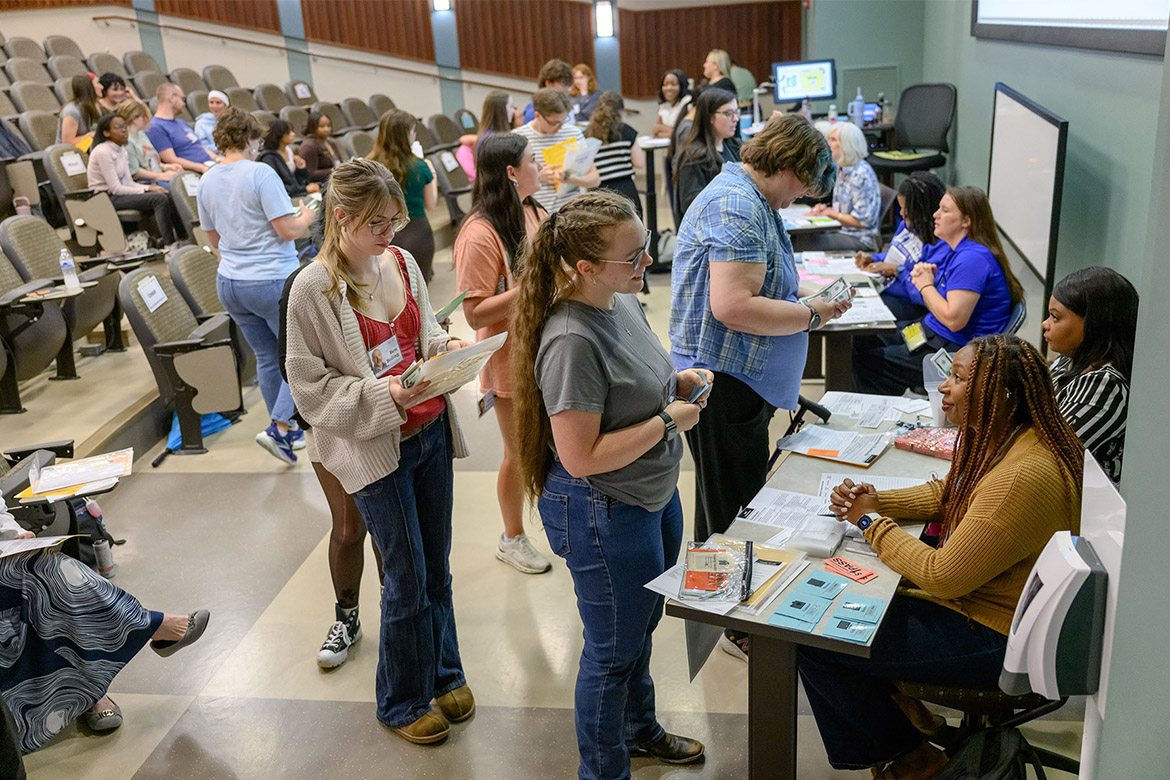
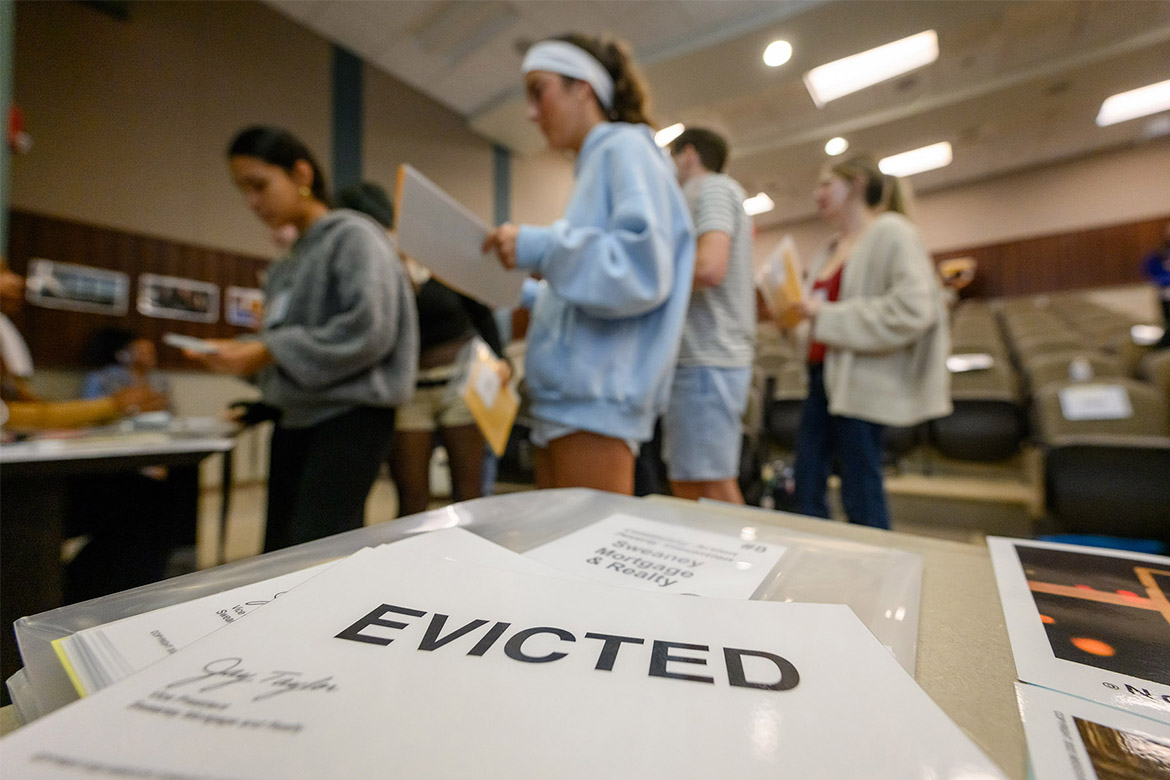
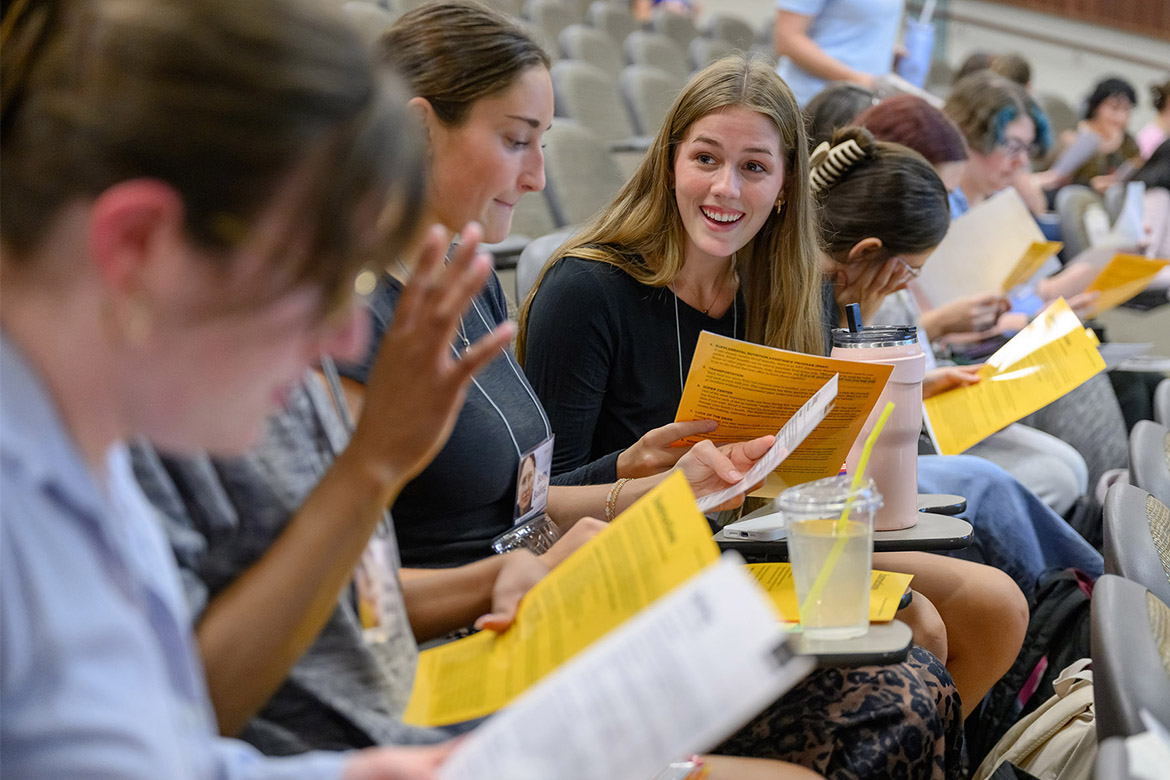
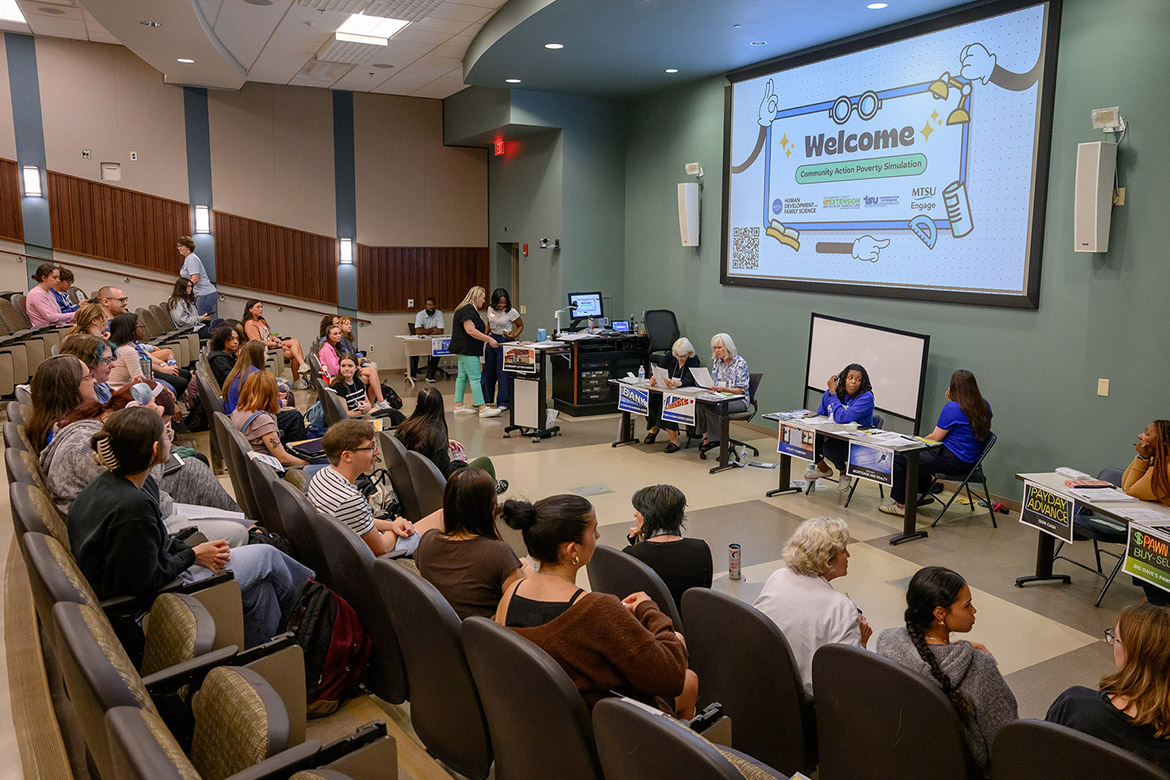
Participants were each assigned a character and family situation to navigate through four 12-minute cycles that mimicked a month of struggles as they faced challenges such as unemployment, affordable child care, transportation, and limited access to resources.
Kara Shepard
“The simulation opened my eyes to the everyday struggles low-income families face, things I hadn’t really thought about before,” said Kara Shepard, a senior human development and family science major who portrayed a single mom of a young daughter and a 17-year-old son whose girlfriend was pregnant. “For example, some people have to make quick cash by pawning personal items. That’s something I’ve never had to experience myself.”
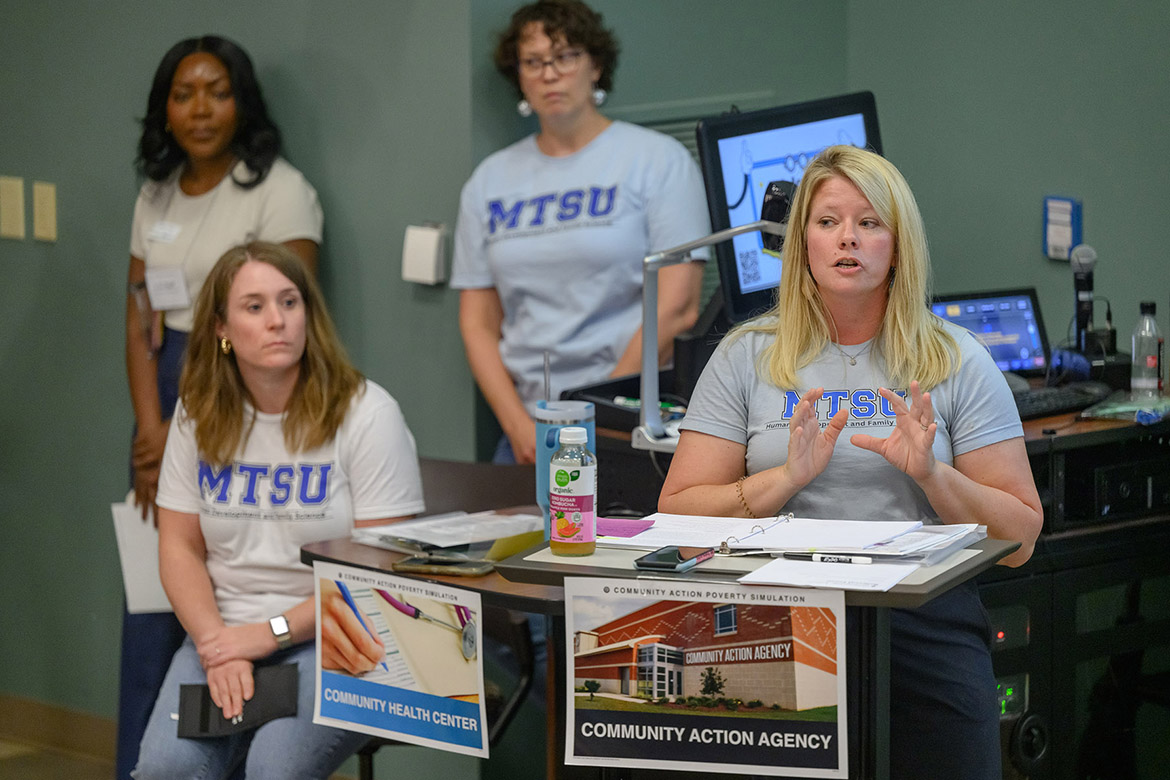
The exercise aimed to build empathy and understanding for individuals and families living below the poverty line, explained Human Sciences instructor Samantha Weir, who organized the first simulation on campus.
Samantha Weir
“I think it’s so important because many of our students have never really considered how many people in our community are struggling,” said Weir, who teaches courses in the Human Development and Family Science program that prepare students for careers in community education, advocacy, and service in nonprofits. “Experiences like this prepare them in a real, hands-on way so they’re not shocked when they encounter families in need.”
According to local data, about 40% of Rutherford County residents fall into the United Way’s ALICE (Asset Limited, Income Constrained, Employed) category — working households that are one crisis away from financial instability.
Throughout the simulation, Shepard faced some of those rough situations and tough choices many people face in real life.
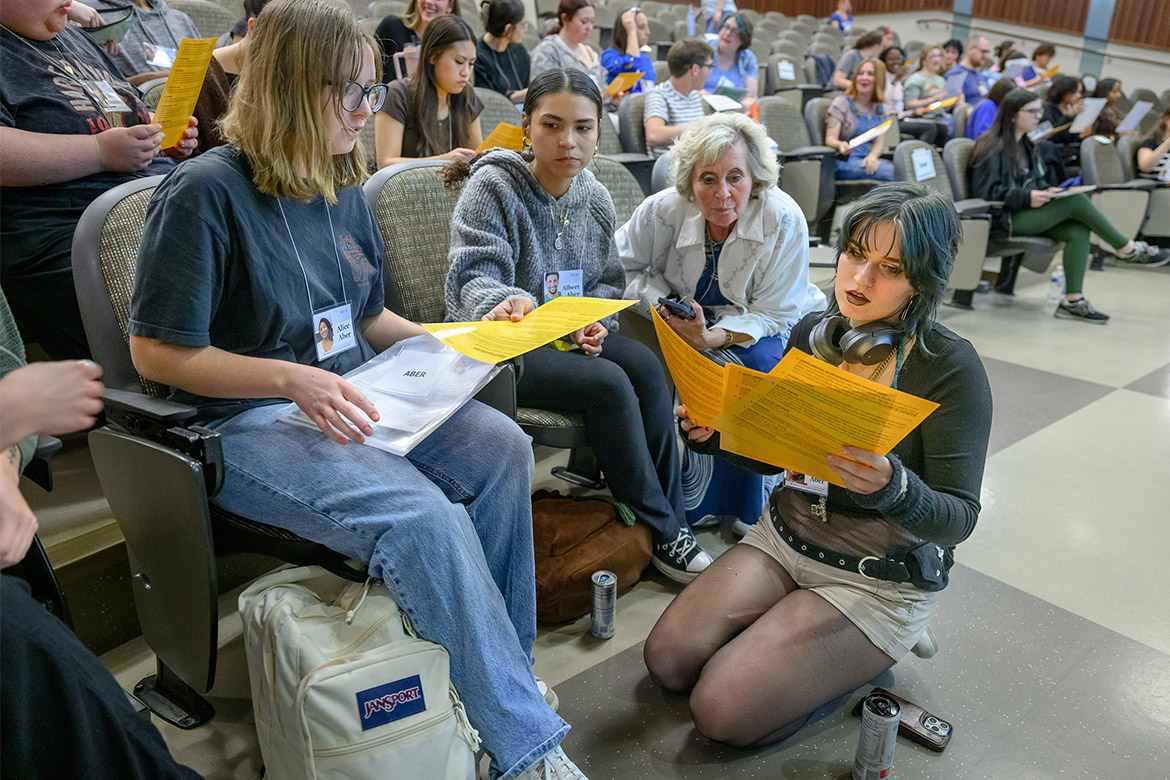
Sitting at right, Samantha Weir, an instructor in the Human Development and Family Science program at Middle Tennessee State University in Murfreesboro, Tenn., explains the parameters to participants in a recent poverty simulation held on campus. Also pictured are, from left, Alexis Trice, Davidson County UT/TSU Extension agent; Rebecca Oldham, assistant professor of Human Sciences; and Claire Cook, Human Sciences professor. The exercise was aimed at helping students build empathy and understanding for community members living below the poverty line. (MTSU photo by J. Intintoli)
“We had no food and no money. We even lost our house and had to stay in a homeless shelter before finally getting it back,” Shepard recalled. “It took weeks to get benefits, and it really showed me how hard the system can be.”
Weir said many students are surprised to learn that the “pull yourself up by your bootstraps” mentality doesn’t reflect real life.
“You realize how often the system works against you and how hard it can be to get out of poverty,” said Weir, who noted that poverty is a root cause of many challenges that students study in both human development and social work programs. “It’s not as easy as we’ve been led to believe. People are trying to do the right things, but they can’t get ahead.”
Shepard said the experience helped her empathize more deeply with her own single mother and families facing similar challenges.
Participants in a poverty simulation held recently at Middle Tennessee State University in Murfreesboro, Tenn., experience a first-hand look at realities low-income families face. Participants were each assigned a character and family situation to navigate through various scenarios to mimic living below the poverty line. (MTSU photo by J. Intintoli)
“Being a mom was the hardest part because I had to choose between searching for employment or spending time at the Social Security office to get housing and benefits,” said Shepard.
Learning not to judge others for their circumstances was also a big takeaway.
“You never know what someone is going through behind closed doors. Poverty is created by a combination of systems and circumstances,” Shepard said.
She also praised her professors for encouraging compassion and service.
“I absolutely love my professors — they’re so inspiring,” Shepard said. “Our program is small and close-knit, and our shared goal is to help others. I want to dedicate my life to helping and serving people in meaningful ways.”
To learn more about the Human Development and Family Sciences program, visit http://bit.ly/3Wm5VlK.
— Nancy DeGennaro (Nancy.DeGennaro@mtsu.edu)
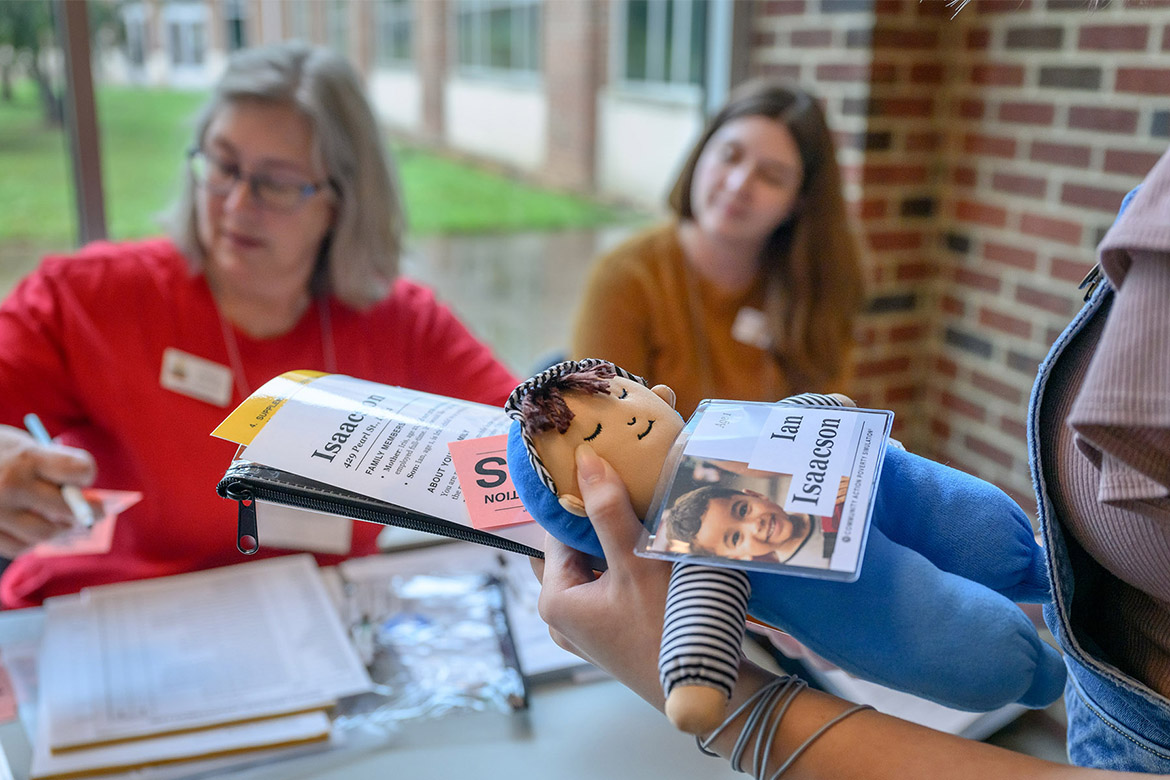
Community volunteers Jolene Radnoti, Read To Succeed director, background at left, and Brittany Satinover, UT/TSU Extension agent, participate in a poverty simulation held recently at Middle Tennessee State University in Murfreesboro, Tenn. In the foreground, a student is assigned the character of a little boy, simulated by a doll, who is accompanied by his parent at a health department appointment. (MTSU photo by J. Intintoli)Middle Tennessee State University students and staff experience a first-hand look at realities low-income families face during a recent poverty simulation held on campus in Murfreesboro, Tenn. Participants were each assigned a character and family situation to navigate through as they faced challenges such as unemployment, affordable childcare, transportation and even home evictions. (MTSU photo by J. Intintoli)Middle Tennessee State University students and staff experience a first-hand look at r ealities low-income families face during a recent poverty simulation held on campus in Murfreesboro, Tenn. Participants were each assigned a character and family situation to navigate through as they faced challenges such as unemployment, affordable childcare, transportation, housing crises and financial troubles. (MTSU photo by J. Intintoli)Middle Tennessee State University students and staff experience a first-hand look at realities low-income families face during a recent poverty simulation held on campus in Murfreesboro, Tenn. Participants were each assigned a character and family situation to navigate through as they faced challenges such as unemployment, affordable childcare, transportation, housing crises and financial troubles. (MTSU photo by J. Intintoli)Participants in a poverty simulation held recently at Middle Tennessee State University in Murfreesboro, Tenn., experience a first-hand look at realities low-income families face. Participants were each assigned a character and family situation to navigate through various scenarios to mimic living below the poverty line. (MTSU photo by J. Intintoli)Bonny McCarty, an advisor in the College of Behavioral and Health Sciences at Middle Tennessee State University in Murfreesboro, Tenn., talks with her fellow participants in a poverty simulation held on campus recently. Participants were each assigned a character and family situation to navigate to mimic what it’s like to live below the poverty line. (MTSU photo by J. Intintoli)Sitting at right, Samantha Weir, an instructor in the Human Development and Family Science program at Middle Tennessee State University in Murfreesboro, Tenn., explains the parameters to participants in a recent poverty simulation held on campus. Also pictured are, from left, Alexis Trice, Davidson County UT/TSU Extension agent; Rebecca Oldham, assistant professor of Human Sciences; and Claire Cook, Human Sciences professor. The exercise was aimed at helping students build empathy and understanding for community members living below the poverty line. (MTSU photo by J. Intintoli)Middle Tennessee State University students and staff experience a first-hand look at realities low-i ncome families face during a recent poverty simulation held on campus in Murfreesboro, Tenn. Participants were each assigned a character and family situation to navigate through as they faced challenges such as unemployment, affordable childcare, transportation, housing crises and financial troubles. (MTSU photo by J. Intintoli)







COMMENTS ARE OFF THIS POST