
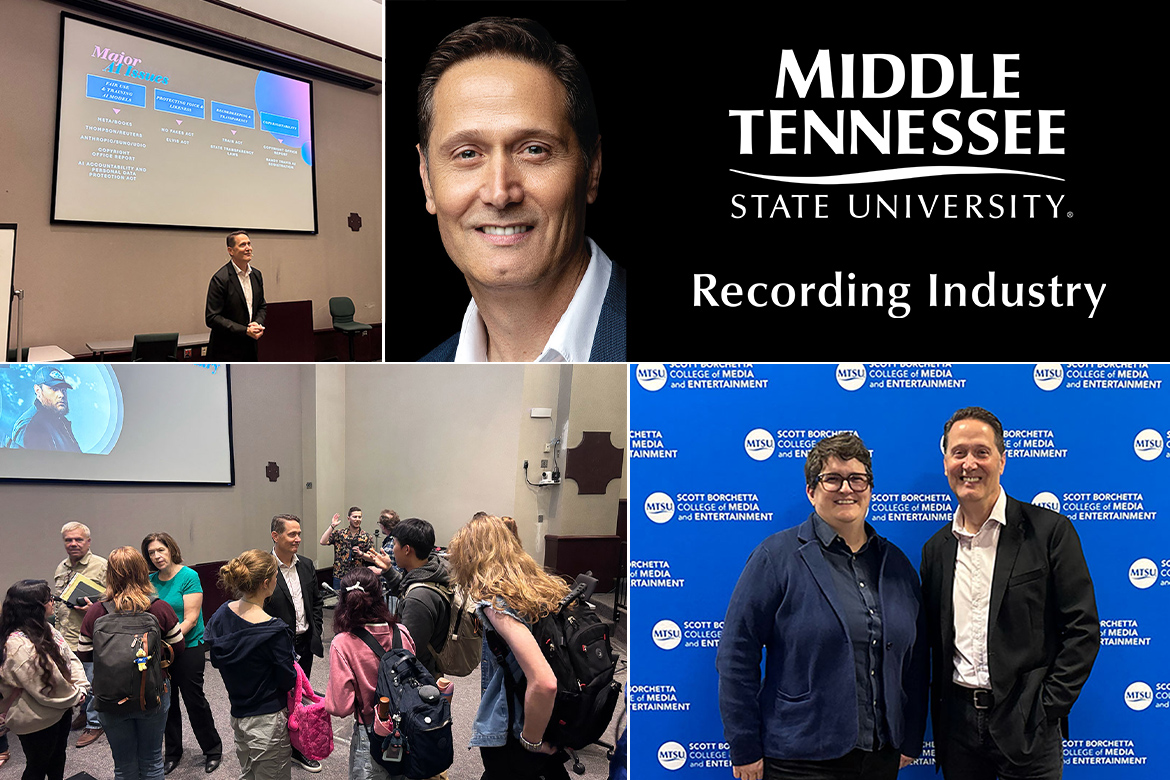
MURFREESBORO, Tenn. — Mitch Glazier, chairman and CEO of the Recording Industry Association of America, or RIAA, visited Middle Tennessee State University recently to discuss how artificial intelligence is reshaping the music industry and what it means for the next generation of creators.
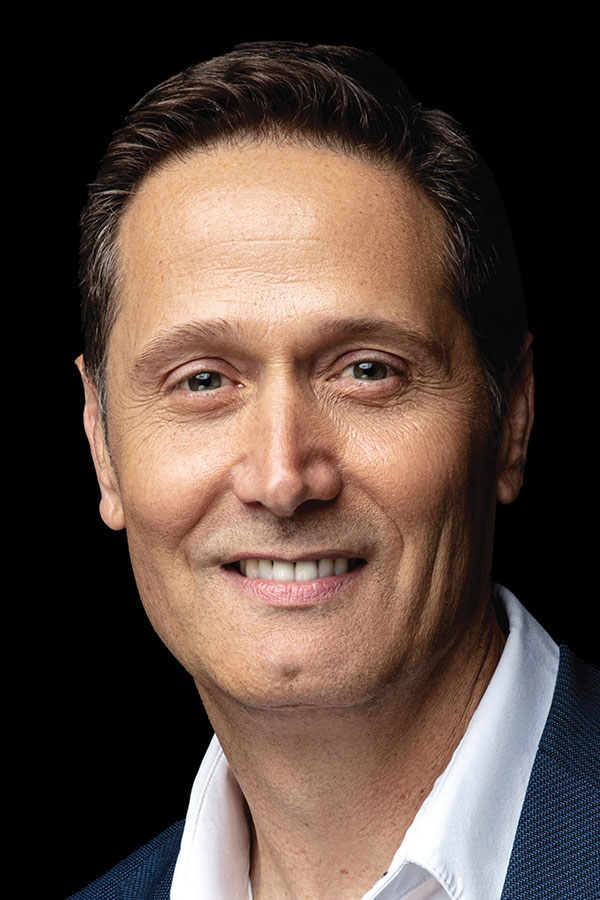
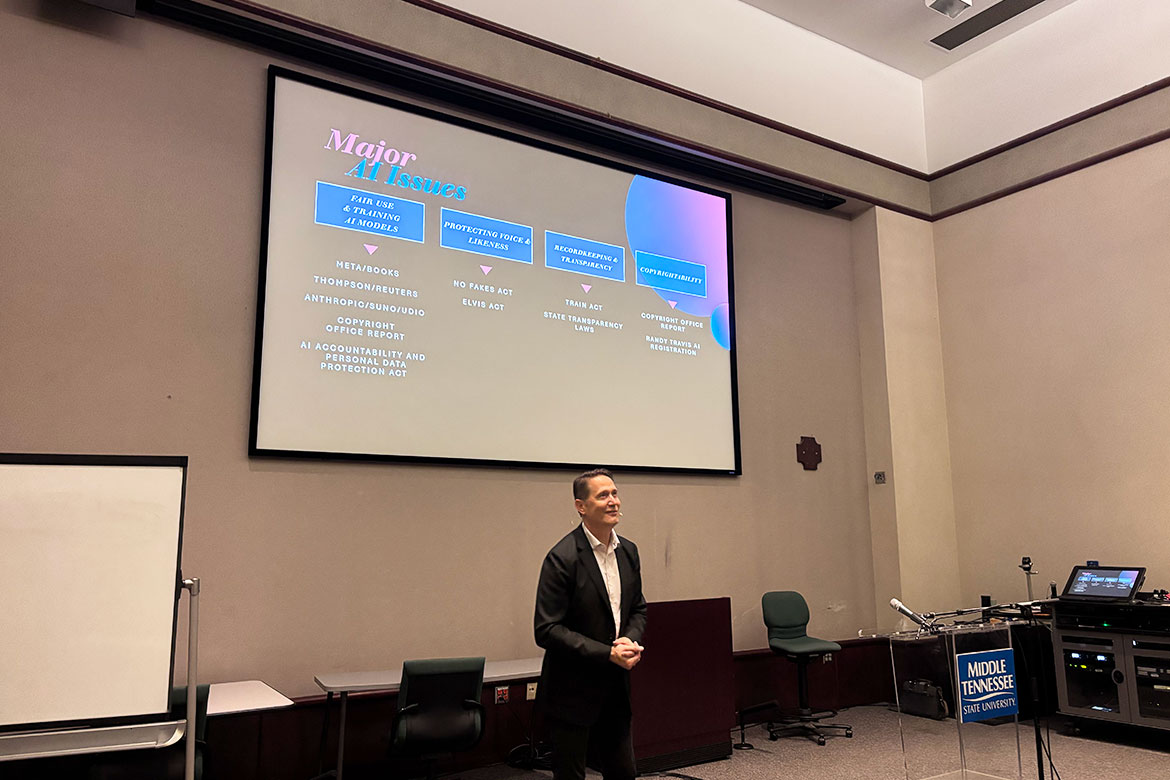
Speaking to a full crowd of students in the Business and Aerospace Building’s State Farm Room, Glazier explored the promise and peril of AI tools that can generate songs, lyrics, and even mimic artists’ voices and images.
“You really are the future of the music industry,” Glazier told students during his Oct. 7 campus talk. “When new technology arrives, it’s always here to stay — but it’s up to us to decide how to shape it.”
Glazier, who has played a key role in the industry’s evolution from physical sales to the streaming era, outlined the major legal and ethical issues emerging from AI’s rapid expansion, including voice cloning, the unauthorized use of copyrighted material, and the ongoing question of whether AI-generated works can be protected under copyright law.
He noted that these technologies also raise deeper moral and constitutional questions about free speech, artistic identity, and ethical responsibility. Glazier illustrated how current technology can convincingly simulate human artistry using live demonstrations of tools such as voice-dubbing services and AI song generators.
One demo transformed “The Thunder Rolls” by Garth Brooks using the voice of Hank Hill, the recognizable animated character from “King of the Hill,” offering a lighthearted example that raised serious questions about ownership and consent. Another live demo, using the AI tool Suno, produced a full country song complete with lyrics, artwork and melody from a simple text prompt in less than two seconds.
“These examples make it clear that we’re entering a new era,” Glazier said.
Glazier explained that the RIAA and its members are actively advocating for legislation to protect artists from misuse of their likenesses and voices, citing the proposed No FAKES Act and similar state-level efforts such as California’s new transparency law for AI developers.
The No FAKES Act is proposed federal legislation to protect individuals from unauthorized, AI-generated replicas of their voice and likeness. The bill, formally known as the Nurture Originals, Foster Art, and Keep Entertainment Safe Act, was introduced in the U.S. House and Senate in 2025.
California recently passed the Transparency in Frontier Artificial Intelligence Act, the first state law to require AI developers to publicly disclose a safety framework that incorporates widely accepted safety standards and explains a a capacity to pose and mitigate catastrophic risks.
Glazier said that despite these efforts, gaps remain in federal protections.
“There is no federal law to prohibit deepfakes,” he said. “There’s nothing out there where you can sue someone for using your image or voice.” He emphasized that the RIAA is working to close that legal gap through new legislation and public policy initiatives, ensuring that artists’ rights are preserved as technology evolves.
Glazier also explained that the new California law will require AI developers to disclose the data sources and inputs used to train their models, a measure he said is essential for proving when copyrighted material has been scraped to generate AI-created music.
Throughout his presentation, Glazier drew on decades of experience at the intersection of music, law and technology. Glazier has worked on every major copyright bill considered in the past three decades, from the Digital Performance Right in Sound Recordings Act of 1995 to the Music Modernization Act of 2018, laying the foundation for the modern streaming economy that has strengthened and remade the music business for the 21st century.
Comparing the current AI disruption to the Napster digital audio file sharing era of the early 2000s, Glazier said every technological upheaval forces the industry to rethink its values.
“When Napster hit, we had three choices: bury our heads in the sand, get on board to see how we can harness it or sue them. We chose option three, we sued Napster and through litigation came results, and through the results, lessons were learned. Those lessons apply now,” he said.
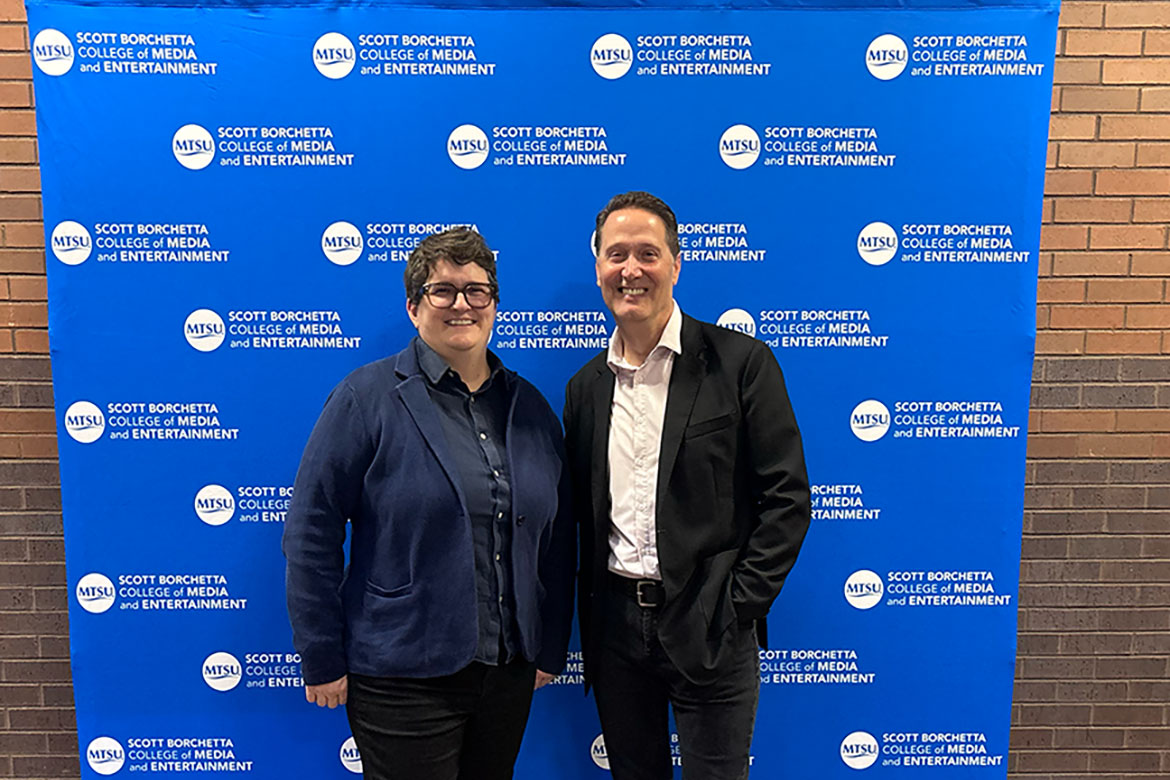
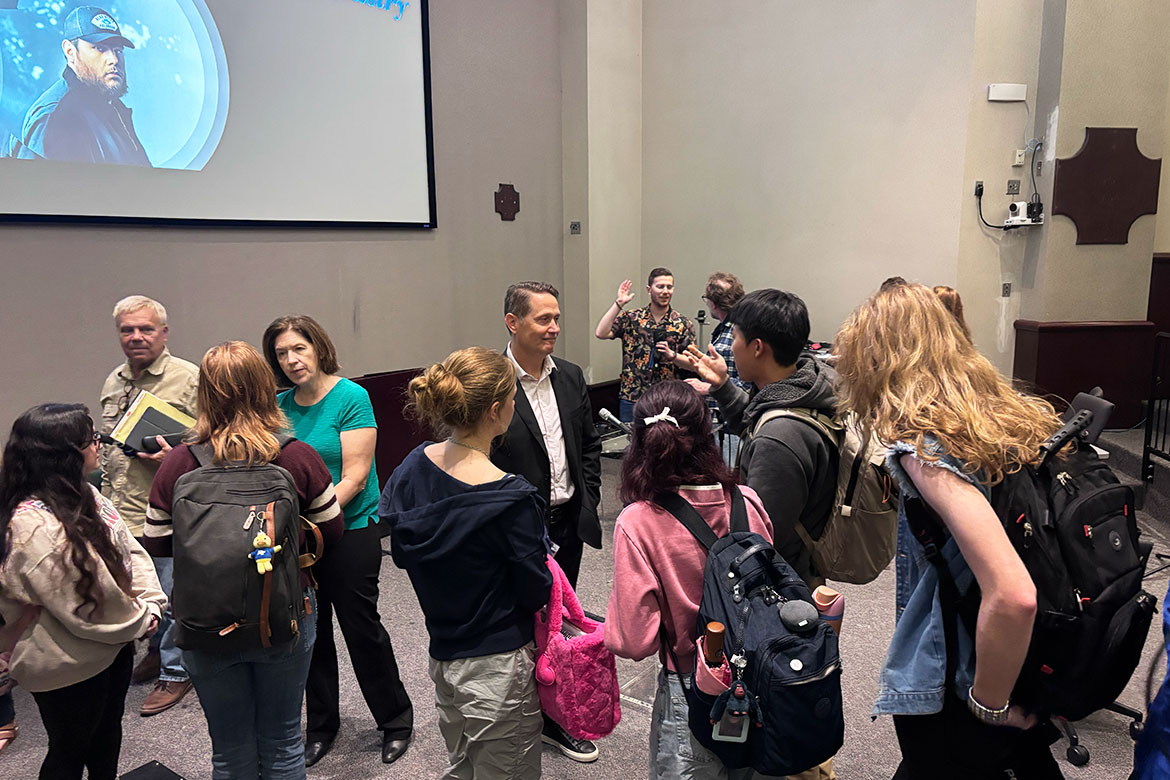
During the second half of the event, students from the Department of Recording Industry engaged Glazier in a lively Q&A session, asking about copyright enforcement, artist compensation, and how record labels will handle AI-generated acts.
Glazier emphasized that major labels represented by the RIAA have not signed AI artists, instead focusing on preserving “the human connection between artist and audience.”

“There’s a big difference between using AI as a tool and using it as a replacement,” he said. “Real artistry comes from people, from emotion, from creativity, from shared experience.”
Michelle Conceison, chair of the Department of Recording Industry, stated that Glazier’s visit offered a timely opportunity for students to confront the complexities of AI’s role in creative work.

“In recent months, I’ve heard people express a wide range of thoughts and feelings about AI: excitement, fear, optimism, and worry,” Conceison said. “As dedicated researchers and future leaders of the music industry, we must gather knowledge, critically consider what we learn, and engage in constructive discussions that move our industry forward.”
She added that MTSU’s programs are built to prepare students for emerging challenges.
“Our prime objective as educators is to prepare students for careers in the present and future music business. Together, we can protect creators’ rights and livelihoods while still supporting innovation,” she said.
For Glazier, the message to students was simple: technology will continue to evolve, but human creativity remains irreplaceable.
“There has to be a connection between a human artist and a fan,” he said. “That connection is what unites an audience and an artist, and it’s something AI can never replicate.”
— Stacey Tadlock (Stacey.Tadlock@mtsu.edu)




COMMENTS ARE OFF THIS POST