
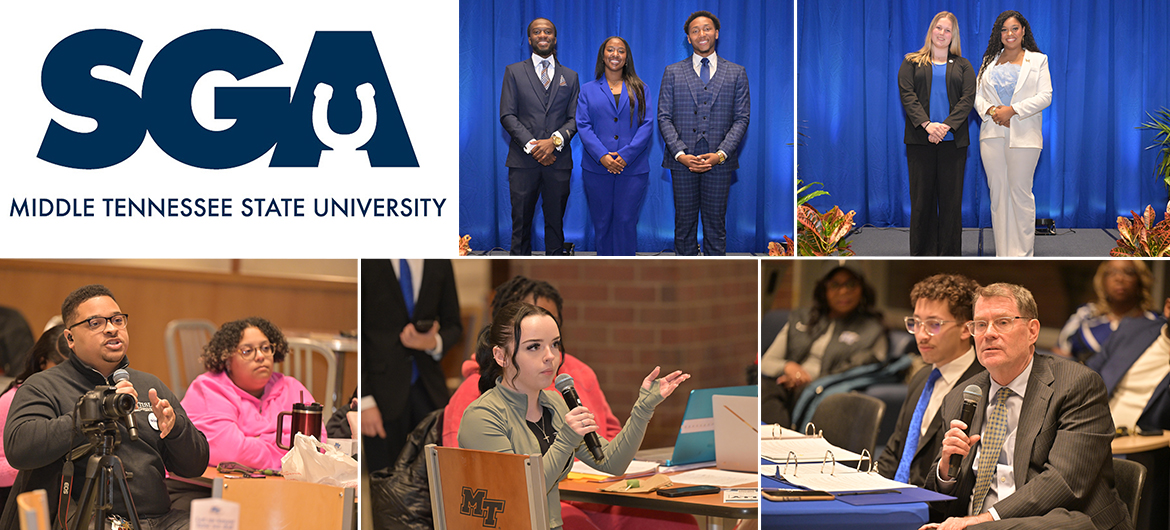
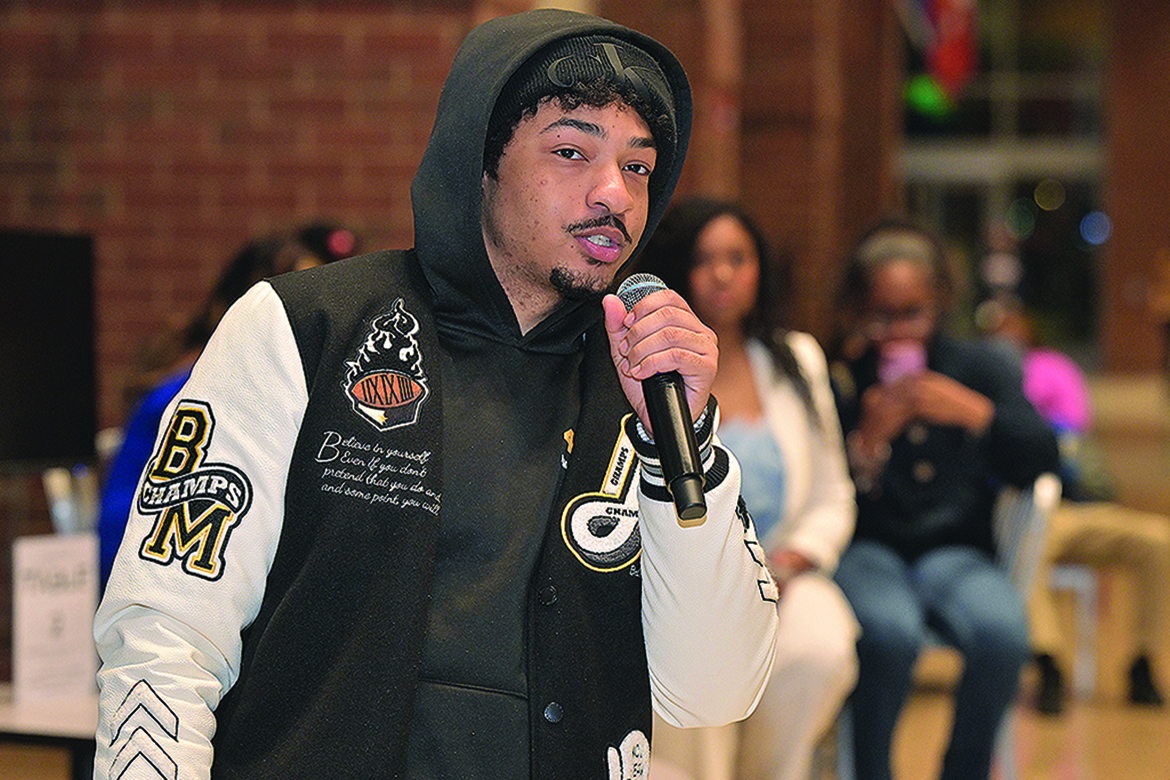
MURFREESBORO, Tenn. — Middle Tennessee State University Student Government Association candidates for president and vice president laid out their platforms during a campuswide executive officer debate in the Student Union Atrium on Monday, Feb. 23.
Voting for Student Government Association, or SGA, officers kicks off at 10 a.m. Monday, March 2, and concludes at 11:45 a.m. Friday, March 5. Election results will be posted by noon outside Student Union Rooms 306 and 330 and on SGA social media.
SGA candidates vying for the presidential seat are Kennedy Garrett, Truvell Haddox and Devin McClendon, with Ally Pricer and Nia Moore competing for vice president.
“Students turned out, asked a lot of great questions, and I think the candidates were able to showcase who they are and what they are all running on, which was great,” said SGA Election Commissioner Luis Esmurria III, an accounting major from Clarksville.
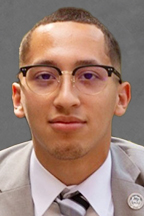
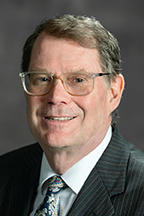
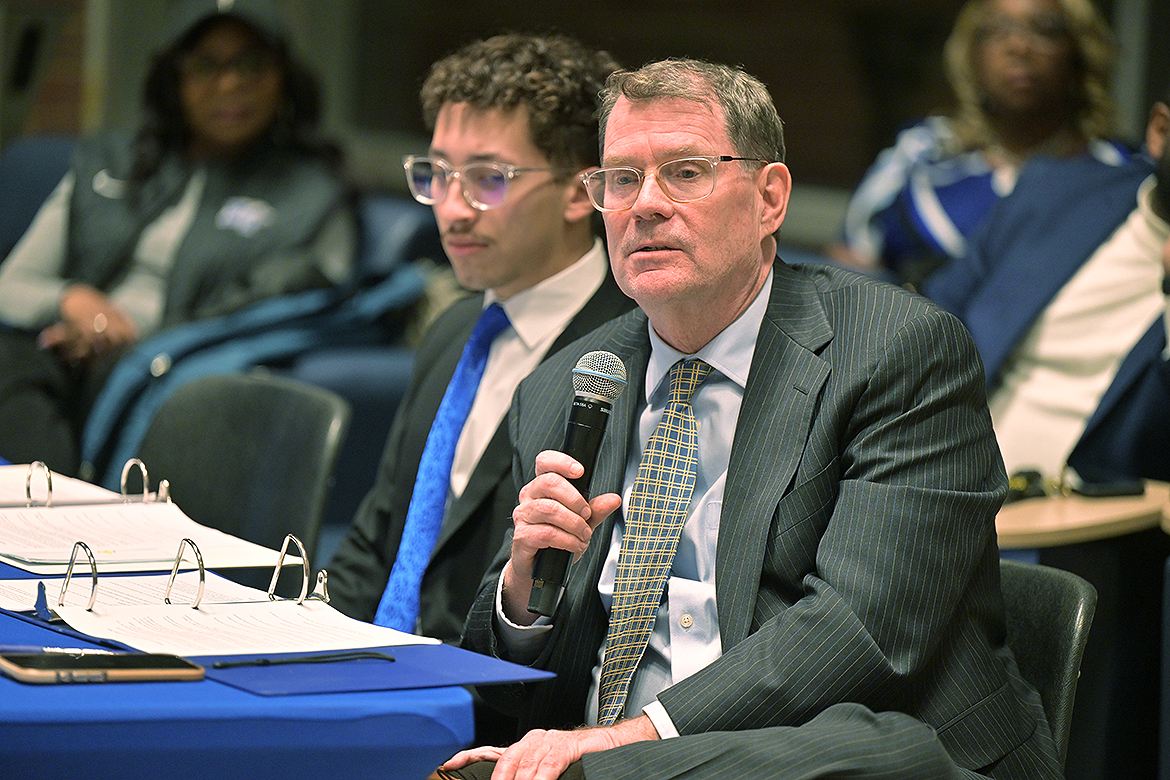
Esmurria and Danny Kelley, interim vice president for Student Affairs and dean of students, moderated the debate, which highlighted priorities that include transparency, mental health support, student engagement and stronger advocacy across campus.
Throughout the evening debate that drew over 100 students, candidates emphasized leadership and experience, with a shared goal of strengthening student voice in university decision-making and campus support.
Presidential candidates focus on engagement, results
Garrett, a political science major from Ooltewah, centered her campaign on three pillars: refining resources, uniting campus and turning action into results. Drawing on her SGA experience as a senator and then her current position as vice president, she said her administration would prioritize clearer communication between students and university leadership.
Haddox, a finance major from Franklin, focused on advocacy, unity and accountability. He stressed that SGA leadership should actively seek student feedback and ensure concerns are addressed efficiently.
McClendon, a finance major from Nashville, emphasized accessibility and visibility in leadership. He discussed the importance of students fully understanding what SGA does and how it impacts their daily campus experience.
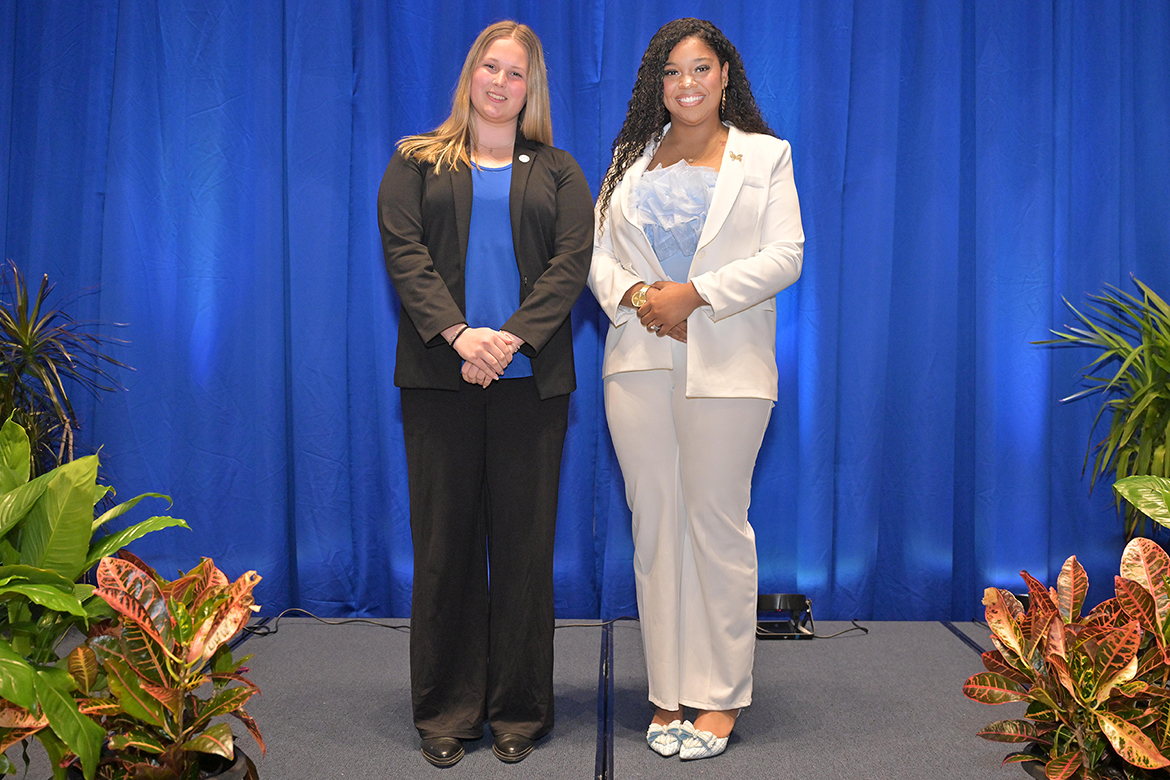
VP candidates outline student support goals
Pricer, an advertising/public relations major from Hixson, is Garrett’s running mate and current SGA speaker pro tempore. She emphasized collaboration within the SGA Senate and the development of legislation that reflects diverse student experiences.
Moore, a political science major from Chattanooga, is a senator and co-chair of the Student Life Committee. She is focused heavily on mental health and transparency.
Following candidate opening statements, the moderators asked questions of each, then opened the floor for student queries. (Editor’s note: Answers to some questions have been condensed.)
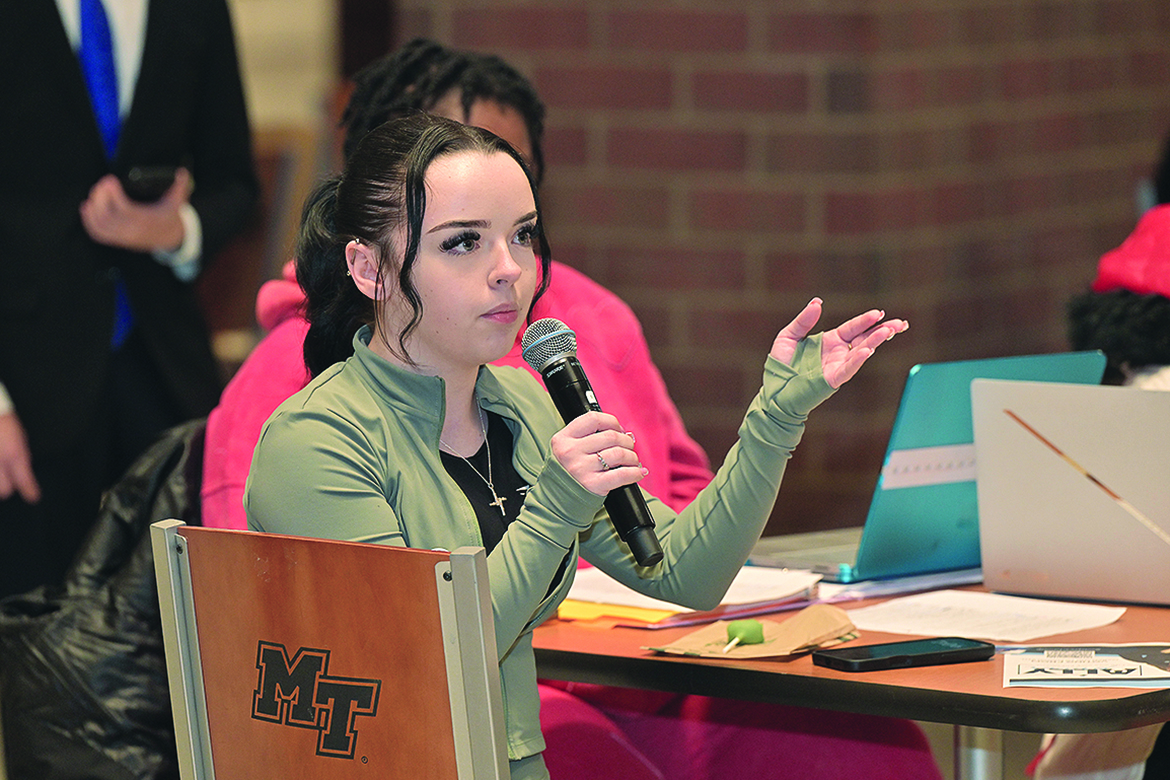
VP candidates respond
• How can the student government improve its transparency and accountability to the student body, and what steps would you take to achieve this?
Moore: “To continue transparency, I would make sure meetings are fully livestreamed … so students (can) see exactly what we’re talking about.”

Pricer: “I would enact different policies to show that communication through everything that we do. Every piece of legislation that would go through my office would be presented to the students.”
• What methods would you use to foster collaboration and active participation within the Senate?
Pricer: “I would lead more open communication … and push them to write more legislation that directly impacts the students.”
Moore: “I want to make sure that we all know each other so that we can work well together.”
• What specific ways would you make sure that all groups of students feel safe and included on our campus?
Pricer: “I want to bring awareness to all the student organizations that we have on campus — we have over 300 student organizations here on campus. I would make the process of registering student organizations easier.”
Moore: “I want to inform all students of the new resources that the university has implemented since some (student support) offices have closed.”
Presidential candidates respond
• As a representative of over 20,000 students, how do you intend to lead and serve the student body effectively and with inclusiveness?
Haddox: “By keeping my life right, by staying on track with my life and my dreams and my success, I can help other students. I could be that person that they can come to.”
McClendon: “I genuinely believe that in order to serve, you must listen … to the issues that they face, the problems that they go through. And then you have to respond accordingly.”
Garrett: “I feel that … our students should know where they are represented and how. And they know who they can come to and who will truly make sure that they are.”
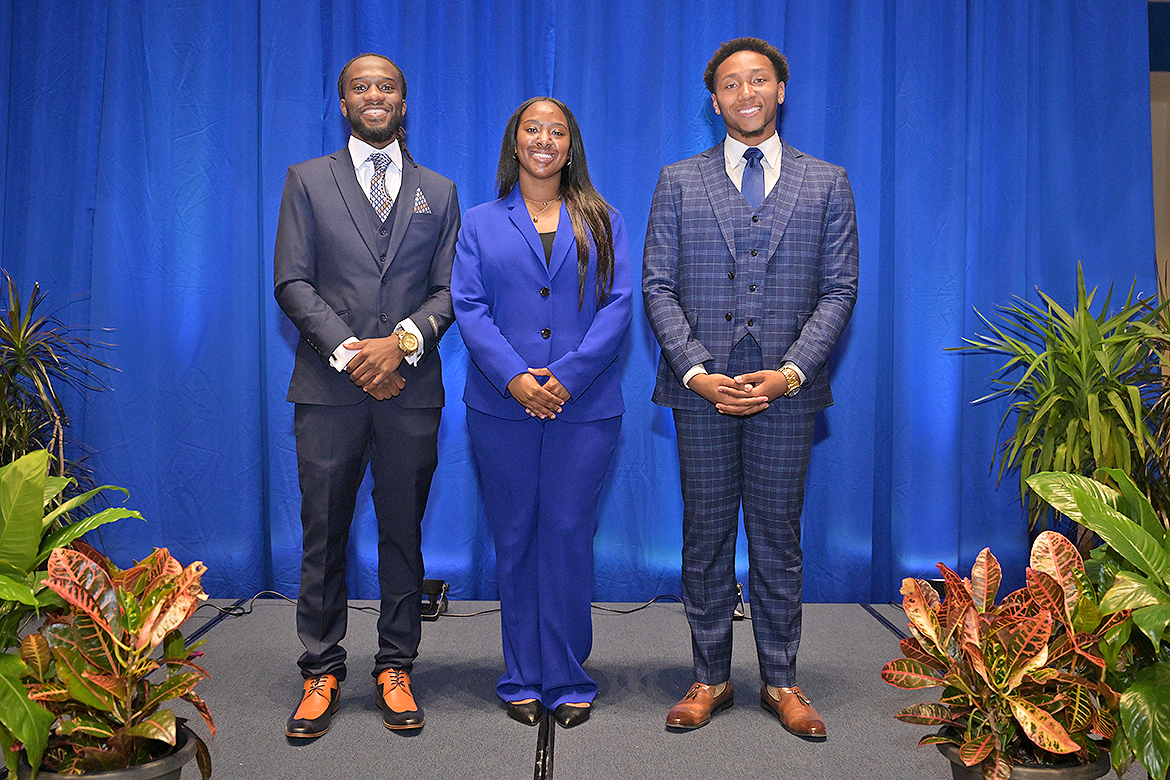
• How will you handle situations where student concerns conflict with administrative policies or decisions?
McClendon: “I’m going to make sure that I communicate to them as clearly and as simply as possible and find some type of solution to the problem.”
Garrett: “Letting students know that although the university policy may say this, and that it could cause negative effects, that as a student body president, I would ensure that their main concerns are at the forefront of what is happening to form that solution.”
Haddox: “Before you can be a voice, you have to be an ear. I would move in my core value of being adaptable. So my adaptability is going to get (things) done.”
• How will you work to improve campus resources and services such as mental health support, academic advising, campus safety, or anything else that you think is important?
Kennedy: “If I’m elected president, I want to make sure that the resources we have affecting mental health, campus safety, or anything else are continued to be pushed.”
Haddox: “Advocating and pushing that agenda out that there’s somebody that will help you, there’s somebody here that can be of assistance to you, there’s somebody here that you can go to, you can call on. So I’ll just lead them to that resource.”
McClendon: I often see women walking around late. … So I want to provide even further aid toward people on campus.”
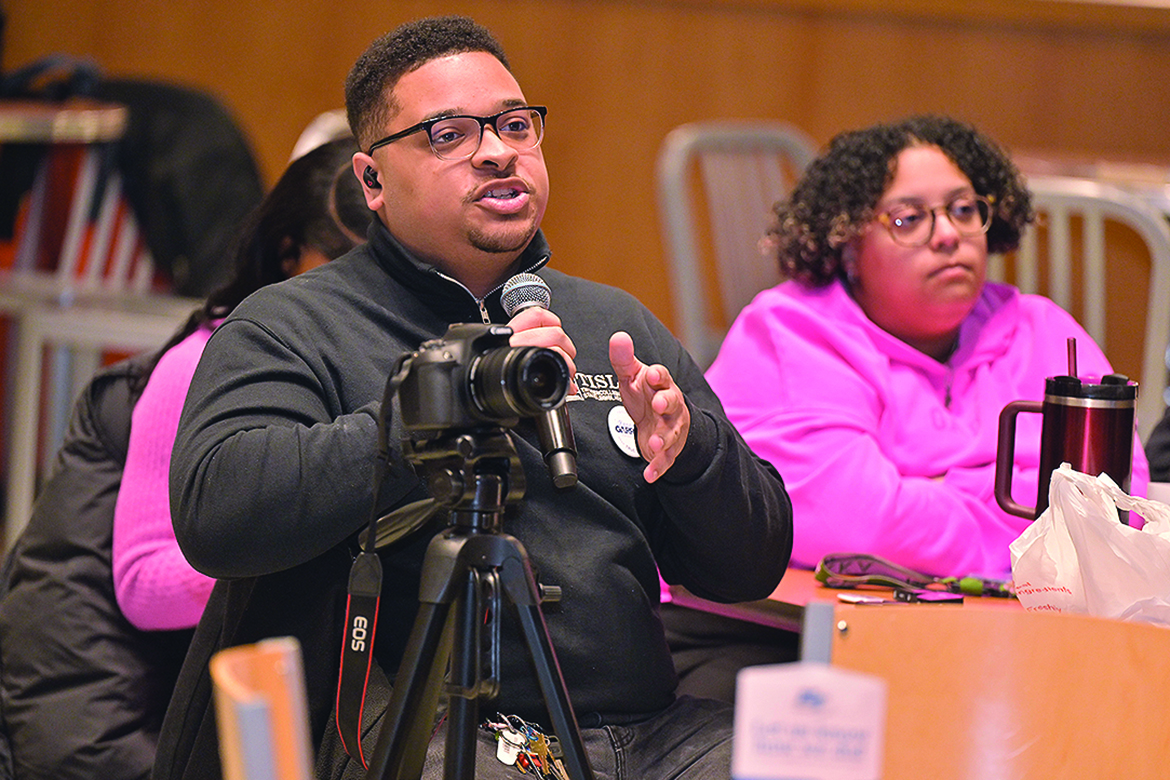
• What do you plan on doing to help organizations, specifically minority organizations, figure it out ourselves rather than giving us a blueprint?
Garrett: “I will ensure that there are other ways, that you all do have the resources that you need, as I feel that due to the current legislation that has happened, our student organizations are needed more than ever. If I’m elected with my administration, that diversity, equity, inclusion will be supported in ways that the university possibly cannot.”
Haddox: “That’s part of my mission, actually, to provide for student organizations, increase the funding. So if any student needs help funding the organization, they can come to us.”
McClendon: “Funding is still here for you. Programming for anything that you want to make happen is still here for you. Diversity, equity, and inclusion may not be able to live on in the laws or in an administration, but it can live on in spirit. It can live on in duty.”
— Nancy DeGennaro (Nancy.DeGennaro@mtsu.edu)




COMMENTS ARE OFF THIS POST