
By Hanna Terletska
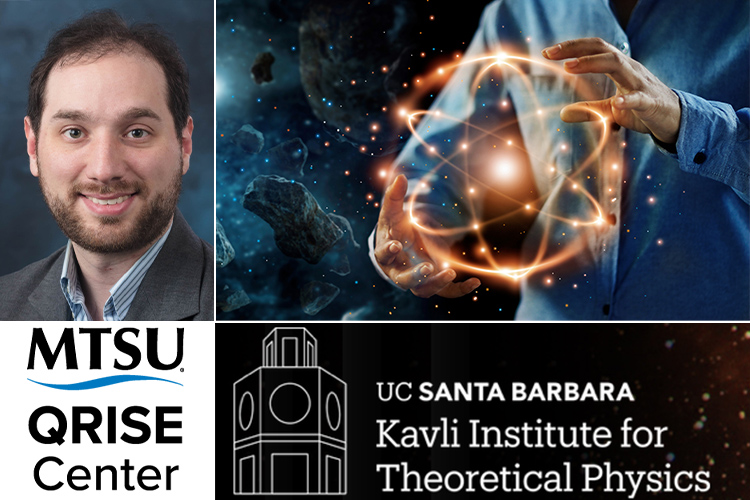
MURFREESBORO, Tenn. — John Villanova, assistant professor in the Physics and Astronomy Department at Middle Tennessee State University, has been selected as a KITP Scholar 2026-28, one of only six to eight faculty members chosen nationwide each year for the prestigious award.

As part of this highly competitive program, Villanova will collaborate with leading physicists at the Kavli Institute for Theoretical Physics at the University of California, Santa Barbara — one of the world’s premier centers for theoretical physics. This distinction places Villanova among an elite group of physicist-educators and researchers and provides sustained access to one of the world’s most influential centers for theoretical physics.
About the KITP Scholar Award
The KITP Scholar Award is a nationally competitive fellowship designed to support physics faculty at emerging research and teaching-intensive universities, institutions that often lack the large-scale research infrastructure of major R1 universities.

Founded in 1979, the Kavli Institute for Theoretical Physics is internationally recognized as a premier hub for theoretical physics. Each year, hundreds of scientists from around the world participate in KITP research programs spanning astrophysics, condensed matter physics, particle physics, quantum information science, and related fields.
The institute is supported by the National Science Foundation and the Kavli Foundation.
Why this matters for MTSU
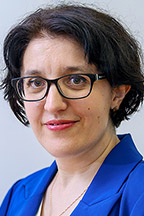
Villanova is part of the leadership team of MTSU’s QRISE Center, guided by associate professor Hanna Terletska, center director. QRISE, which stands for Quantum Research, Interdisciplinary Science and Education, was launched last October to guide MTSU’s leadership in advancing quantum research, education and workforce development across disciplines.
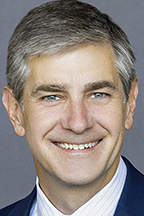
“Dr. Villanova’s selection for the Kavli Institute award is further evidence that the research excellence and contributions of MTSU faculty are being recognized at the forefront of quantum science in the United States and around the world,” said Greg Van Patten, dean of MTSU’s College of Basic and Applied Sciences.

As the state’s largest public R2 university, MTSU is actively building research capacity, visibility and expertise, and programs like the KITP Scholar Award are designed to accelerate that growth by providing faculty with dedicated time and access to high-quality research environments.
“Being awarded one of the eight KITP Scholar Awards nationwide is very prestigious and will enable Dr. Villanova to be successful for NSF or Department of Energy grants,” said Ron Henderson, chair of the Department of Physics and Astronomy. “He has only been at MTSU for 16 months and yet has already made remarkable contributions to the QRISE Center.“

Villanova’s extended visits to KITP will also place him near the NSF Quantum Foundry at UC Santa Barbara, a next-generation materials research center focused on developing materials with unprecedented quantum coherence and training the future quantum workforce. This proximity creates a natural bridge for collaboration between MTSU’s QRISE Center and world-class quantum materials initiatives.
“Dr. Villanova’s selection validates MTSU’s strategic investment in quantum science and interdisciplinary research,” Terletska noted. “For institutions like MTSU, national awards of this caliber carry outsized significance.”
QRISE Center and the quantum future
Villanova’s work exemplifies the type of research QRISE aims to support.
“New and complex materials are how scientists harness the most exciting properties of quantum physics to build advanced technologies,” Villanova said. “Students need the skills to contribute to these developments, which will have impact across the entire nation.”
Villanova is only the second MTSU faculty member to be named a KITP Scholar, with Terletska previously holding the KITP distinction during the 2017–19 cohort.
“As associate director of research for QRISE, Dr. Villanova’s work at KITP will directly advance MTSU’s research in theoretical and computational quantum materials,” Terletska said. “The sustained collaborations he develops at KITP will strengthen the university’s research profile and deepen its engagement with the national theoretical physics community.”
From ORNL to QRISE
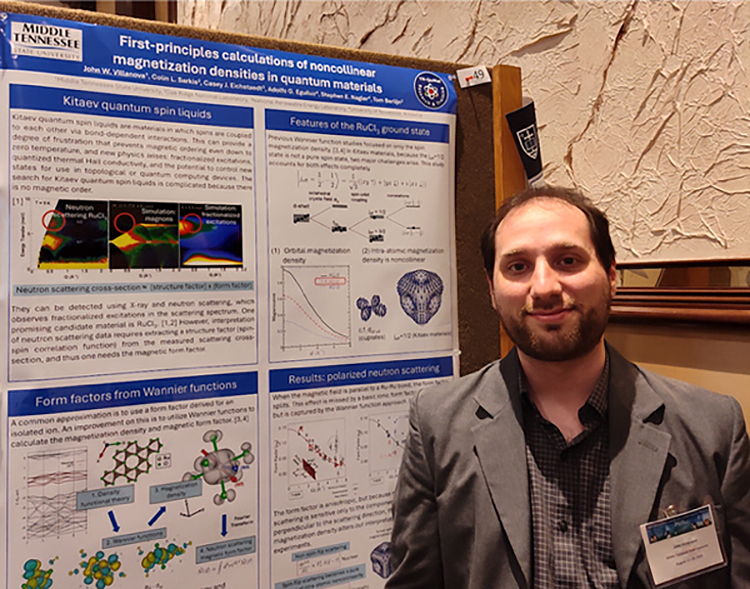
Villanova’s research trajectory includes experience at one of the nation’s premier national laboratories. After earning his Ph.D. in theoretical condensed matter physics from Virginia Tech in 2018, he served as a postdoctoral research associate at the University of Arkansas and then in the Nanomaterials Theory Institute at Oak Ridge National Laboratory, the U.S. Department of Energy’s largest science and energy laboratory and home to the Quantum Science Center, one of five National Quantum Information Science Research Centers.
His research focuses on density functional theory and computational approaches to quantum materials, including topological kagome systems, quantum spin liquids, Weyl and Dirac semimetals, two-dimensional ferroelectrics, and spin-wave physics in van der Waals antiferromagnets.
Villanova is also one of the principal investigators on TN-QuMat (Tennessee Quantum Materials Workforce Development and Training), a $2.2 million Department of Energy initiative partnering MTSU with ORNL, Tennessee State University, Fisk University, and Meharry Medical College. He leads the topological materials simulation thrust, training students in computational techniques that bridge experiments and theory.
— Hanna Terletska (hanna.terletska@mtsu.edu)




COMMENTS ARE OFF THIS POST