
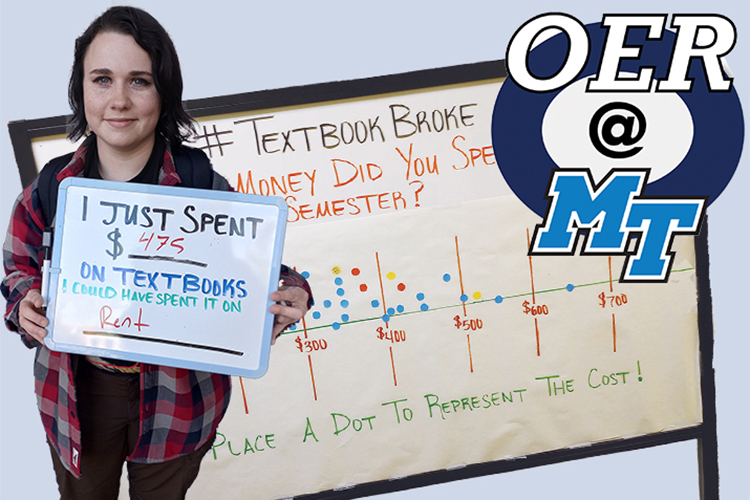
MURFREESBORO, Tenn. — As James E. Walker Library at Middle Tennessee State University prepares to observe Open Education Week March 2–6, the campus is also celebrating an important milestone.
Over the past five years, MTSU students have saved more than $3 million in textbook costs through Zero Textbook Cost, or ZTC, courses. These courses eliminate textbook expenses by using options such as Open Educational Resources, or OER, library-licensed materials and other free resources.


“We wanted to celebrate hitting that milestone,” said Ginelle Baskin, who oversees OER on campus.
Since formally tracking zero-textbook-cost courses in 2022, MTSU has seen steady growth in both faculty participation and student savings.
“Saving students millions in textbook costs speaks to the strength of collaboration across our campus,” Walker Library Dean Kathleen Schmand said. “Our faculty, librarians, and advocates like Ginelle Baskin are making a tangible difference in students’ lives.”
Using average enrollment figures and estimating roughly $100 per student in textbook expenses, the library calculates savings for each qualifying section — though Baskin noted actual savings are often higher. Last semester alone, students saved approximately $819,000. With fall data now included, cumulative savings have reached about $3.3 million.
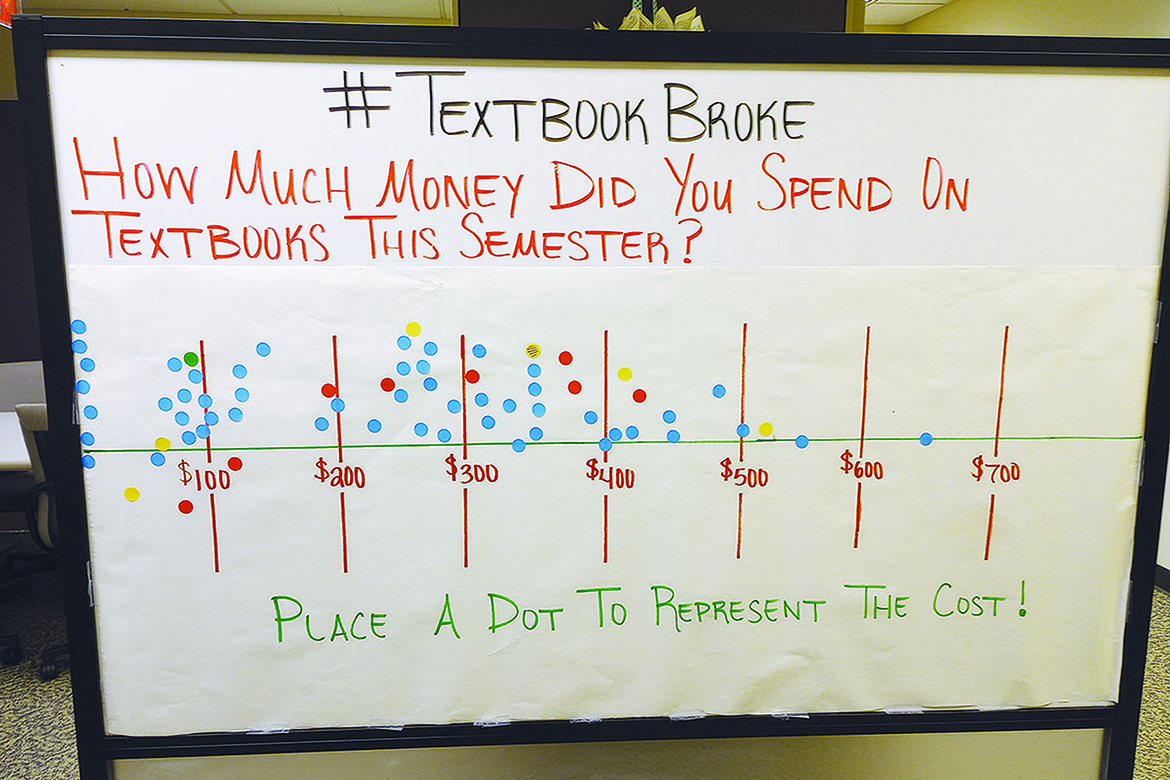
Events help celebrate milestone
To mark the monetary milestone, the library will host two events during the globally recognized Open Education Week, including an OER Champions Showcase at 10:30 a.m. Tuesday, March 3, in Room 348 of Walker Library or via Zoom to recognize and celebrate the cost-saving benchmark.
The event will feature the university’s first “Textbook Hero” Award and faculty presentations from Dianna Rust, University Studies; Rebecca Seipelt-Thiemann, Biology; Janet Colson and Sarah Harris, Human Sciences; and Amy Sayward, History.
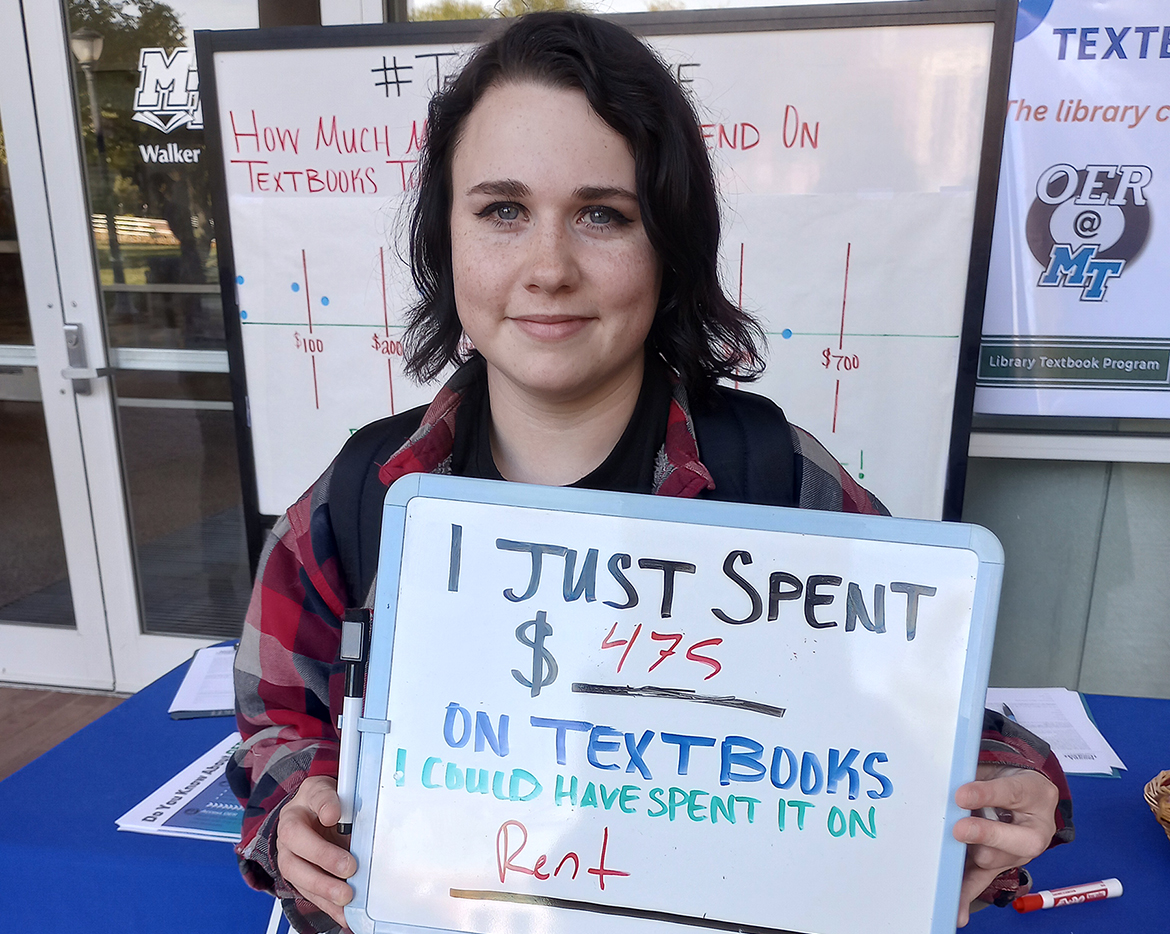
At 1 p.m. Thursday, March 5, findings from a recent campus survey exploring the impact of course material costs on students will take place via Zoom. The presentation will highlight key data, student voices and opportunities for faculty to make their courses more affordable.
Nearly 8% of course sections currently carry the zero-cost label, compared to barely 1% just a few years ago. Baskin hopes to reach 10% in the near future.
“We think it has a real impact on students. It can affect whether they stay enrolled in a class and whether they choose to purchase materials or try to go without,” said Baskin, who also helps professors utilize OER platforms to create their own textbooks and adapt others’ curriculum for their own courses.
Campuswide collaborative
The initiative reflects a collaborative, campuswide effort — one embraced by faculty like Colson, a professor of nutrition. She uses Pressbooks, a user-friendly, WordPress-based online platform designed for creating, editing, and publishing digital and print-ready books.

“Textbooks are too expensive,” Colson said. “I hate that students pay $200 for a book they use one semester.”
Colson remixed open textbooks originally developed by faculty in Hawaii and later adapted by educators in Washington state, tailoring the content to meet the needs of MTSU students. The flexibility of OER allows her to incorporate sections on food insecurity, SNAP and WIC and to design applied assignments addressing real-world scenarios.
“There are some really good Pressbooks out there,” Colson said. “And when faculty create and share their own, it saves our students a lot of money.”
For information on other OER events both statewide and globally, visit the Tennessee Higher Education Commission’s Open Education Week site at bit.ly/3ZP2KEX or the Open Education Global site at oeweek.oeglobal.org/activities/.
— Nancy DeGennaro (Nancy.DeGennaro@mtsu.edu)




COMMENTS ARE OFF THIS POST