
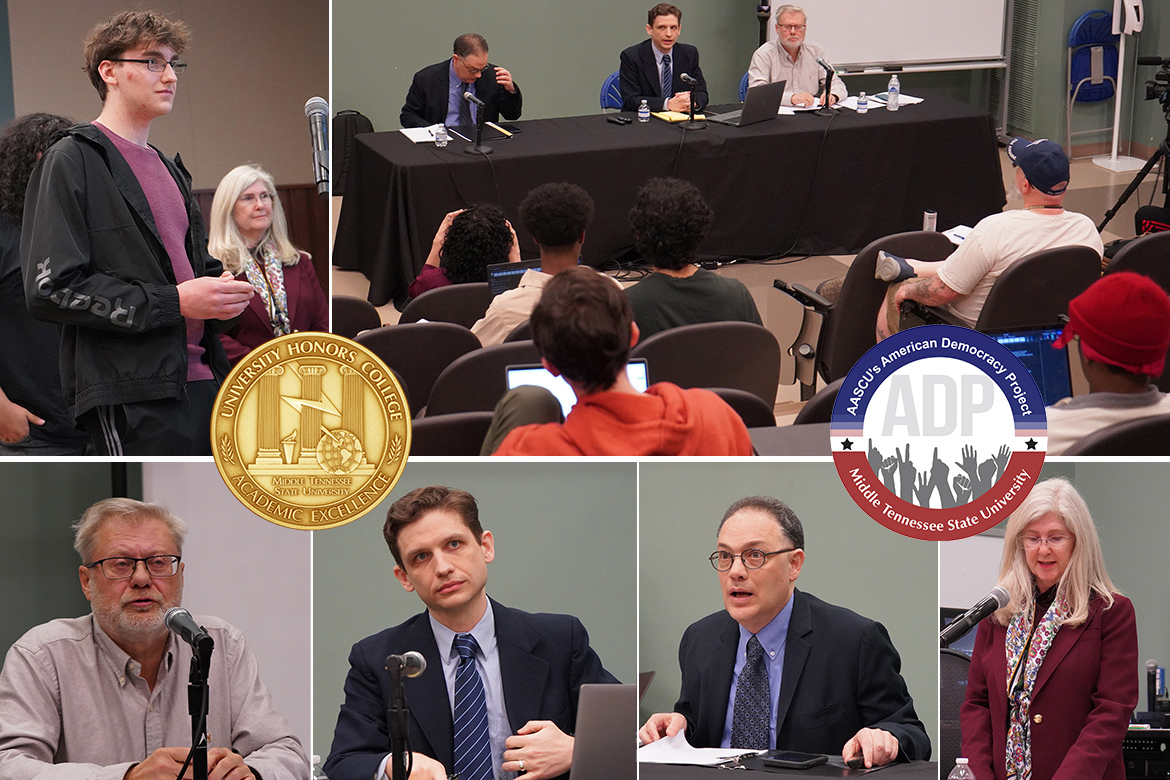
MURFREESBORO, Tenn. — Middle Tennessee State University hosted an in-depth and wide‑ranging panel discussion recently titled “War in Iran,” bringing together three campus experts to assess the rapidly escalating conflict that has drawn in Iran, the United States, Israel, and several Gulf states.”

Sponsored by the Honors College and the American Democracy Project, the panel inside the College of Education Building offered sobering analyses of how the war began, why it has intensified, and what its consequences may be for the Middle East and the world.
Honors College professor Joan McRae opened the event by outlining the gravity of the moment: a war that began amid Iran’s internal unrest has now exploded into a multifront regional conflict. Attendees filled the room to hear assessments from three faculty experts whose fields span Middle Eastern history, military strategy and international politics.
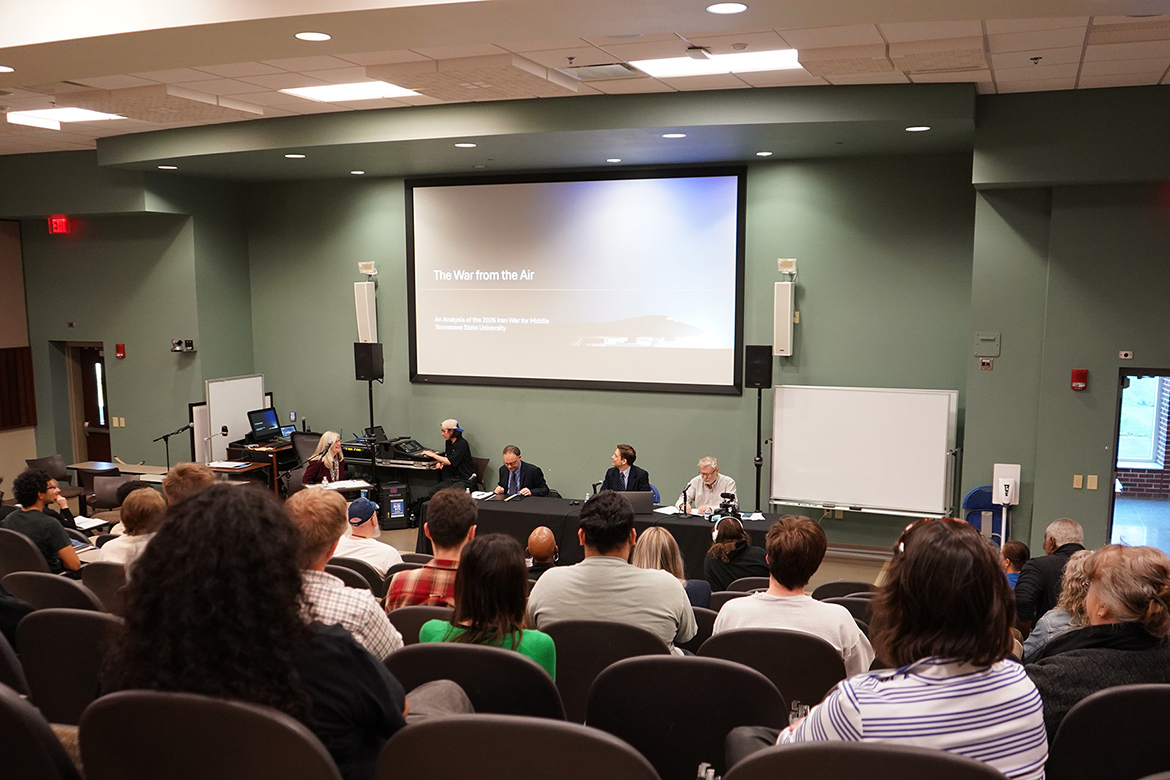
Operation Epic Fury and a region under strain
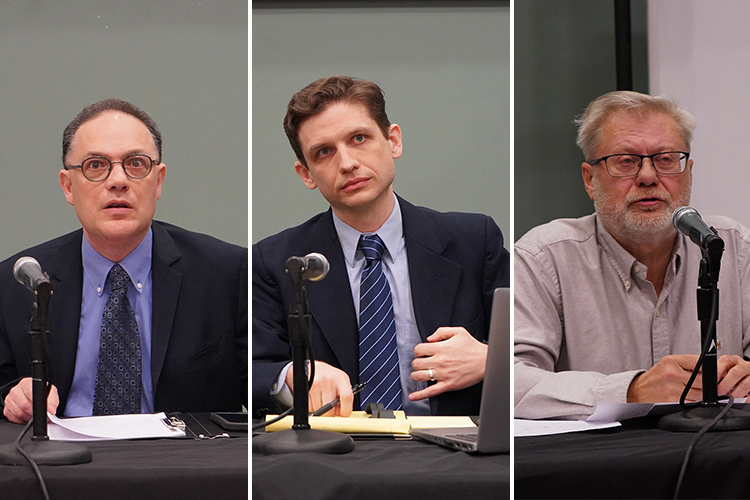
Sean Foley, professor of history and a specialist in the Middle East, who is also a nonresident fellow at the Arab Gulf States Institute, began with an overview of what he described as a conflict that has already “sent shockwaves around the world.”

According to Foley, the United States and Israel launched what has been named “Operation Epic Fury” on Feb. 28, initiating thousands of strikes on military and political targets in Iran, including an attack that killed Supreme Leader Ali Khamenei. Iran has retaliated with ballistic missiles and drones across the region, striking Israel, U.S. bases, and numerous Gulf energy facilities.
Foley emphasized the unprecedented economic impact of Iran’s successful efforts to restrict shipping through the Strait of Hormuz, one of the world’s most critical choke points for oil and gas. With tankers grounded and refineries damaged across the Gulf, energy prices have surged worldwide, prompting governments from Thailand to India to impose emergency measures ranging from reduced workweeks to limits on electricity consumption.
Lebanon, Foley added, has suffered devastating consequences as Israeli operations have displaced over a million people — nearly a fifth of the country. “This is one of the most significant refugee crises Lebanon has ever experienced,” he said.
Strategic middle game with no clear end
Following Foley, Luke Truxal, a historian of air power and U.S. military strategy, framed the war as entering what he called the “middle game” of a long chess match. Truxal argued that the U.S. and Israel appear to be seeking regime change in Iran, an objective he said has no historical precedent for success through airpower alone.

“There is no example of a bombing‑only strategy achieving regime change,” Truxal stressed, citing Vietnam, Afghanistan, and other major conflicts. The U.S., he said, seems to have underestimated both Iran’s resilience and its ability to strike back through a coordinated oil‑targeting campaign that mirrors historically effective “oil offensives” used in conflicts from World War II to modern Ukraine.
Truxal also warned that rising civilian casualties inside Iran, especially the widely condemned missile strike on a girls’ school that killed almost 170, mostly children, are likely to strengthen hardline factions and deepen public support for the Iranian government. Iran’s capacity to wage drone warfare and overwhelm U.S. air defenses, he said, increases the likelihood that Washington will face pressure to commit ground forces, an outcome he called “deeply concerning.”
Global power, politics, shifting landscape
The final speaker, Andrei Korobkov, professor of political science, analyzed how the conflict intersects with global power competition. He argued that Russia and China, while not militarily involved, are positioned to benefit strategically as U.S. attention and resources shift away from Europe and Asia.

Korobkov highlighted surging oil prices, which have doubled Russia’s projected oil revenue, and shifting alliances across the Middle East. At the same time, he cautioned that Gulf states facing attacks on refineries, desalination plants, and population centers are confronting “social time bombs” due to high dependence on foreign labor and imported food.
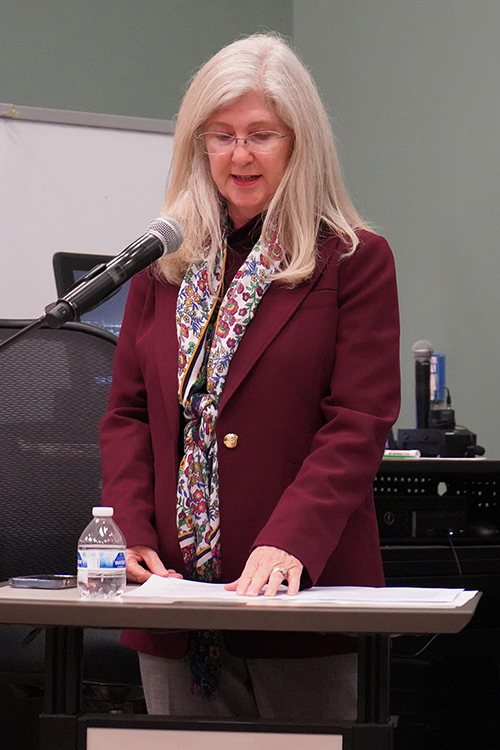
While some observers speculate that the BRICS nations (an intergovernmental organization comprising 10 countries) may deepen their alignment in response to U.S. actions, Korobkov noted that internal rivalries, particularly between Iran and Saudi Arabia, complicate hopes for a unified response.
Audience engagement reflects wide-ranging concerns
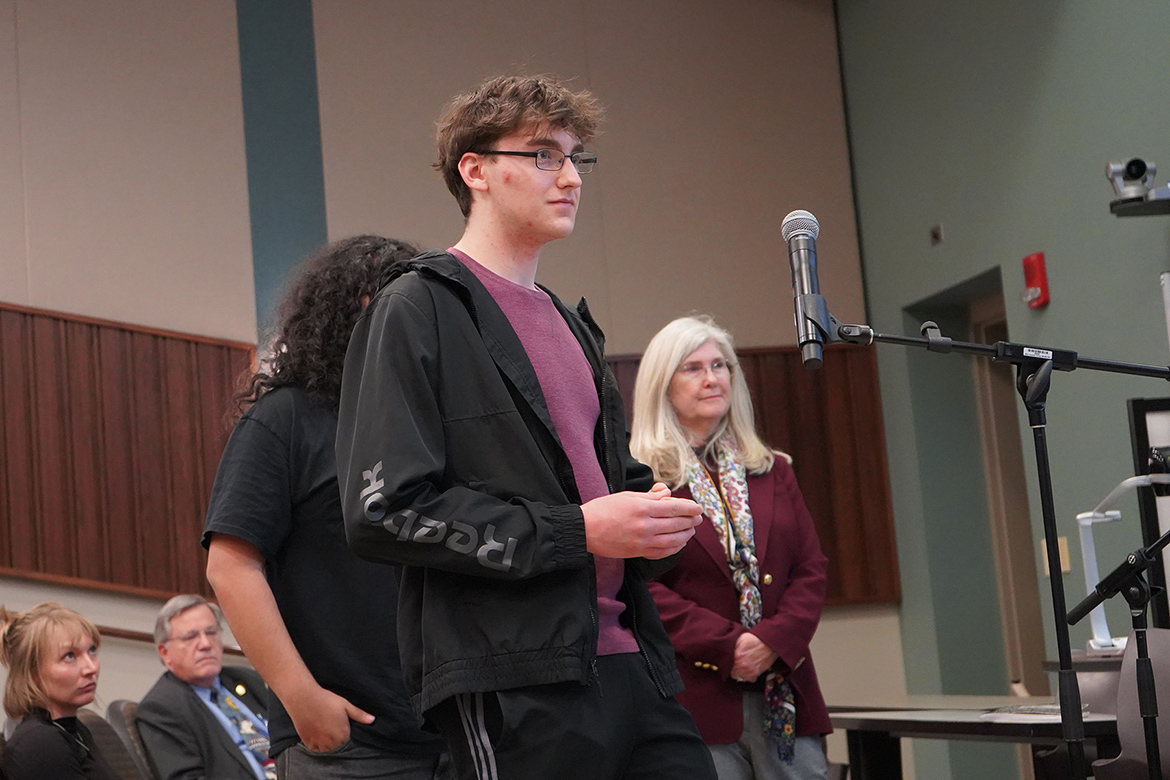
During an extended Q&A session, audience members asked about U.S. public opinion, the likelihood of a diplomatic settlement, religious narratives, Kurdish involvement, and the potential for retaliatory attacks on U.S. soil. Panelists consistently noted that polling shows Americans largely oppose the war and that diplomatic progress is unlikely in the near term.
Foley concluded by quoting a Somali proverb: “The game has a second half.” How the conflict evolves from here, he said, will depend on which actors adapt most effectively to a rapidly changing strategic environment.
The panel was recorded and will be available to watch on True Blue TV.
— Robin E. Lee (Robin.E.Lee@mtsu.edu)




COMMENTS ARE OFF THIS POST