
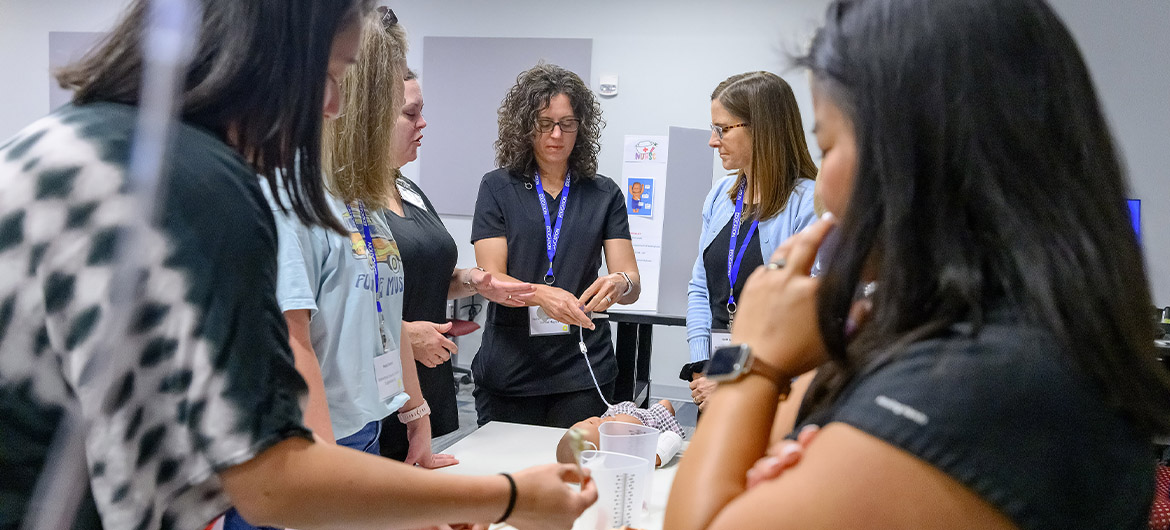
MURFREESBORO, Tenn. — Dozens of Middle Tennessee school nurses sharpened clinical skills during a training day hosted this summer by faculty and staff from Middle Tennessee State University’s School of Nursing.

“MTSU’s central location, along with our faculty expertise, lab space and equipment, made hosting this School Nurse Skills Day training a natural fit,” said TaRessa Poole, clinical assistant professor of nursingand one of the training organizers. “Saying yes was really a no-brainer because it allowed us to serve the community while providing valuable education and gave us a great opportunity to work with our clinical partners.”
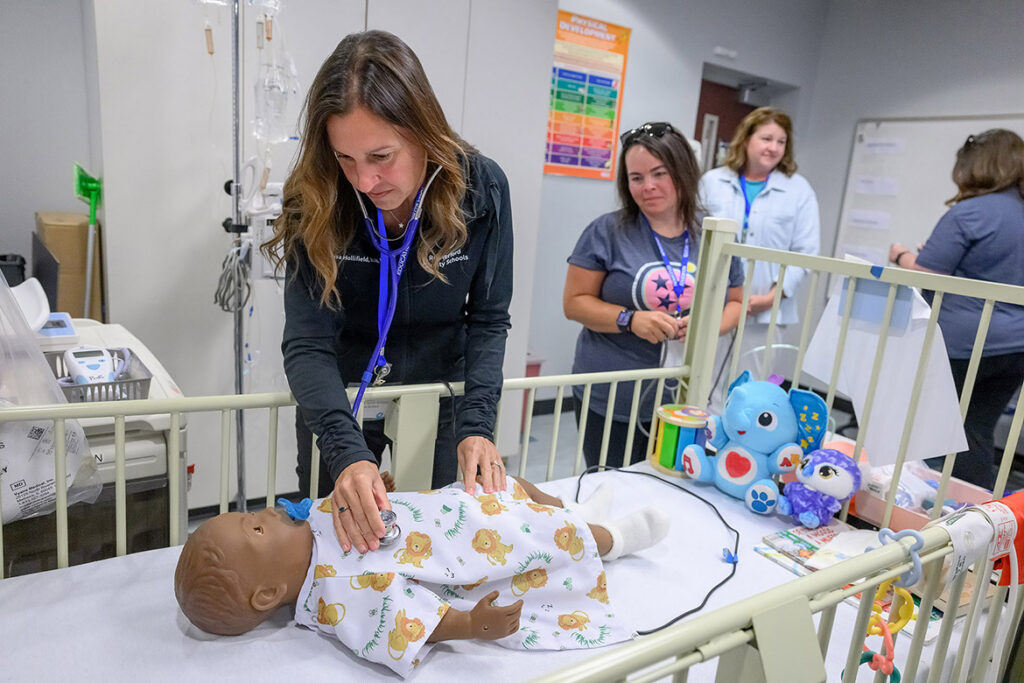
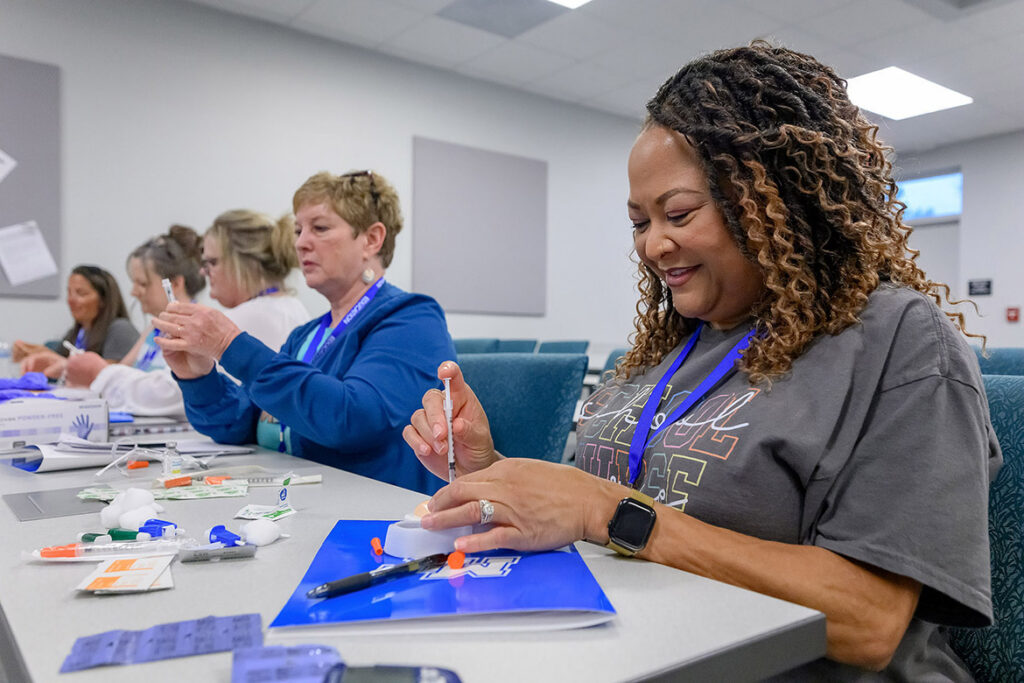
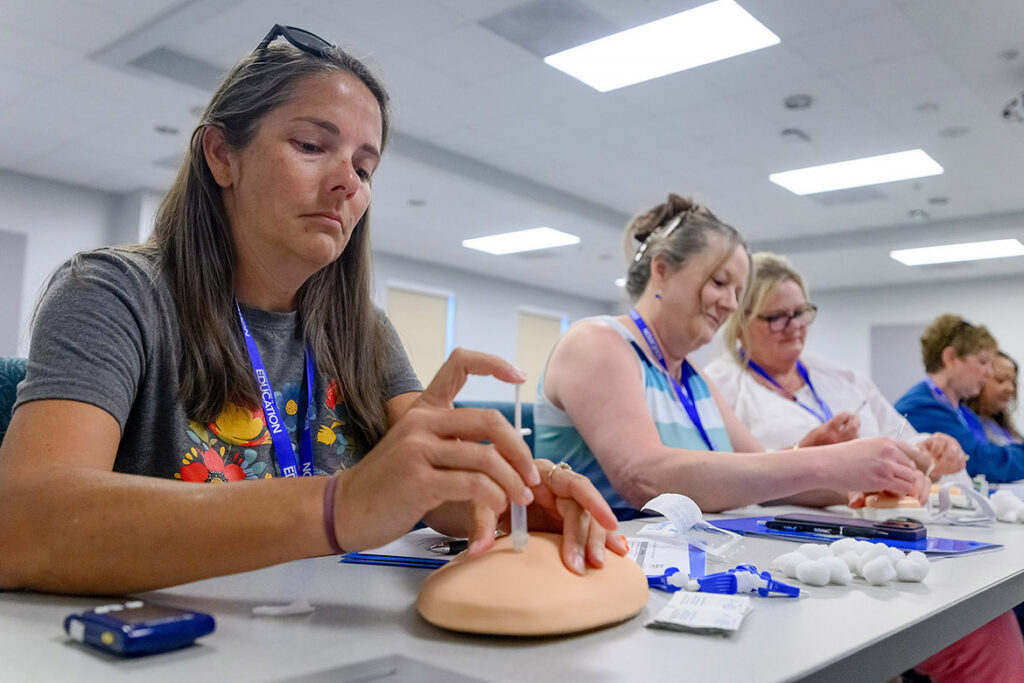
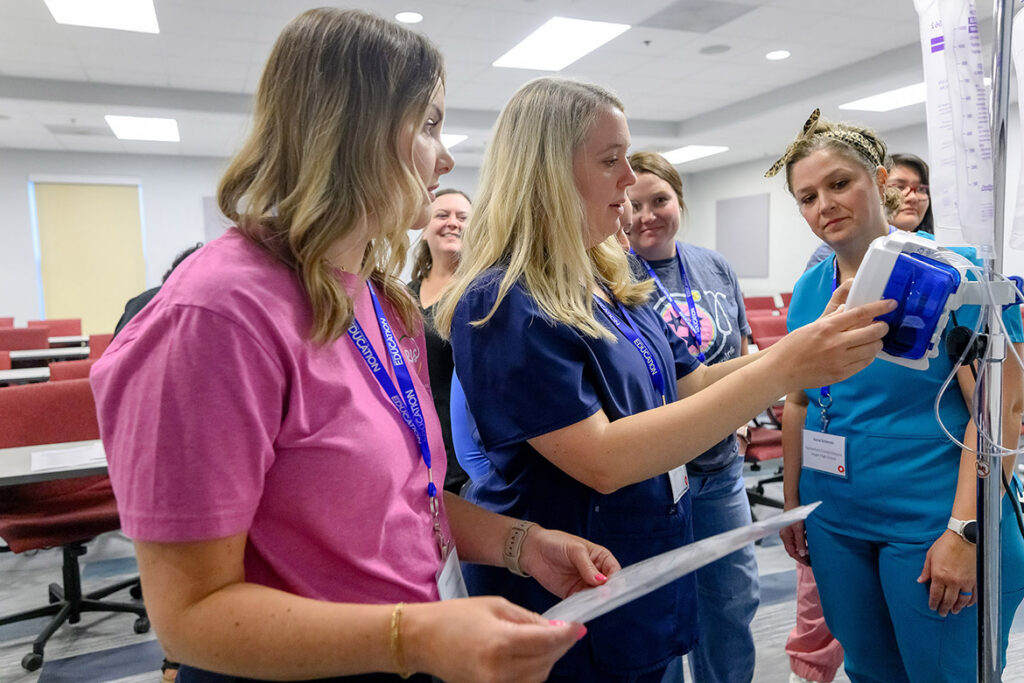
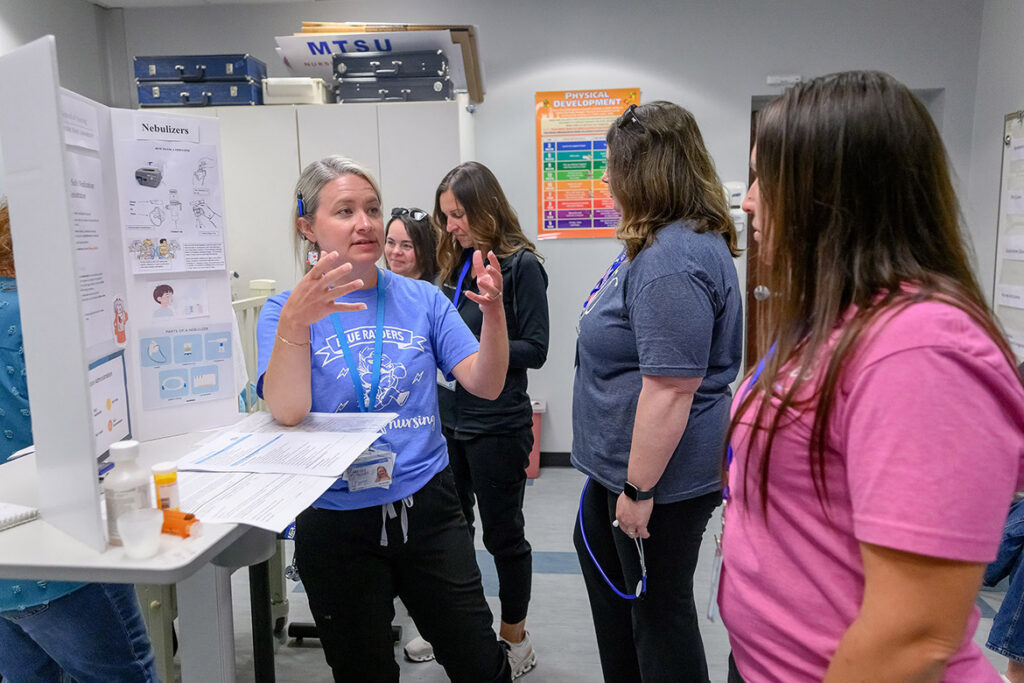
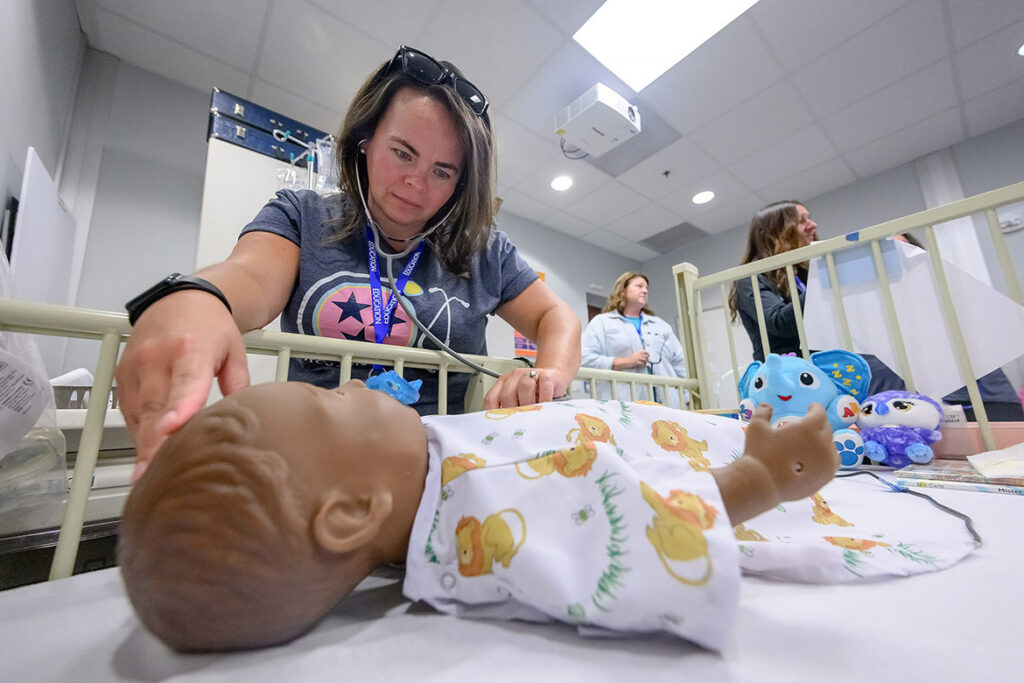
School nurses from districts across the Midstate attended on-campus training at Cason-Kennedy Nursing Building for a half-day of hands-on learning — from mastering emergency asthma care on a realistic pediatric simulator to programming feeding pumps and learning the latest diabetes protocols.

The skill set needed to manage the array of issues goes far beyond first aid, sick visits and daily medication administration. Many school nurses care for students with tracheostomies, ventilators, feeding tubes, insulin pumps and continuous glucose monitors.
“I don’t think the public realizes how medically fragile some students in our schools are,” said Shanna Groom, school nursing coordinator for Rutherford County Schools. “Everyone deserves access to public education, and we’re happy to have these students in our schools. We just need to make sure we can care for them safely.”
Workshop fills critical gap in training

Presented in partnership with the Tennessee Department of Education, the June training played “a crucial role” to ensure school nurses are prepared to meet the complex healthcare needs of students, said Amanda Johnson, the state agency’s school nurse consultant.
“The partnership with MTSU’s School of Nursing demonstrates what’s possible when school districts and community organizations work together toward a shared goal,” Johnson said.
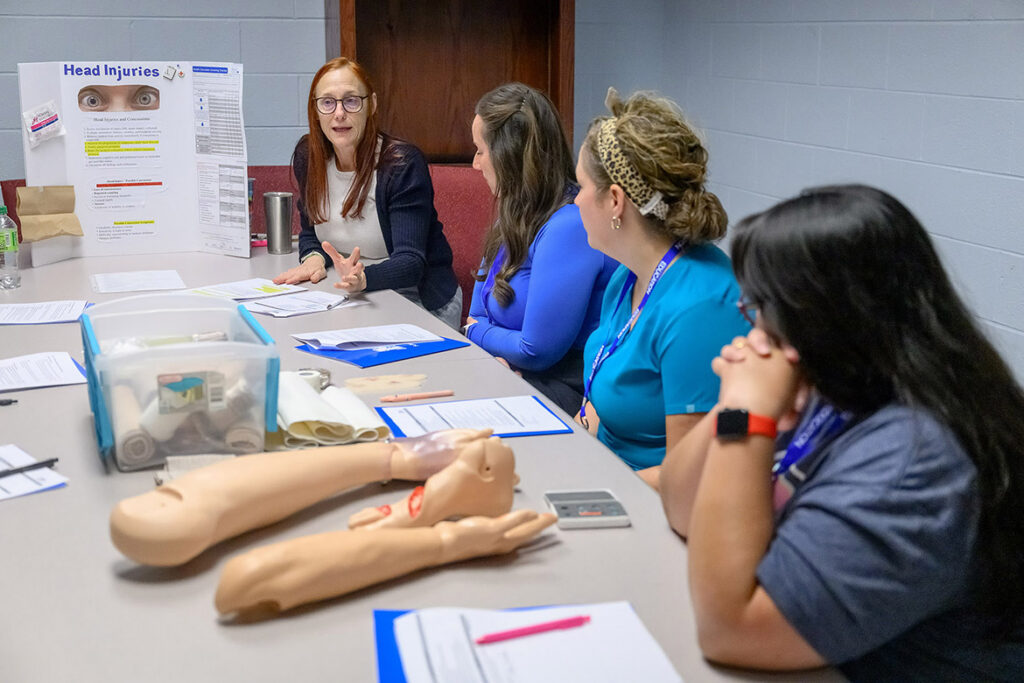
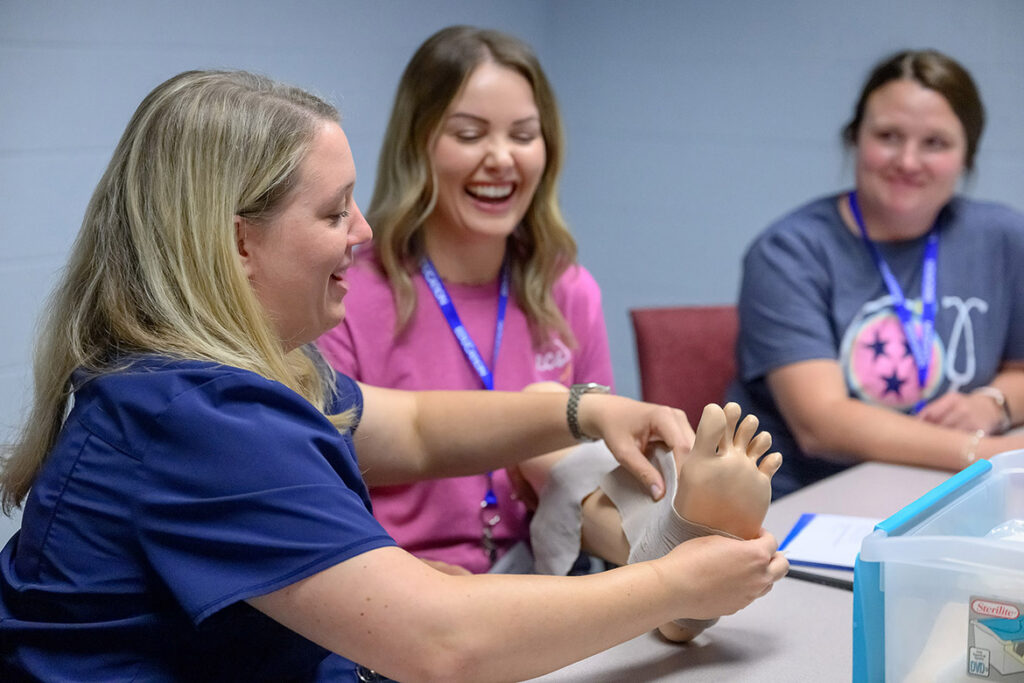
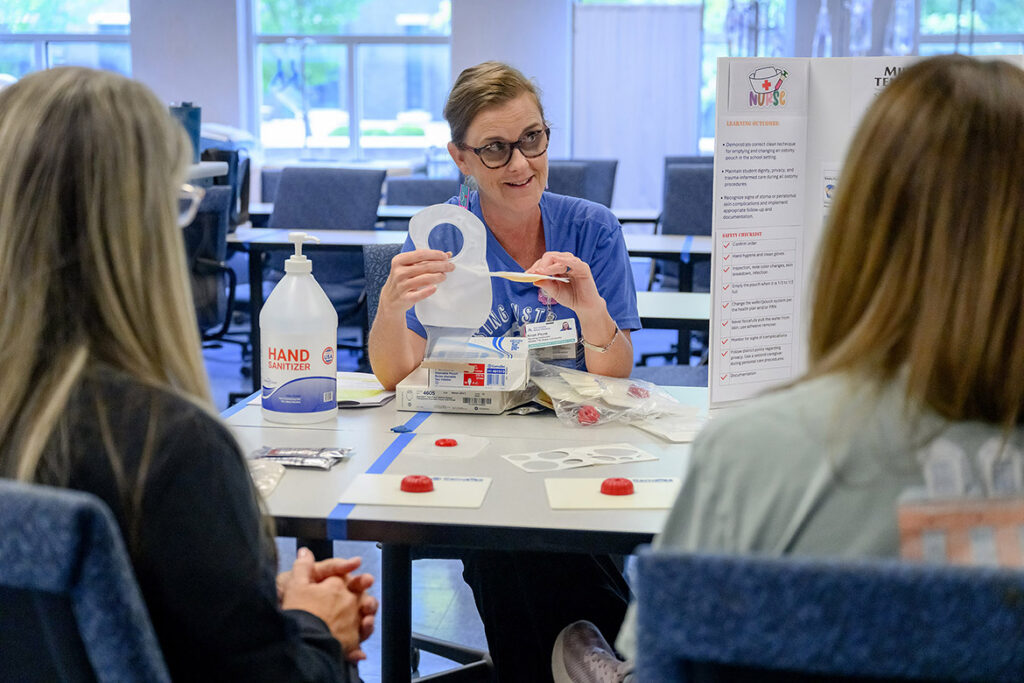
Five interactive skills stations covering common school injuries such as sprains and breaks; catheterization and ostomy care; medication administration and asthma response; diabetes management; and tube feeding procedures.
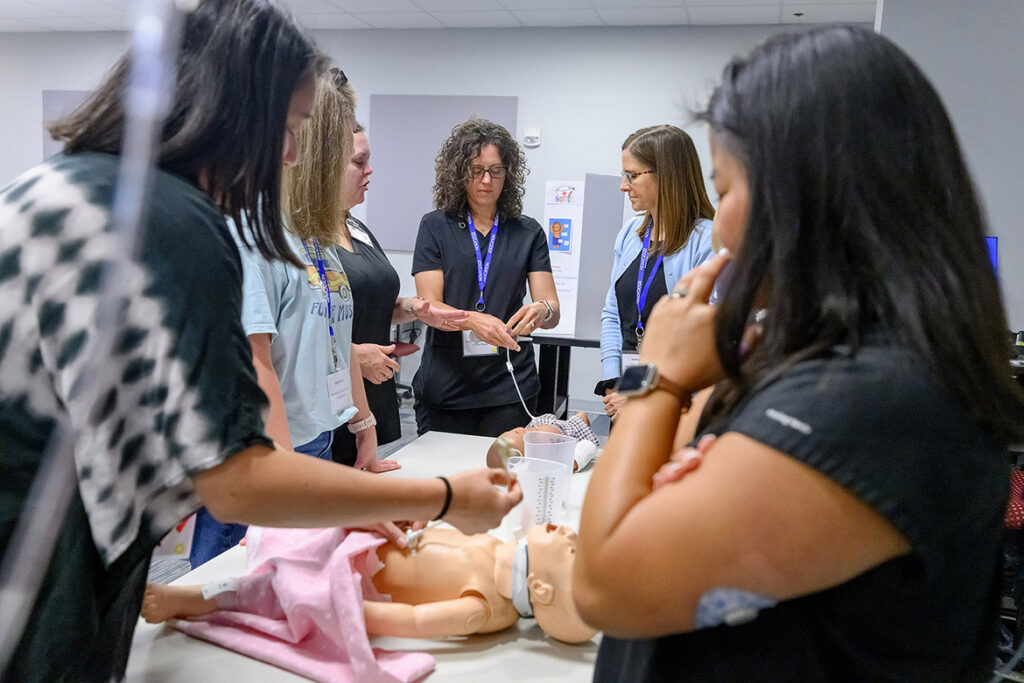
Each skill station was designed to strengthen the care they provide to students with increasingly complex medical needs and showed participants best practices using high-fidelity simulation equipment rarely available in school settings.
Access to MTSU’s simulation labs filled a critical training gap, Groom said.
“In schools, we don’t have simulation mannequins,” Groom explained. “We practice tube feedings using an apple juice bottle with a Mickey button in the lid. We practice applying tourniquets on pool noodles. We’re very resourceful, but it’s not the same as using actual medical equipment.”
Simulating real-world situations, fostering collaboration
In one session, nurses responded to a simulated asthma emergency using a toddler mannequin capable of breathing, wheezing and responding like a real patient. Another station utilized a pediatric simulation model to demonstrate standardized care for administering liquid nutrition through a feeding tube.
Because Tennessee school districts must verify nursing competencies annually, Groom said realistic practice environments improve both confidence and patient safety.
“It’s much better to practice these skills on simulation mannequins or with actual equipment than at a student’s bedside,” Groom said. “Without resources like these, many skills are checked off while providing care to students, which isn’t always the best case scenario.”
The event also fostered collaboration.
“One of the things participants liked most was having the opportunity to talk with nurses from other school districts and see how they handle different situations,” Poole said. “It also served as a refresher course on clinical skills and evidence-based best practices.”
Participants also earned a half-credit toward continuing education, while the training itself remained free. Registration filled quickly, creating a waiting list, and organizers have already received requests to offer the program again.
“We intentionally kept the group small this first year,” Poole said. “But we’re hoping to expand, add more skills stations and secure grant funding so we can provide even more hands-on training opportunities for school nurses.”
For Groom, the partnership demonstrates the value of higher education supporting K-12 schools.
“Having a partner like MTSU willing to share its resources and faculty expertise was wonderful,” Groom said. “The feedback from our nurses was overwhelmingly positive, and we’d love to see this continue.”
Johnson said she “could not be more impressed by the event’s success.”
“Launching an inaugural event takes vision, trust, and a willingness to invest in the communities and populations we serve,” Johnson said. “MTSU’s School of Nursing created a meaningful learning opportunity for school nurses that will have a lasting impact on school nursing practice across Middle Tennessee. I’m excited to see how this partnership continues to grow.”
— Nancy DeGennaro ([email protected])




NO COMMENT