
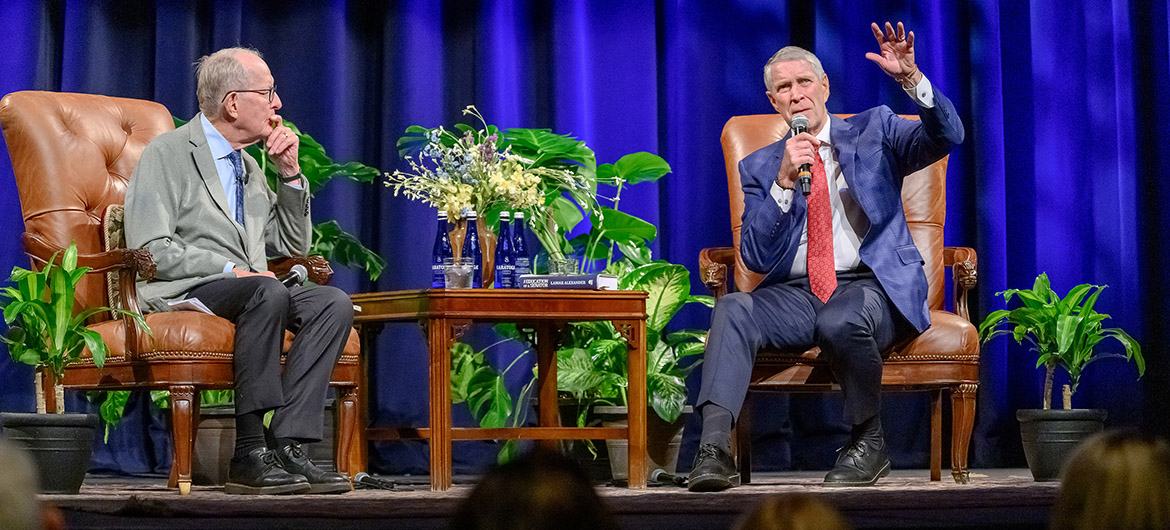
MURFREESBORO, Tenn. — Two of Tennessee’s most influential public servants returned to Middle Tennessee State University on Monday, Oct. 19, to reflect on leadership, bipartisanship and the value of civic engagement while highlighting a new chapter in preserving the state’s political history.
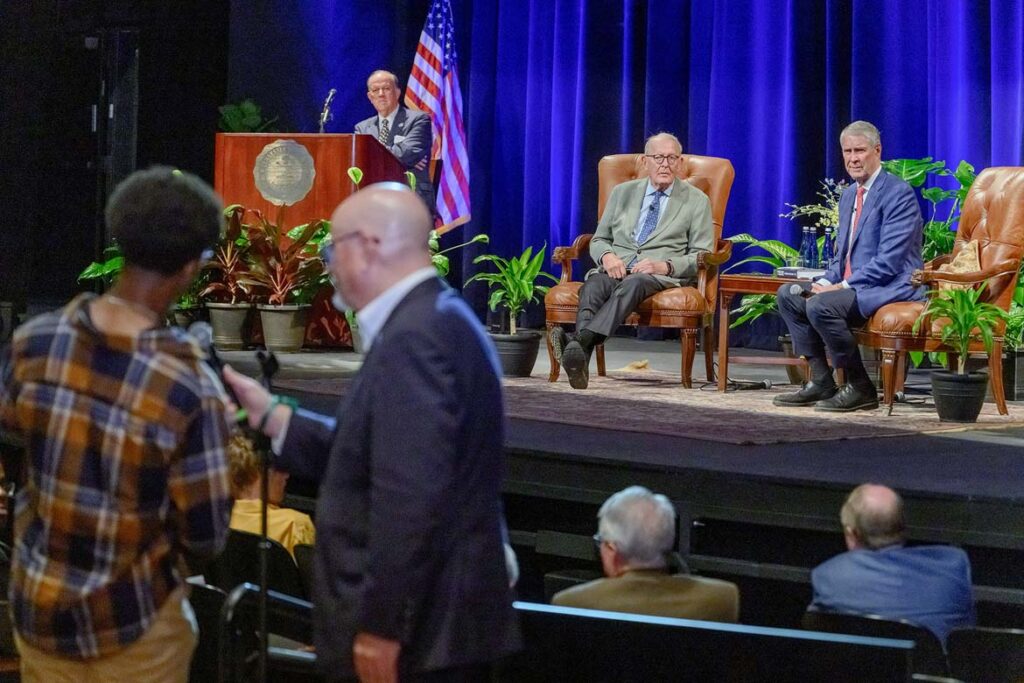
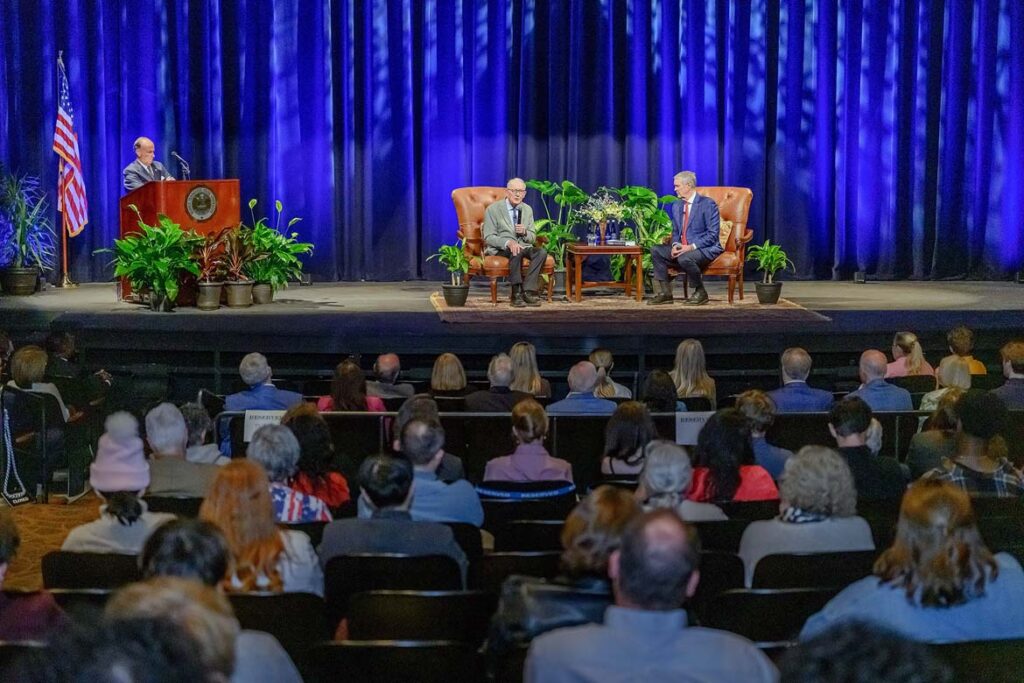
Former Republican U.S. Sens. Lamar Alexander and Bill Frist took the stage at Tucker Theatre on campus for “Leadership and Public Service: Past, Present, and Future,” a wide-ranging conversation that drew on decades of experience in government, education, healthcare and philanthropy, followed by a Q&A with the audience.
“The surest way to help the largest number of people is to figure out how to get yourself elected to something, or go to work for somebody who has,” Alexander said as he recounted his first successful campaign for governor and the conversations that helped shape his vision for Tennessee.
MTSU President Sidney A. McPhee welcomed the crowd of 250, followed by MTSU Board of Trustees Chairman Steve Smith, who introduced the senators as “very distinguished Tennesseans whose careers have shaped public policy and national leadership for generations.” State Sen. Dawn White, former U.S. Congressman Bart Gordon and several of MTSU’s trustees were among those in attendance.
Legacy noted in ‘Education of a Senator’
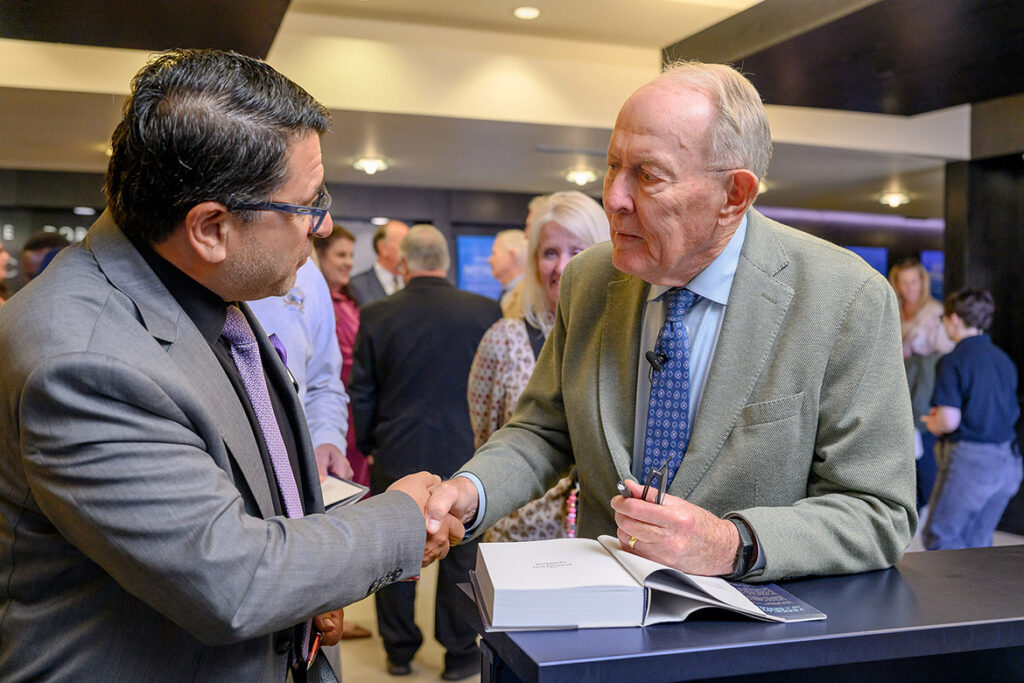
The event also touched on Alexander’s new memoir, “The Education of a Senator: From JFK to Trump,” a collection of stories from a public career that included time as Tennessee governor, U.S. Secretary of Education and U.S. senator.
Throughout the conversation, Alexander and Frist emphasized the importance of leadership rooted in service and personal relationships as well as a willingness to “work across the aisle” with lawmakers who held differing political viewpoints.
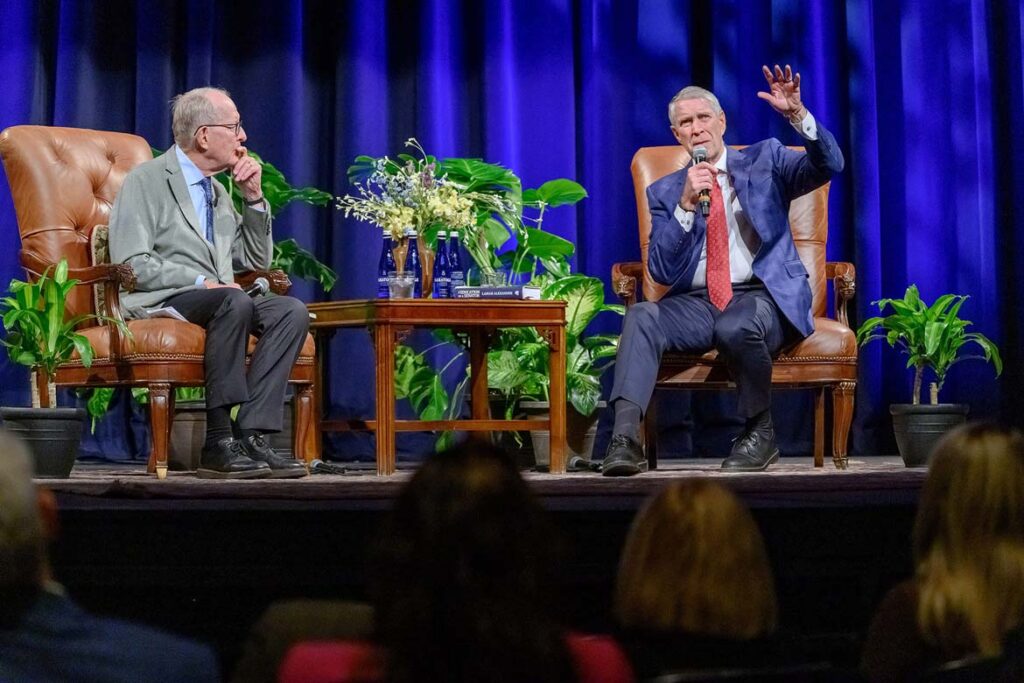
Alexander reflected on walking across Tennessee during his 1978 campaign for governor — known for wearing his trademark black-and-red-checkered flannel shirt — and on spending the night with 73 families on his journey.
“I ate their food, met their friends, went to their churches, got to know them. And I learned a lot about our state,” said Alexander, who stayed with the Knight family in Lascassas, located in rural Rutherford County, and heard their worries about their twin boys’ futures.
Many of those experiences, he noted, reinforced his belief that education and economic opportunity are closely linked.
Alexander reflected on his thinking at the time: “We’re never going to recruit enough jobs to raise family incomes. We’re going to have to grow them. And that means we’re going to have to be smarter. And that takes better schools, colleges and universities.”
Those experiences bolstered his efforts to bring the auto industry to Tennessee, which now boasts three major manufacturing plants — including Smyrna’s Nissan Assembly Plant, where the Knights’ grown sons and a grandson were employed.
Trust, camaraderie imperative for united vision
Frist, a retired transplant surgeon and former Senate majority leader, echoed the importance of education and civic responsibilities.
“I said, ‘What is the one thing I can do to have the single greatest impact? … It all comes back to education,” Frist said. “You can take these seemingly insurmountable problems … and you work it together — private sector, public sector, government, philanthropy — you can take these insurmountable problems and make a difference.”
The discussion frequently returned to the theme of ethics.
“With social media … it’s going to take leaders that you really can trust,” Frist said.
Both former senators also discussed the challenges facing modern politics while expressing optimism about the future.
“Being bipartisan isn’t a noble thing,” Alexander said. “You’ve got to make agreements with people with whom you disagree if you want to get a result.”
Frist agreed, noting today’s increasingly polarized environment.
“Partisanship isn’t necessarily bad,” he said. “The difference today is tribalism.”
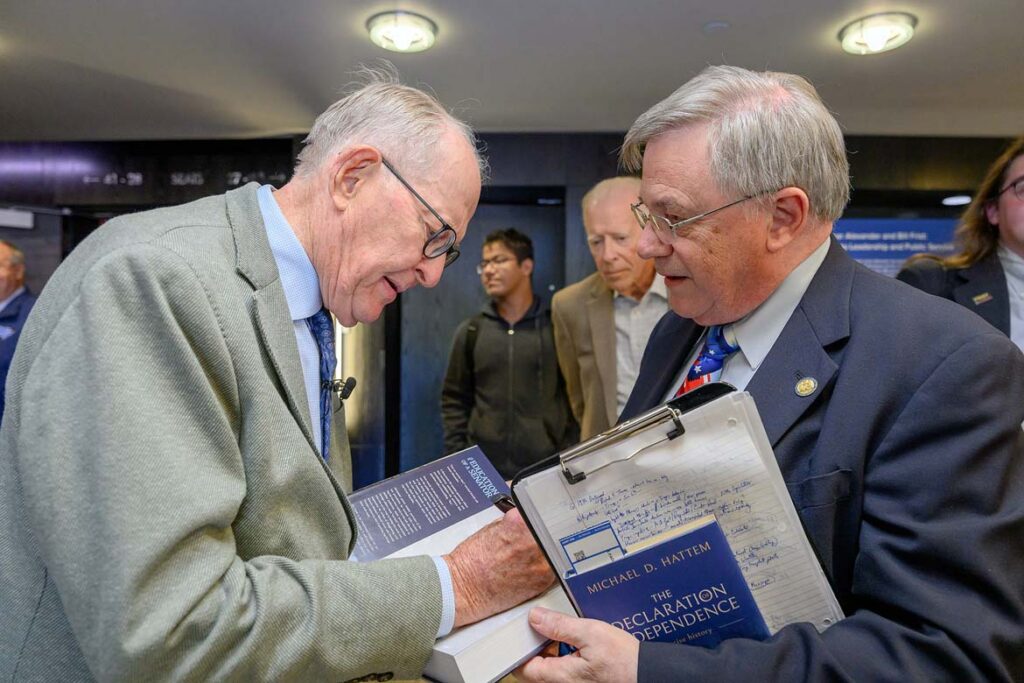
The event also highlighted MTSU’s role in preserving the history of public service through its stewardship of Frist’s professional papers.
For the past four years, archivists at the Albert Gore Research Center, part of the MTSU College of Liberal Arts, have been processing Frist’s extensive collection, which documents his groundbreaking career in medicine, his years in the U.S. Senate, his leadership as Senate majority leader and his work after public office in healthcare, conservation and philanthropy.
Frist said MTSU’s commitment to history, archives and public scholarship made it the right home for the collection.
“History doesn’t repeat itself, but it teaches us,” Frist said.
Held in conjunction with MTSU’s Yorktown Day and America 250 activities presented by the American Democracy Project chapter at MTSU, the event offered students and community members an opportunity to hear firsthand accounts of public service from two leaders whose careers helped shape Tennessee and the nation.
— Nancy DeGennaro ([email protected])




NO COMMENT