
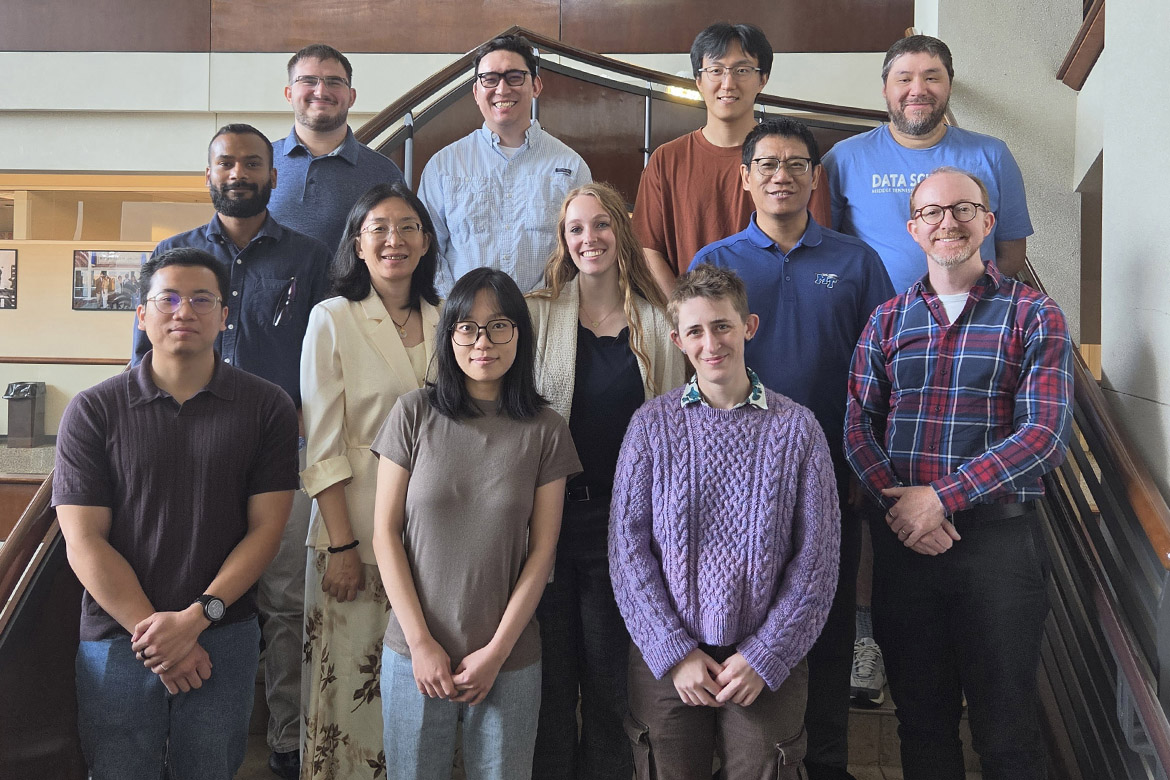
MURFREESBORO, Tenn. — “If we want to build a sustainable quantum ecosystem in Tennessee, we also have to build the people who will power it.”
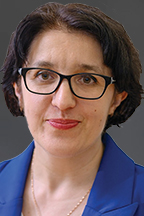
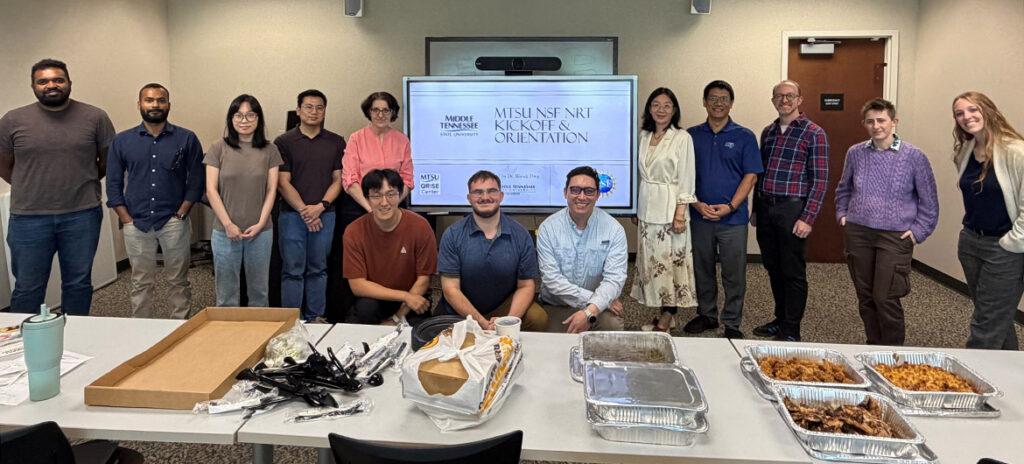
Those words from Middle Tennessee State University physics professor Hanna Terletska, director of Quantum Research Interdisciplinary Science and Education Center, or QRISE, welcomed the first cohort of eight trainees to an orientation session inside the James E. Walker Library made possible by a $2 million National Science Foundation grant to bolster research in quantum science and artificial intelligence.
Over the next five years, the NSF’s National Research Traineeship grant will prepare these MTSU graduate students to meet the growing demand for skilled professionals experienced in quantum computing and AI. Trainees receive $16,000 in tuition assistance, a host of professional development opportunities, and a $37,000 stipend for eligible students.
“A student might begin with fundamental research at MTSU, spend time at Oak Ridge National Research Laboratory working at the frontier of quantum science, and then work with an industry partner where the questions become very different,” said Terletska. “What problem are we solving? Who is the customer? Can this technology be deployed? That is the workforce pipeline we want to build.”
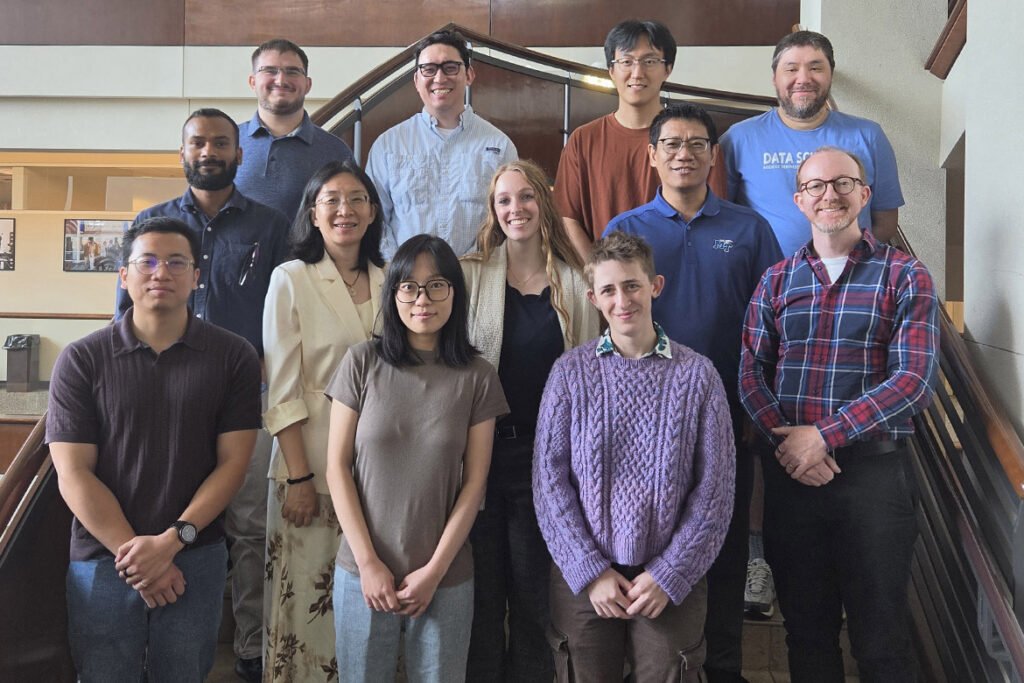
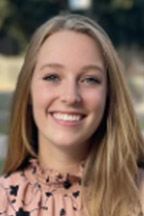
Eight graduate students make up the first cohort of trainees — Tomy Chet, a data science major from Murfreesboro; Laurel Koenig, a computational and data science major from Hampton; Patrick Wong, a computational science major from Lakeland; Danlei Zhu, a computational and data science major from China; Robert Dohner, a computational and data science major from Clarksville; Gavin Liles, a computer science major from Nashville; Dongyu Liu, a computational and data science major from China; and Hannah Osborne, a mathematics major from Chapel Hill.
“Another thing they get out of this program is a mentor, and so we pair them with a faculty member on our grant team,” said Aspen Malone, research project manager.
Terletska, computer science professor Joshua Phillips, assistant computer science professor Kritagya Upadhyay and assistant mathematics professor Donglin Forrest Wang will provide mentorship to this first cohort of 2026-27 students throughout their research.
This combination of mentorship, financial aid and professional development directly supports students’ ability to focus on their research, rather than divide their attention. For many students, it means graduation is finally within reach.
“We’re finishing our research so I can graduate on time and contribute to the quantum and theorized program,” said Wong, whose research with Terletska explores the behavior of materials needed to build new technology using quantum simulations. “It’s much cheaper to run the simulation of how the materials can behave rather than make it, because you can simulate it 10 times for the cost of making it once.”
Koenig and her mentor, Phillips, have been planning her dissertation for two years.
“Part of the reason it has taken so long is that I have been working part time for Thompson Machinery during that time period,” said Keonig. “So instead of being able to be completely focused on school, I have had to spend 20 to 30 hours of my week (working).”
Koenig’s research uses quantum machine learning to study data from large machines, then uses the findings to predict maintenance on things such as construction equipment.
“Preventive maintenance is scheduled,” said Koenig. “Predictive maintenance is trying to catch when something is going to fail so that you can fix it, essentially right before it fails, to get as much useful life as you possibly can.”
As quantum computing grows in capability and accessibility, the need for professionals in this field continues to increase.
“In my head, quantum is really like the next space race, right?” said Liles. “As someone who cares about my community, about this country, how can we best prepare our country for this next space race?”
Wandi Ding, principal investigator for the grant and associate director of education for MTSU’s QRISE Center, was elated to learn that their proposal was selected by the National Science Foundation. Ding worked together with co-principal investigators Abdul Khaliq, Jing Kong, Phillips and Terletska, and senior personnel Upadhyay and Wang.
“We thought, ‘Our dream just came true.’ I’m very thankful,” said Ding.
— Cat Curtis Murphy ([email protected])




NO COMMENT