
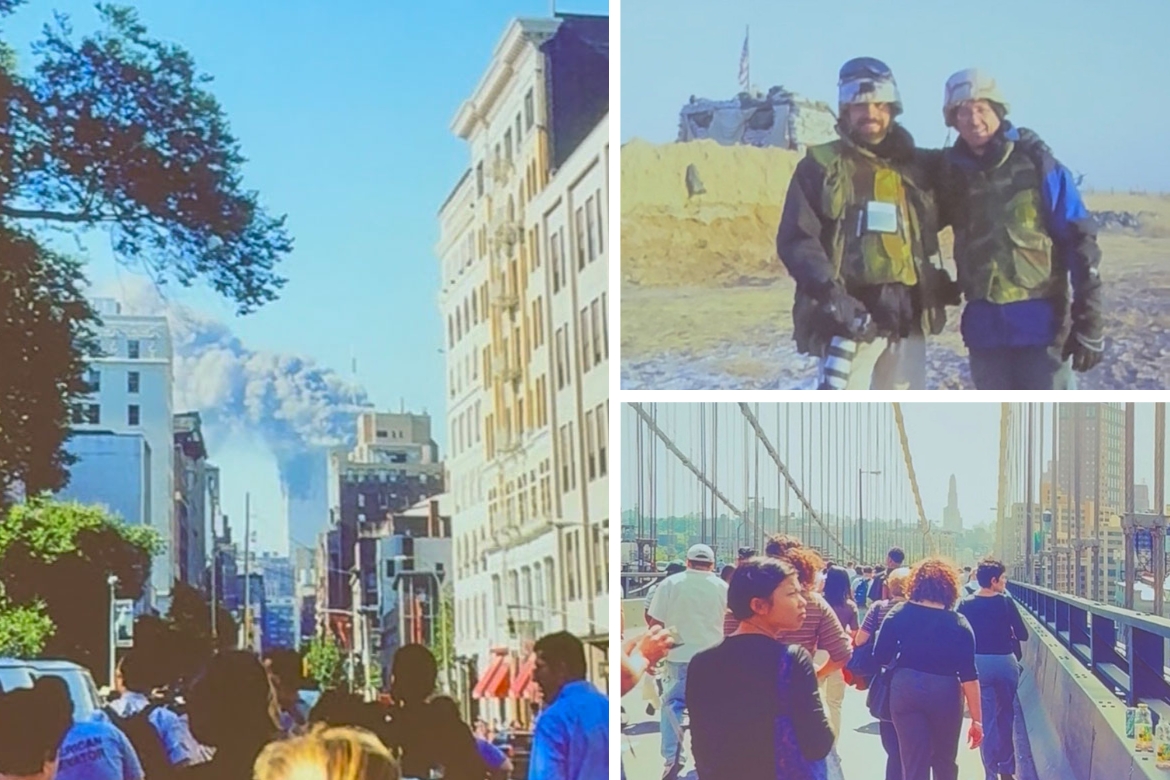
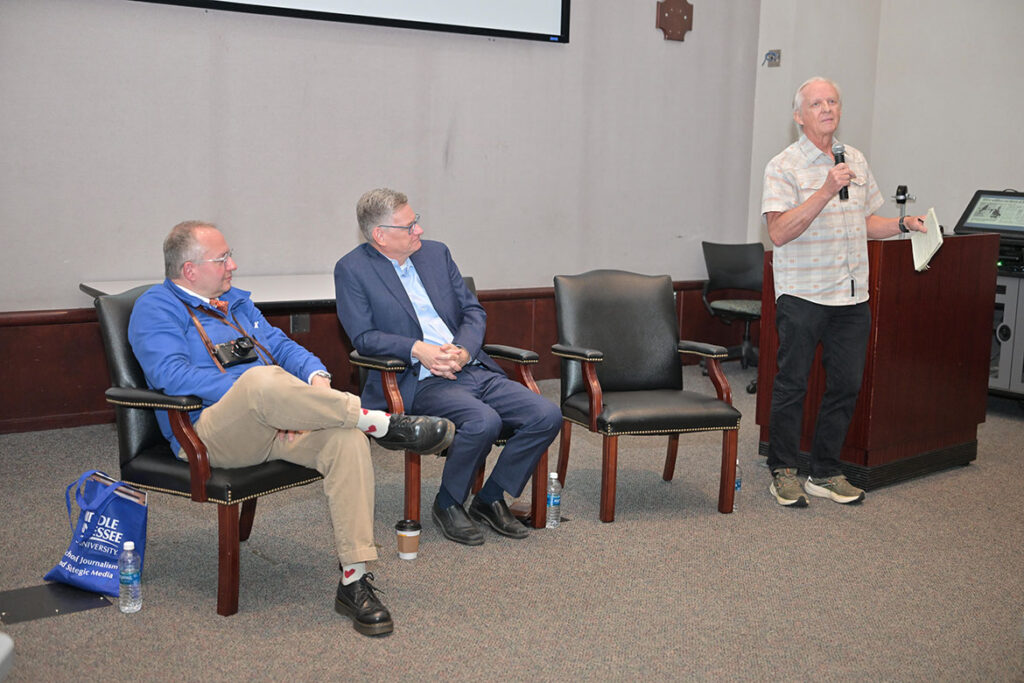
MURFREESBORO, Tenn. — A day before the milestone 25th anniversary of the 9/11 terror attacks, three journalists recalled the historic day that changed American history as they spoke to a room full of Middle Tennessee State University students, faculty and staff, reflecting on that day, and the days, months and years after.
Sept. 11, 2001, started like any other day. In New York City, it was a clear fall morning without a cloud in the sky. It had rained the night before, dropping temperatures to a crisp 68 degrees. The city was bustling as usual. People were going about their normal lives until 8:46 a.m. — and that’s when everything changed.
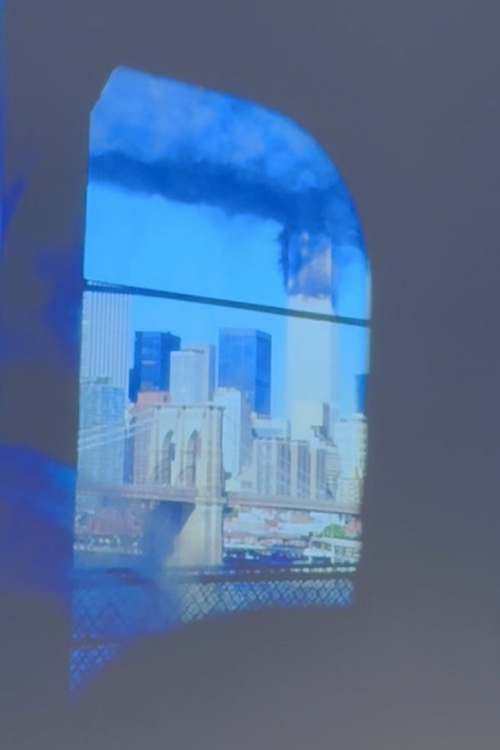
Ray DiPetro, now a photojournalist in Nashville, was living in Brooklyn, working in the music business. He was running late to work that fateful day. He doesn’t remember why, but he does remember the shoes he was wearing: a new pair of Doc Martins that he would later walk seven miles in to get home. By the time he got off the subway, life as he knew it in the city had changed forever.
“I remember that day extraordinarily clearly,” he told the crowd gathered in the State Farm Room of the Business and Aerospace Building.
Leon Alligood was a reporter at The Tennessean in Nashville. He was also teaching an 8 a.m. feature-writing class at MTSU in room 228 of the Bragg Building. The 8 a.m. class time block was the only one that fit into his schedule as a full-time reporter. He didn’t know a distracted student looking at a classroom computer would break the news to him and the class, marking the beginning of the biggest story Alligood ever covered in his decades-long career.
“I will never forget that day for many reasons,” Alligood said.
Ben Hall was working at News Channel 5 in Nashville as a general assignment reporter. He was getting ready for work when his home phone rang. It was his mom. She told him the Twin Towers had been hit by a plane. He hurried to the Nashville newsroom and wound up spending the day talking to Nashvillians who worked in busy downtown buildings. He’s not sure when that package aired, except that it aired in a room full of college students 25 years later.
“Everyone was glued to their television. And everyone was so emotional and scared,” Hall said.
After the attacks
The three journalists said the days and hours that followed the 9/11 attacks are moments that are ingrained in their minds forever.
DiPetro captured photos of that day in NYC, but it would take him months to get the film developed because he didn’t want to deal with it. He now calls the photos he shot on a little point-and-shoot camera he took everywhere the “most traumatic” pictures he’s ever taken.
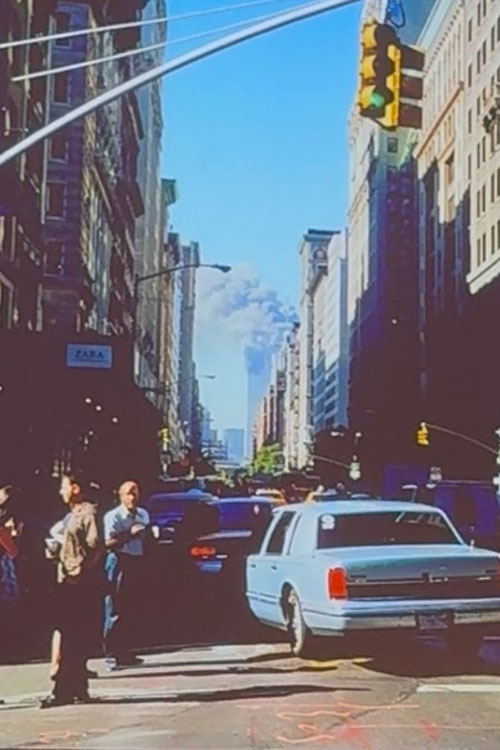
“I was standing on Fifth and 18th streets when the second tower fell,” he recalled. “No one knew they were going to fall.”
Alligood and Hall raced to their respective newsrooms, waiting for their assignments.
There’s something about a newsroom on a big news day. I can’t explain it,” Alligood said. “It’s like you’re in the center of the world and your job is to tell what’s going on. We had our hands full that day. There was nobody on the road. The interstate was just me.”
“Everyone that day was so on edge. We had just watched on television the two towers fall,” Hall said. “What is going to happen this afternoon or tomorrow? It was clear at that point we were under attack.”
More than 800 miles away in New York, DiPetro continued capturing photos of the day’s events while walking with thousands of other people who were trying to get home.
“You could have heard a pin drop. It was silent except for the sirens. There were pieces of spreadsheets falling from the sky,” he recalled. “I don’t know how to express how putrid the smell was.”
Reporting from a warzone
In The Tennessean’s newsroom, Alligood was called upon by one of the top editors to head to Fort Campbell. He was the only reporter in the newsroom who had ever covered the military before.

He didn’t know that the assignment would be the stepping stone to being embedded with the 101st Airborne three months later. Or that he would later write around 50 obituaries for soldiers who lost their lives.
“I never in my wildest imagination thought (I would go overseas to a warzone). It was a test of everything I had been taught and everything I had learned at the newspapers where I had worked. I had to apply it all,” Alligood said.
The now-retired journalist said adrenaline kicked in after he learned he was going to Afghanistan and later to Kuwait.
“I turned my professional life on and said, ‘I’ll deal with whatever I saw or heard later. I realized the soldiers had gone through hell, but they had no idea the half of what they would have to deal with when they got home,” he said.
Last time Americans gathered around TVs
For Hall, he saw the events of 9/11 differently and considers it the last time Americans gathered around their televisions for information like they did that day and the days after. The first time was when John F. Kennedy was assassinated.
“Sept. 11 was one of the few times an event happened that everyone knew it was transformative. We all knew it was bad; there was mourning and coming together, but it was a time like no other, where you were filled with anxiety and sadness.”

Hall recalled the major networks taking over the airwaves across the country for days on end, including in Nashville.
“This was a time when there wasn’t social media. All three networks went on the air right after it happened and stayed on for 93 hours straight; it was the longest coverage of all time for an event,” Hall said.
Hall said when the weekend came around, he went to church because he was in desperate need of decompressing.
“I remember going to church and knowing the world was different, but I still didn’t know how,” he said.
Weeks to leave New York
DiPetro was stuck in New York for weeks before he could finally leave, calling the terrorist attacks the “biggest moments” of his life.
“Nothing will touch that, I don’t think, in my lifetime. It was horrific. I don’t like the anniversary of 9/11,” he said. “I thought it was important to be here because you guys weren’t born yet and don’t understand the magnitude. … I think it was the last great moment of this country coming together.”
Sense of community
While each journalist experienced and covered 9/11 from a different perspective — whether professionally or personally — they all agreed that the unity and support that followed the tragedy left a lasting impression.
“The sense of community was beautiful out of something truly horrific. I wasn’t scared. I was horrified. It’s something I’ll never forget,” said DiPetro, who wears the same pair of Doc Martin shoes each year on the anniversary of Sept. 11.
“There were no Democrats or Republicans the day after 9/11. We were all Americans,” Alligood said, calling his work from the tragedy the pieces he’s most proud of.
Their visit was presented by the Scott Borchetta College of Media and Entertainment in partnership with the MTSU Sidelines student media outlet.
— DeAnn Hays ([email protected])
From the subway, photojournalist Joe DiPetro captured this image showing the Brooklyn Bridge and smoke coming from the Twin Towers on the morning of Sept. 11, 2001, in New York City. (Photo by Joe DiPetro) 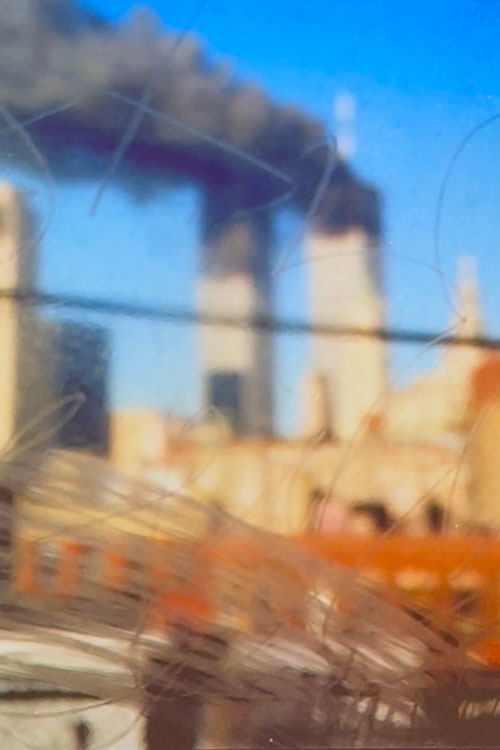
Taken from the subway with graffiti on the windows headed toward Chinatown before going back underground, Joe DiPetro took this photo of the burning Twin Towers in New York City on Sept. 11, 2001. (Photo by Joe DiPetro) 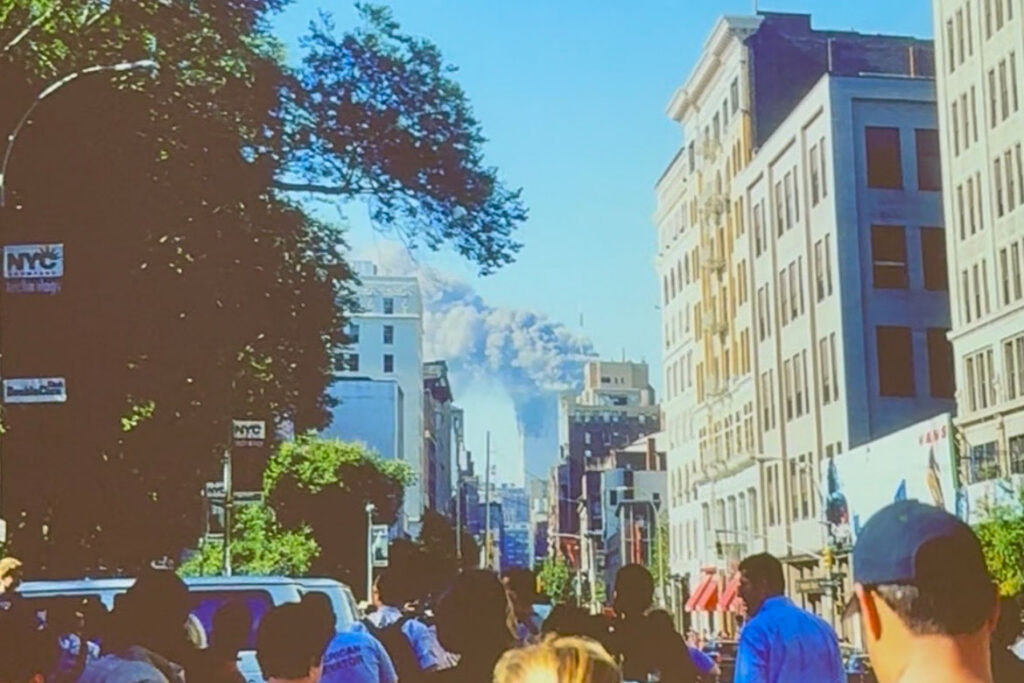
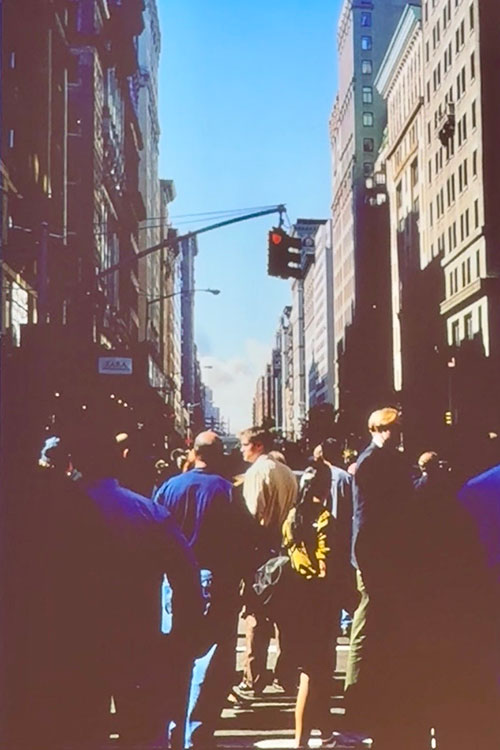
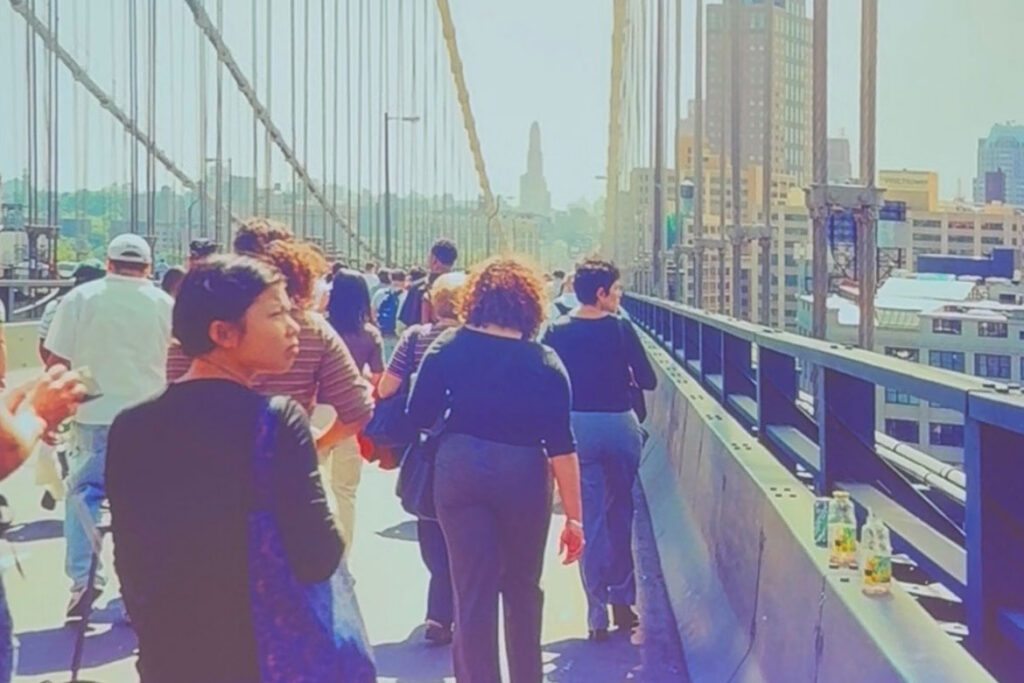
Photojournalist Joe DiPetro took this photo at Union Square after getting off the subway on Sept. 11, 2001, in New York City as he was headed to work. (Photo by Joe DiPetro) Photo by photojournalist Joe DiPetro captures the view of the burning Twin Towers from Fifth and 18th streets in front of his New York City office on the morning of Sept. 11, 2001. (Photo by Joe DiPetro) Joe DiPetro captured this photo moments after the Twin Towers fell in New York City on Sept. 11, 2001, while standing outside his office at Fifth and 18th streets. (Photo by Joe DiPetro) Photojournalist Joe DiPetro took this photo from the Manhattan Bridge as he and thousands of other people walked across the bridge in an effort to get home after the Twin Towers in New York City had fallen on the morning of Sept. 11, 2001. (Photo by Joe DiPetro) 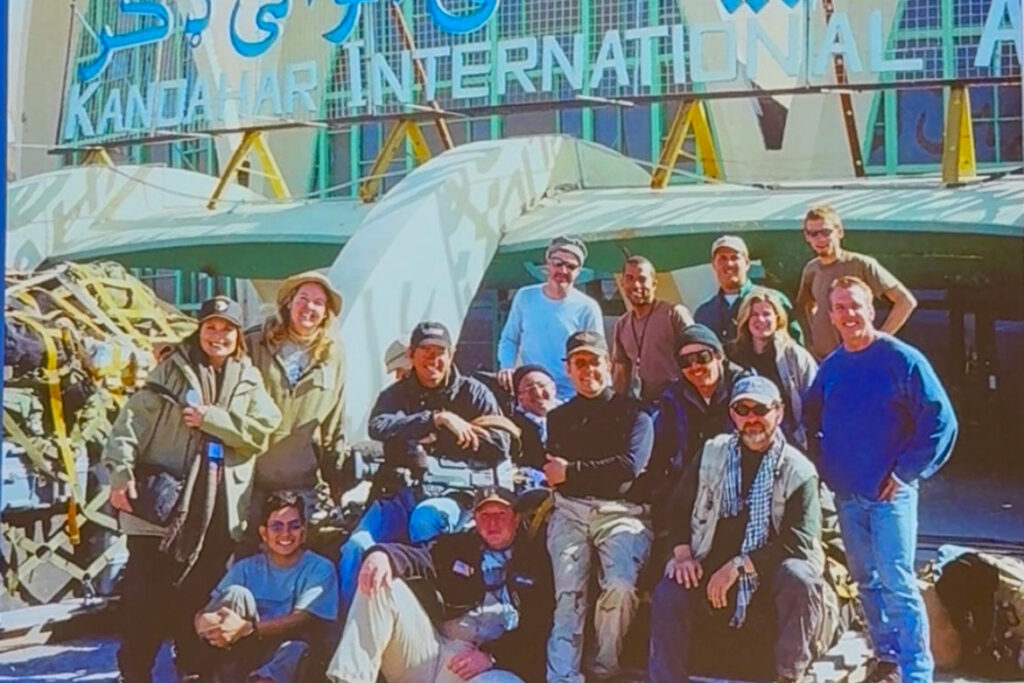
Retired Tennessean reporter and Middle Tennessee State University School of Journalism and Strategic Media professor Leon Alligood, third from right in the third row, pose for a photograph, outside of the Kandahar Airport in Kandahar City, Afghanistan, which served as a media hub for reporters covering the war. (Photo submitted) 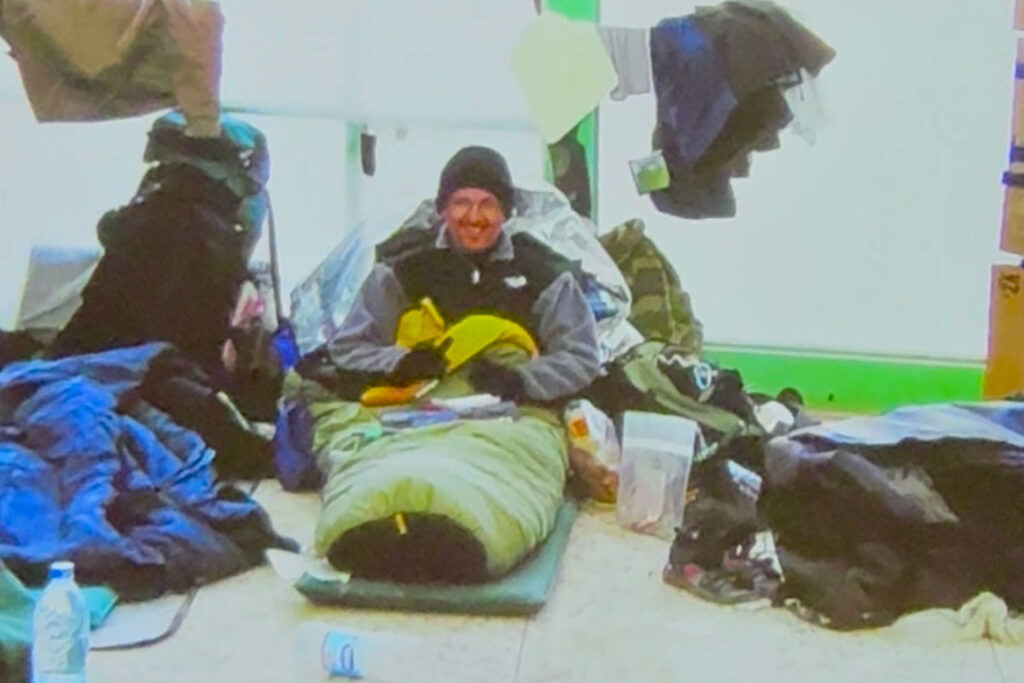
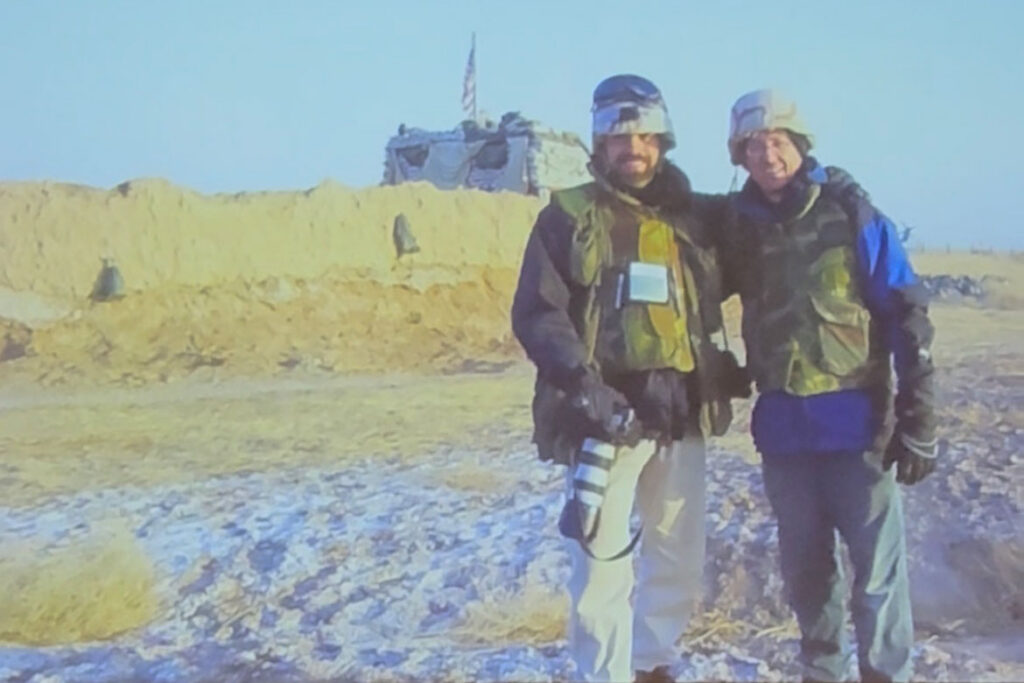
Retired Tennessean reporter and Middle Tennessee State University School of Journalism and Strategic Media professor Leon Alligood sits in his makeshift bed in the media hub in the Kandahar Airport in Kandahar City, Afghanistan, in 2002 while embedded with the 101st Airborne Division based out of Clarksville, Tenn. (Photo submitted) Retired Tennessean reporter and Middle Tennessee State University School of Journalism and Strategic Media professor Leon Alligood, right, and his photographer Eric Parsons pose for a photo in Afghanistan in January 2002. The two spent six weeks embedded with the 101st Airborne Division based out of Clarksville, Tenn. (Photo submitted)




NO COMMENT