
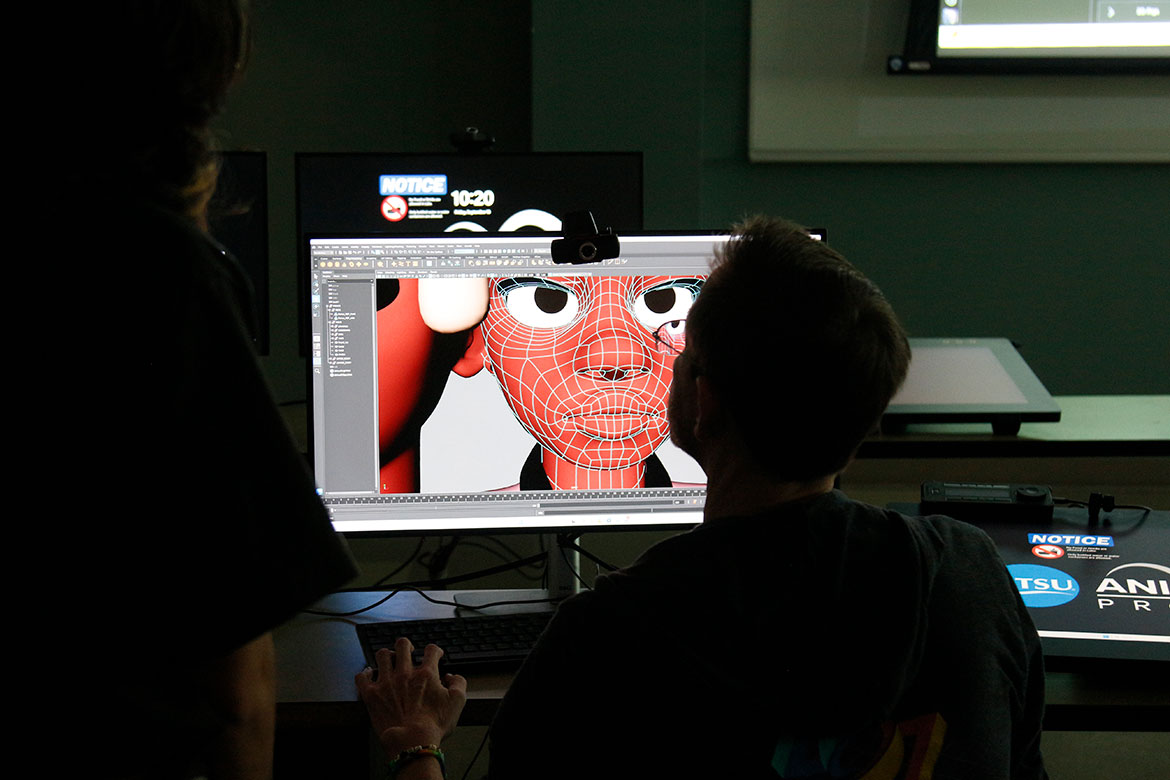
MURFREESBORO, Tenn. — Students interested in animation at Middle Tennessee State University now have two-degree pathways designed to match their individual interests and career goals.

Beginning this fall, MTSU’s Animation program transitioned from a single Bachelor of Science degree to offer both a Bachelor of Fine Arts (BFA) in Animation and a Bachelor of Arts (B.A.) in Animation through the Scott Borchetta College of Media and Entertainment.
The new degree options build on more than a decade of growth and development within MTSU’s animation program within the Department of Media Arts, which has continued to expand its curriculum, industry connections and opportunities for students.
“We’ve been gradually improving our program over the last decade or more,” said professor and program coordinator Kevin McNulty. “Our field is constantly changing, so what we teach and what we can offer students needs to reflect that evolution.”
The program’s accreditation from the National Association of Schools of Art and Design, or NASAD, also helped open new opportunities for curriculum development and expansion.
“We began adding so many new and valuable classes for our students,” McNulty said. “We ended up with such a fantastic and robust program, transitioning to a BFA was easy.”
Two degrees, more options
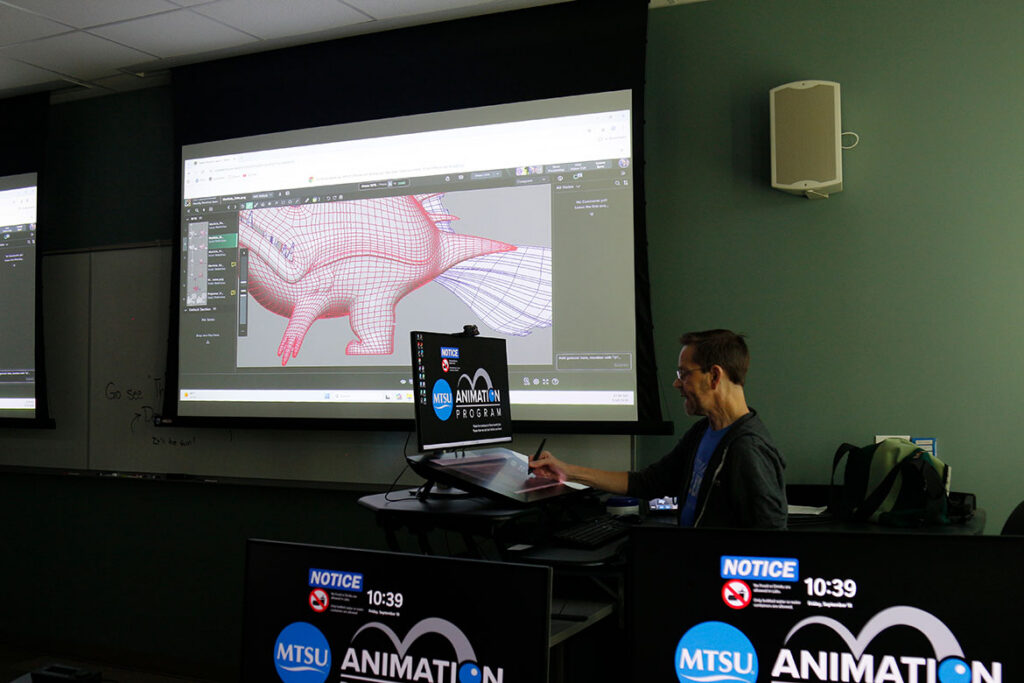
The BFA is a professional degree designed primarily for students who want to pursue careers in animation and entertainment, including film, television, series and games.
Students are also introduced to animation applications beyond traditional entertainment, including commercials, music videos, live production graphics, and visualization, such as architectural, product, and medical visualization, and much more.
“The BFA is predominantly for students who want to get into films, series and games,” McNulty said. “But we also introduce them to other professional fields they might not have considered.”
The B.A. is a liberal arts degree designed for students who want to combine animation with other academic interests.
Students in the B.A. track complete the same core animation classes as BFA students during their first two years, giving them the opportunity to develop foundational skills and begin building their portfolios. They then have greater flexibility to add a minor and electives in another area of study.
That flexibility could allow students to pair animation with another field and explore creative applications that cross traditional disciplinary boundaries.
“The notion that animation could be combined with any other discipline with the potential to create something new and innovative is very exciting,” McNulty said.
Building professional skills from day one
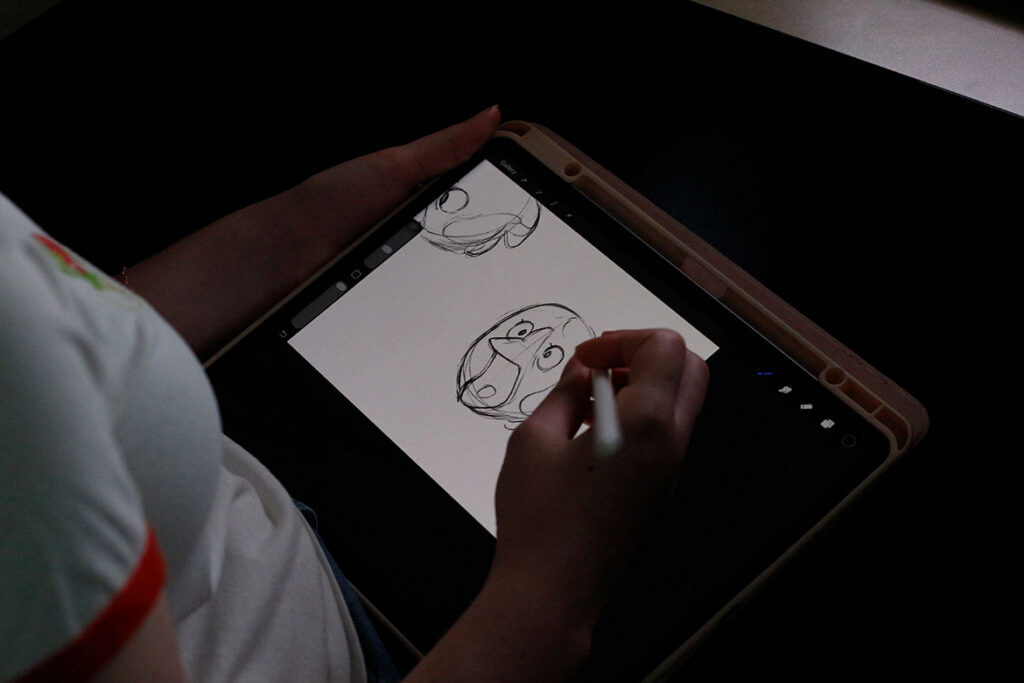
While the two degrees provide different pathways, both emphasize hands-on learning and portfolio development.
BFA students complete a more extensive curriculum designed to prepare them for their career pathway. Nearly all animation courses are lecture/lab-based, giving students opportunities to create work for their portfolios beginning in their first semester.
By the second semester of their junior year, BFA students begin developing an animated short film as part of a team. The experience allows students to work collaboratively while also focusing on specific areas of animation and producing more polished work.
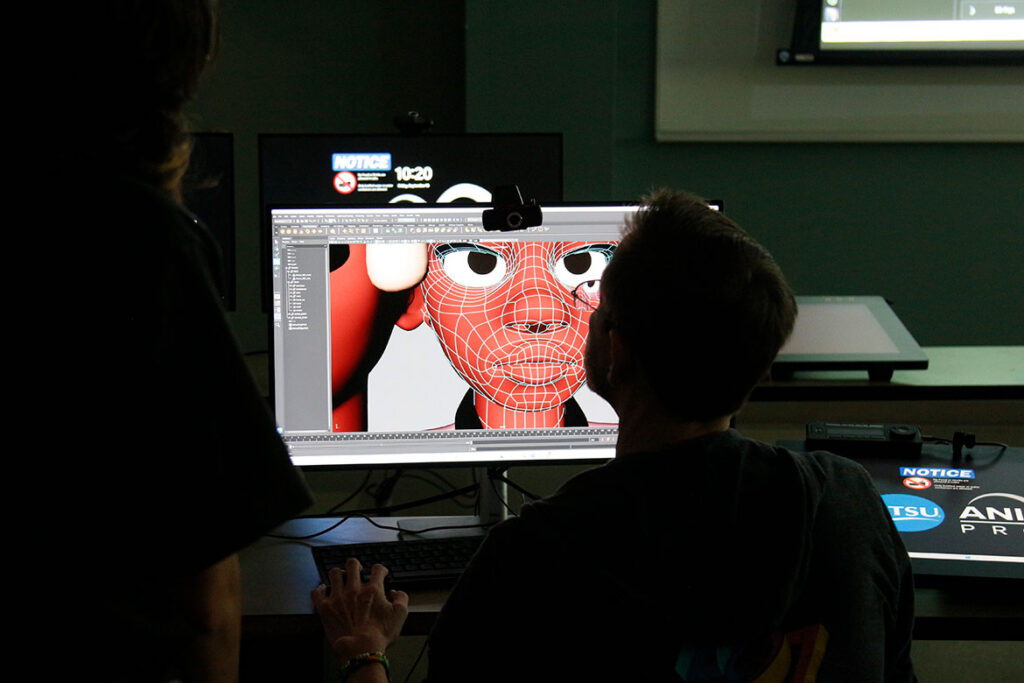
The BFA curriculum gives students experience across the full production pipeline, including 3D animation, 2D animation, visual effects and motion graphics.
Graduates have pursued careers in areas such as character animation, storyboarding, 3D modeling and texturing, and production assistance.
For students pursuing the B.A., the degree’s flexibility allows them to determine how animation fits into their broader academic and career interests.
“That’s really the beauty of the degree,” McNulty said. “Because the degree is so customizable, students can carve their own path combining animation with other disciplines.”
Preparing students for a changing industry
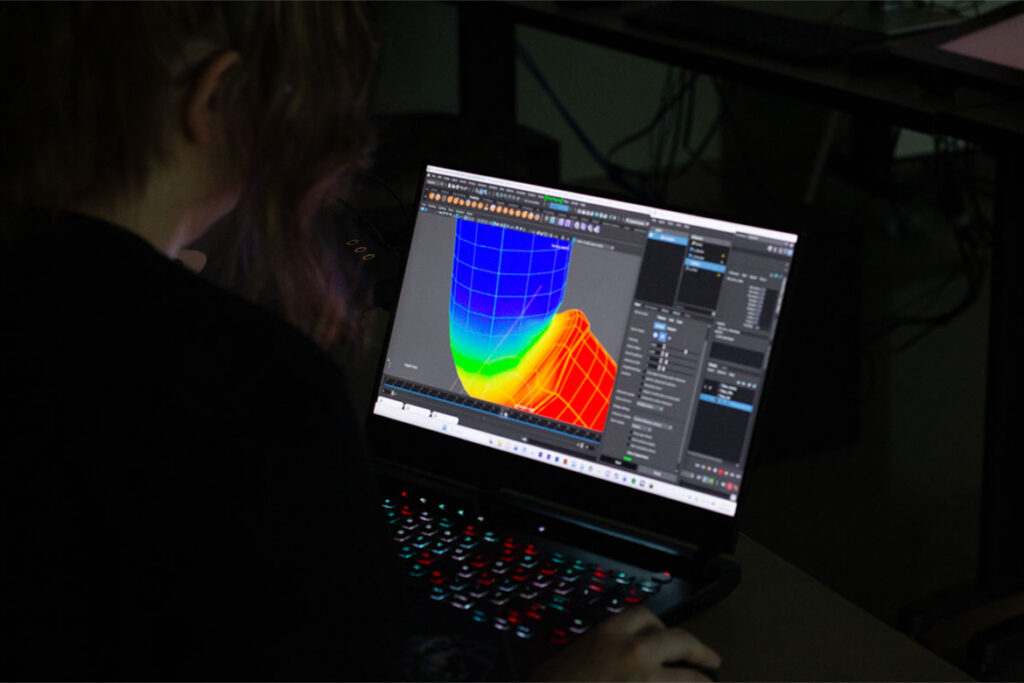
As technology and animation tools continue to evolve, McNulty said students need more than technical skills to succeed in the field.
Technical and artistic proficiency remain essential, but employers also want graduates who can adapt, learn new tools and approach problems creatively.
“The tools we use today may not be what we use in 10 years, five years, or even a year from now,” McNulty said. “No one has a crystal ball, so having a flexible mindset and being willing to pivot and learn new things is important.”
Portfolio development is a major part of that preparation. Students begin building their portfolios during their first semester, with portfolio requirements incorporated throughout the program’s production courses.
During their senior year, students take professional practices in animation, where they refine their resumes and cover letters, narrow their portfolios to their strongest work and develop their online presence.
The course also introduces students to job searching, networking and foundational knowledge for freelancing.
With the addition of the two degree pathways, students can now choose between a professional BFA focused on extensive preparation for the animation industry and a flexible B.A. that allows them to combine animation with other areas of study.
“I’m excited that our students now have more options to flex their creativity,” McNulty said, “Whether it’s following one of the more traditional paths of films or games, or it’s carving a new, uncharted path using animation in ways no one ever thought to.”
About Animation
MTSU’s animation program is consistently ranked No. 1 in Tennessee among public and private institutions and is recognized as one of the top animation programs in the United States. To learn more, visit https://www.mtsu.edu/program/animation-b-f-a-b-a/
— Stacey Tadlock ([email protected])




NO COMMENT