
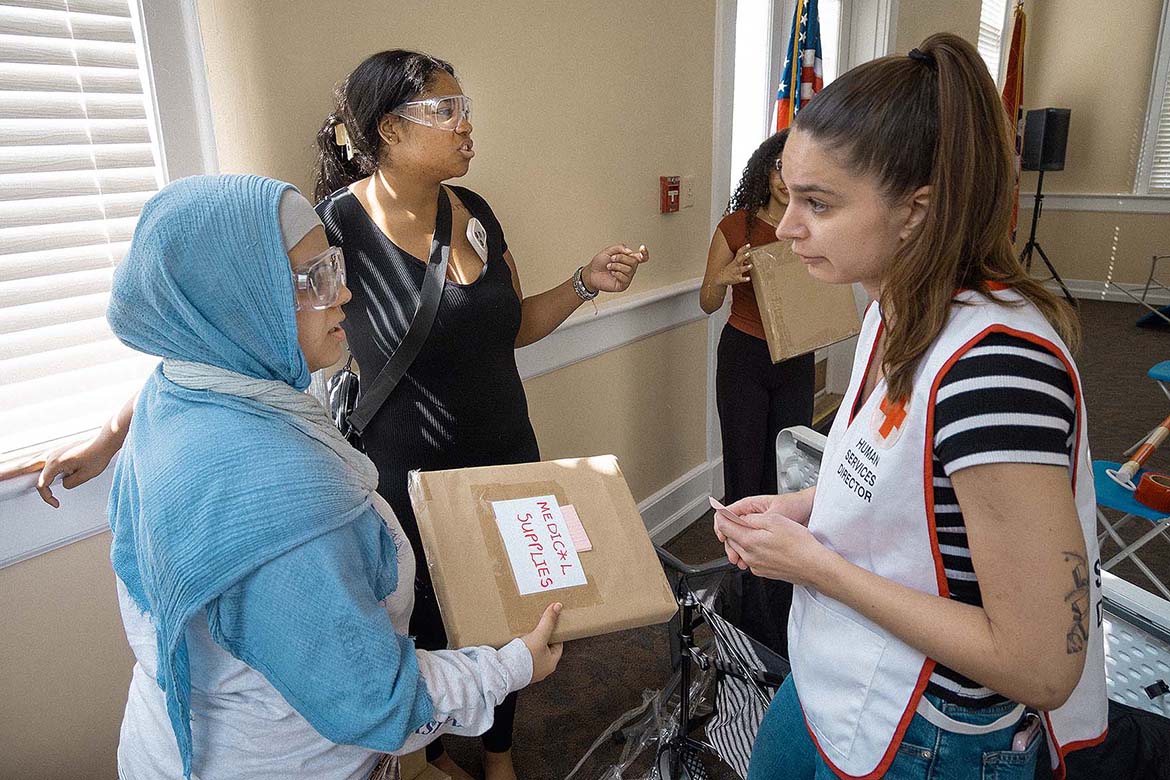
MURFREESBORO, Tenn. — War is no game, but students enrolled in the Humanitarian Aid and Crisis course at Middle Tennessee State University are using a little friendly competition to teach some serious lessons about the rules of armed conflict.

Students will partner with MTSU’s Model UN team to host the free Rules of War-Fair, a carnival-style event, from noon to 5 p.m. Wednesday, Nov. 18, in Cantrell Hall of the Tom Jackson Building, 628 Alma Mater Drive.
“You can come learn about international humanitarian law, learn how to do hands-only CPR, have some popcorn, have some snacks, do a little trivia, maybe a mini escape room, and you can throw balls at targets for a little stress relief,” said Department of Political and Global Affairs professor Amy Atchison, who teaches the political science class each fall.
The free event is part of the American Red Cross Youth Action Campaign — a national peer education initiative under the nonprofit’s International Humanitarian Law, or IHL, program — that challenges young people to raise awareness about armed conflict regulations.
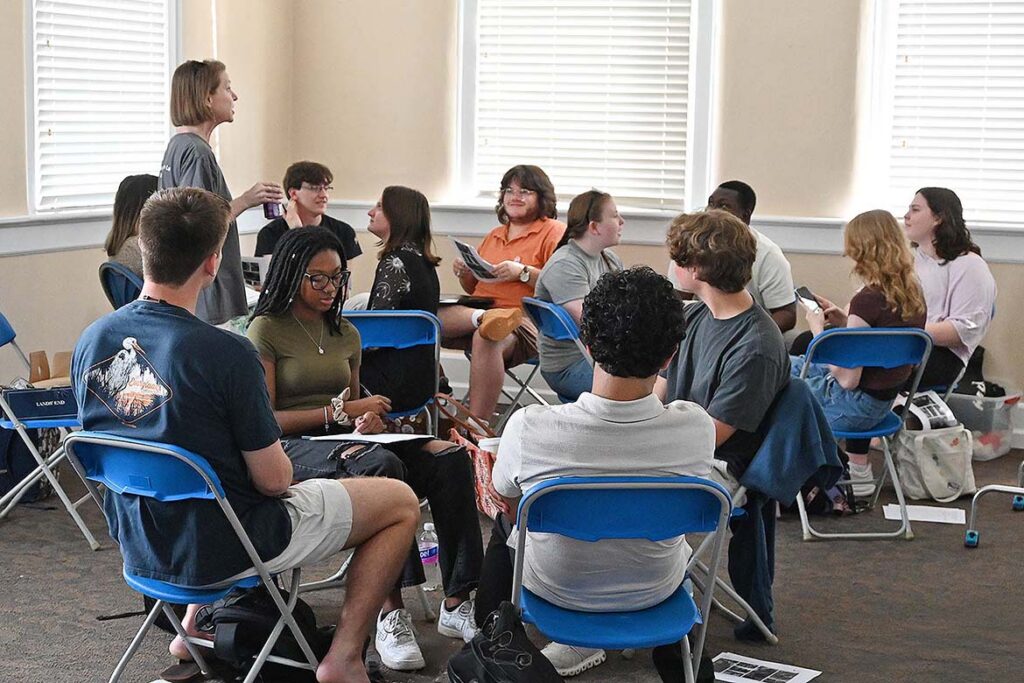
Coursework exercises inspire students
Backed by the Heart of Tennessee Chapter of the American Red Cross, the Humanitarian Aid and Crisis activities are part of MTSU’s Experiential Learning, or EXL,and Engage programs, aimed at learning beyond the classroom.
Themes change annually and this year’s campaign focuses on protecting hospitals, medical personnel and healthcare services during armed conflict. Previous campaigns have explored nuclear warfare and the protection of journalists during conflict.
“The National Red Cross provides all of the materials for teaching them the rules of war and then about the theme. But then the students have to come up with how they’re going to tackle the theme,” Atchison explained.
Atchison’s students become Red Cross volunteers as part of the course.

“To be able to connect both of my favorite worlds — international relations and science — has been a huge passion that has grown from this class,” said class member Elena Jones, a science major from Cottontown. “I have had the opportunity to do this by showing other students how to perform hands-only CPR.”
So far, Jones has presented those skills to over 300 fellow students and hopes to share with more in the future — including those attending the Rules of War-Fair.
After brainstorming and voting on ideas, this year’s class settled on a fair-style event featuring multiple interactive activities.
“I have some amazing classmates that have taken the ideas that we all decided on and ran far with them. The Game of Life version for IHL is phenomenal and one I am looking forward to playing,” Jones said.
Atchison said the hands-on approach helps students better understand the human consequences of war and the struggles facing people caught in humanitarian crises.
“It’s a way to kind of get them in the mindset of thinking about how to creatively learn about this topic,” Atchison said.
Fellowship expands reach of humanitarian efforts
Atchison is also expanding her approach to humanitarian education through a fellowship with Binghamton University’s Institute for Genocide and Mass Atrocity Prevention.

The fellowship brings together educators from across the globe in disciplines ranging from political science and comparative literature to communication studies and theatre. In regular meetings and online forums, the fellows explore ways to incorporate atrocity prevention into their coursework.
“I wanted to do it so I could expand on what I do in class,” said Atchison, who leads her students through other interactive projects throughout the semester.
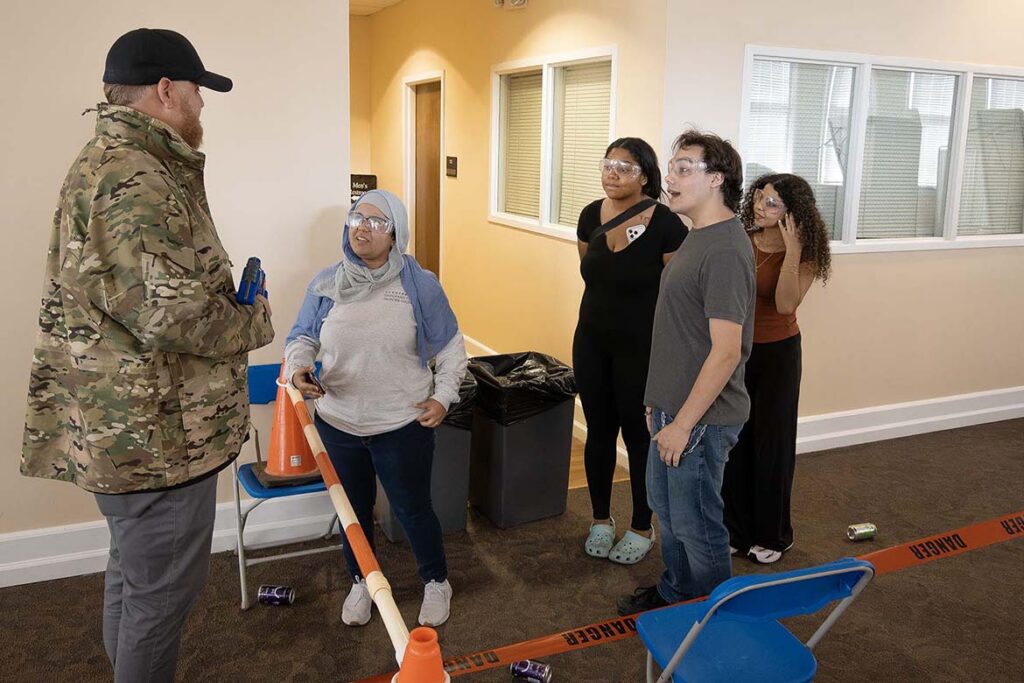
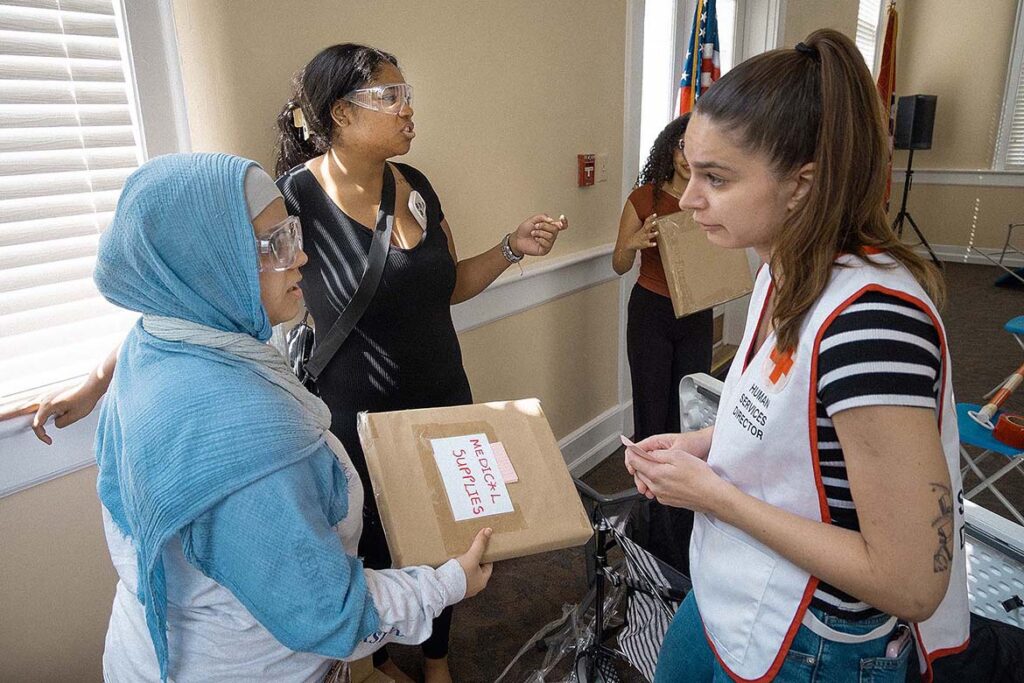
Earlier in the fall, students in Humanitarian Aid and Crisis participated in an escape room-style simulation in which they took on the roles of refugees in an encampment.
Her students have embraced the opportunity to examine war crimes, genocide prevention and the factors that lead people to commit atrocities.
“They really wanted to focus more on the war crimes and prevention, and so that dovetails nicely with the fellowship,” Atchison said.
For Atchison, teaching international humanitarian law goes beyond understanding treaties and legal protections. It’s about recognizing a shared responsibility to protect human dignity.
“I care very much about teaching people about the rules of war because I think that helps them understand shared humanity, that war does have rules. We can’t conduct war just any which way we please,” she said. “It’s not about total victory because we all have to live together after a war is over, and when citizens care about that, they can make politicians care about that.”
— Nancy DeGennaro ([email protected])





NO COMMENT