
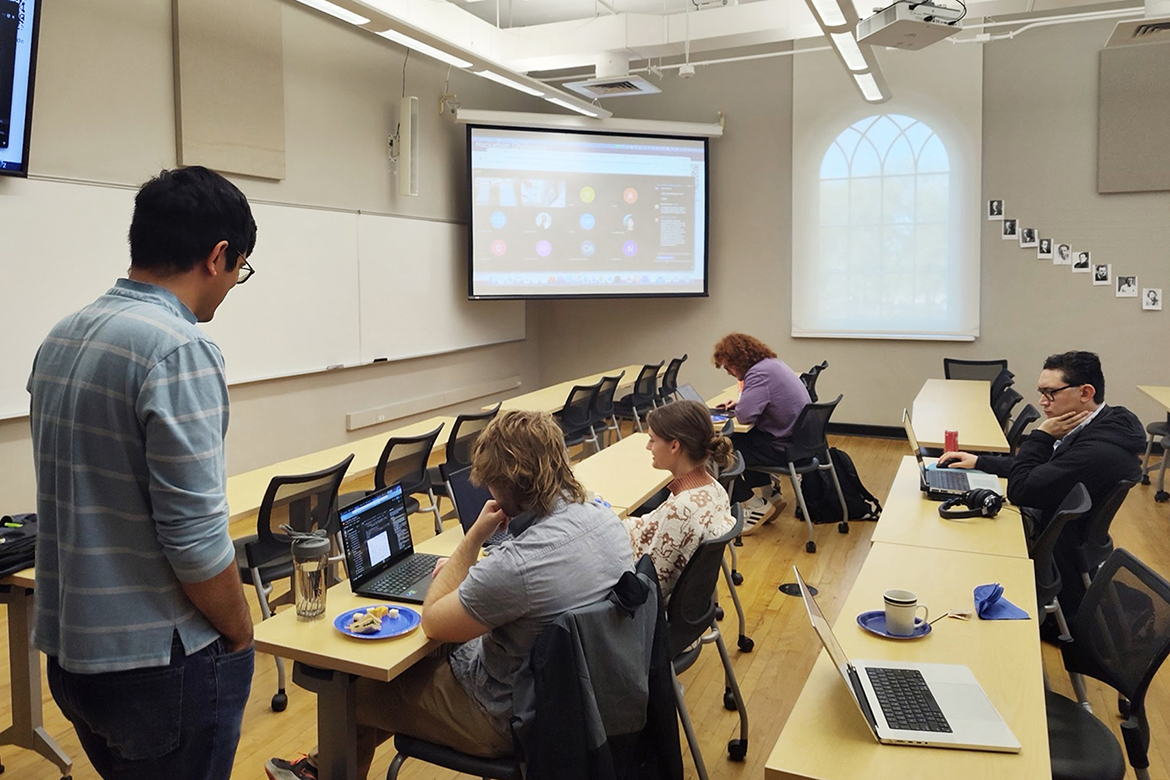
MURFREESBORO, Tenn. — Marking the first event of its kind in the state, Middle Tennessee State University’s Quantum Research Interdisciplinary Science and Education Center, better known as QRISE, recently led an international quantum “hackathon” for students around the world.
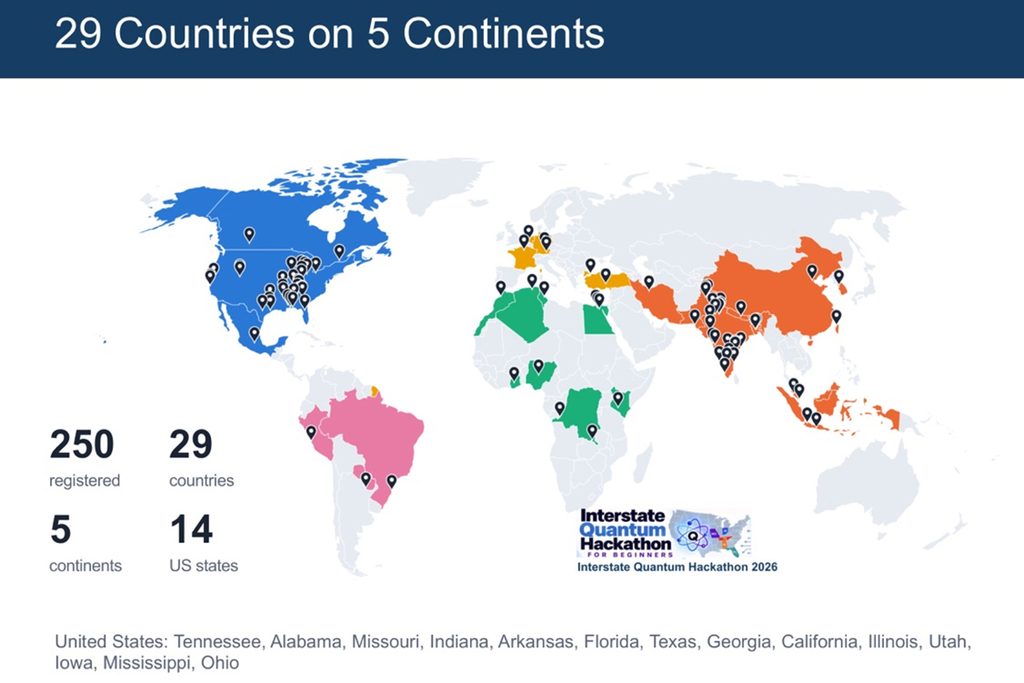
Originally billed as an interstate initiative across Tennessee, Indiana, Missouri, Florida and Alabama, the hybrid virtual and in-person Interstate Quantum Hackathon for Beginners ultimately brought together students from 14 states and 29 countries over three days, working from local university sites and connecting virtually with each other, mentors and speakers. Of the 250 registrants, 156 completed all three days.
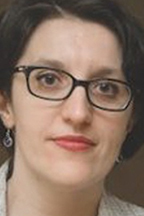
“What makes this initiative particularly meaningful is that we are not just creating opportunities for students at MTSU,” said Hanna Terletska, QRISE director and physics professor. “We are bringing together universities, researchers and industry partners across the country to make quantum education more accessible.”
Led by Terletska and MTSU assistant professor Abhijit Chakraborty, with David Liu of Purdue University Fort Wayne, local organizers from participating institutions included Mohammad Arif Hossain, John Villanova and Varun Puram from MTSU; Ridwan Sakidja from Missouri State University; Aaron Wade from University of West Florida; Sergei Gleyzer and Konstantin Matchev from University of Alabama; Dinh Nguyen from University of Alabama in Huntsville; Ning Zhang from Fisk University; Tyler Sax from Tennessee State University; and Pushpita Chatterjee and Lei Qian from Meharry Medical College.
As quantum computing advances from laboratory research to emerging applications, preparing people to translate this technology into practical solutions is increasingly important, Terletska noted. Building more capable quantum computers is only part of the challenge, as scientists, engineers, programmers and industry professionals must also learn to identify useful problems, develop and test algorithms, and understand where quantum approaches might eventually offer an advantage over conventional methods.
“Talent exists everywhere, but opportunities do not,” said Terletska. “As a public research university, we have an important role to play in connecting that talent, building partnerships and preparing the workforce that will help move quantum technologies from research laboratories into real-world applications.”

Building state’s quantum workforce
The Oct. 22-24 event offered four weeks of training in quantum computing fundamentals ahead of the hackathon. With more than 40% of participants reporting no previous experience in the field, students working in interdisciplinary teams gained skills that are becoming increasingly important to employers as quantum technology develops.
“On Thursday, most of these students had never written a line of quantum code,” said Chakraborty. “By Saturday they were presenting working solutions to real problems.”
The second day of the hackathon, Quantum Industry Day, was led by Sophy (Soyoung) Shin, a developer advocate with IBM Quantum Content and Education who builds the hands-on labs behind IBM Quantum Learning, the Qiskit Global Summer School and the IBM Quantum Challenge.
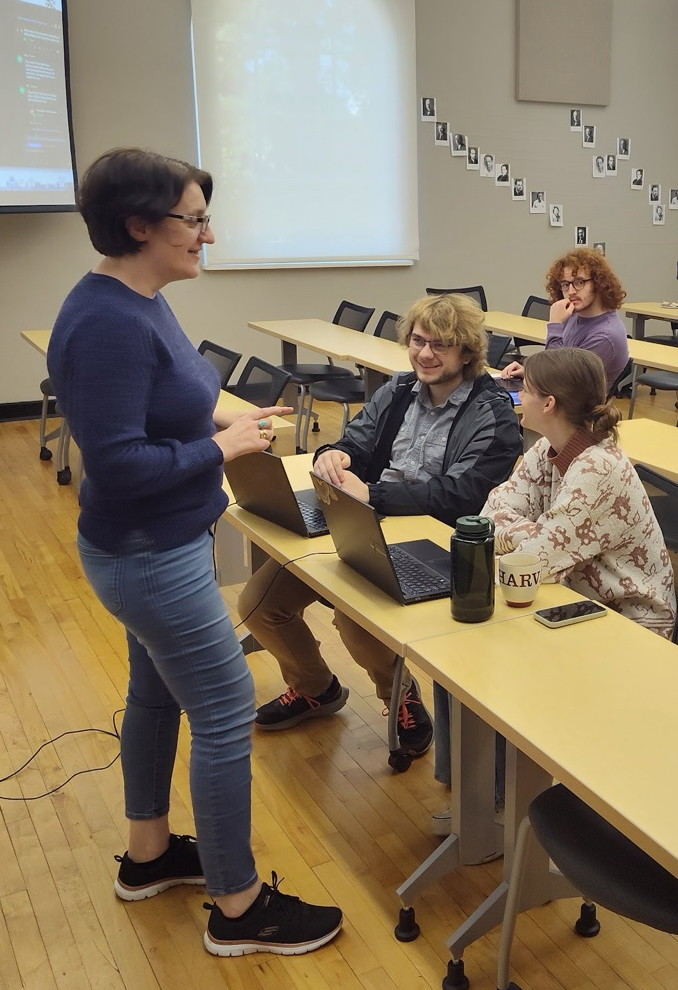
In her keynote, “Quantum Computing Today: Where We Are and What Comes Next,” Shin guided students through recent progress in quantum hardware and algorithms, IBM’s roadmap toward large-scale, fault-tolerant quantum computers and the ways students can get involved now.
Special guest Braden Stover, senior advisor to the commissioner on nuclear and quantum strategy at the Tennessee Department of Economic and Community Development, welcomed participants and introduced the Tennessee Quantum Initiative, Gov. Bill Lee’s statewide effort, backed by a $43 million state commitment, to grow quantum research, infrastructure and jobs. Stover told students that this growth depends on people trained to use the technology.
“Building Tennessee’s quantum workforce starts with giving students opportunities to put their knowledge to work. Events like the Interstate Quantum Hackathon help students tackle challenging problems, collaborate across institutions and see a future for themselves in this growing field,” Stover said. “TNECD is proud to see MTSU translating the goals of the Tennessee Quantum Initiative into meaningful opportunities for Tennessee’s next generation of talent.”
‘Open ramp for quantum education’
The student teams worked in Qiskit, IBM’s open-source software for programming quantum computers. Hackathon participants were awarded certificates from IBM Quantum’s Qiskit Fall Fest program by Shin, whose presentation guided students through recent progress in quantum hardware and algorithms and forecast the future of this emerging technology.
“By partnering with MTSU’s QRISE Center and expanding Purdue University Fort Wayne’s Qiskit Fall Fest partner site into a multistate and virtual format, the Interstate Quantum Hackathon has created a truly open on-ramp for quantum education,” said Liu of Purdue University Fort Wayne. “Supported by IBM Quantum and the (National Science Foundation) QC4MC project, we scaled a localized partner site into a massive gateway that connected beginners across state lines and 29 countries to solve real-world problems, proving that regional collaboration is the key to building a diverse, workforce-ready quantum community.”
Winning teams
Winners were named in two categories, Champion and Rising Star, and ranged from undergraduate to doctoral students, along with industry and research professionals.
MTSU team “ASQI,” made up of graduate students Tanzimul Fahim, Sharmin Milu, Shahariar Shanto and Abdur Rahman and mentored by Mohammad Arif Hossain, took first place in the Champion category.
First place for Rising Star was a tie between “Quantum Heal,” consisting of Mohamad Kassaee of chemical and biotechnology company Wacker and Maryia Bairachnaya of Douglas Research Centre in Montreal, and team “Tunneling to the Top,” with Molly O’Donnell of University of Alabama, Bibek Shrestha of University of Alabama in Huntsville, Siam Saad of University of Dhaka in Bangladesh and technology professional Alexander Dorozynski.
Lakshikka Sithamparanathan of Cleveland State University in Ohio took second place in the Champion category, while Kieran McCrorey of University of Alabama in Huntsville took second place in the Rising Star category.
Greg Van Patten, dean of MTSU’s College of Basic and Applied Sciences, praised the ongoing efforts by the QRISE Center to assume a leading role in the state’s development of quantum research and technologies.

“Under Dr. Terletska’s leadership, the QRISE team at MTSU has become a leader in quantum education, bringing students together with researchers and industry professionals to gain hands-on experience with emerging technologies,” said Van Patten. “This is exactly the kind of work we want to see coming out of our college, where strong academic programs, meaningful research and industry partnerships prepare students for careers in the high-tech fields that are shaping the future of our state and country.”
The event was sponsored by Middle Tennessee Electric, with additional support from IBM Quantum’s Qiskit Fall Fest, the National Science Foundation and MTSU’s Department of Physics and Astronomy.
More information about the Interstate Quantum Hackathon is available at https://iq-hackathon.github.io/hackathon-beginners-26/. Learn more about MTSU’s quantum programs at https://quantum.mtsu.edu/.
— Cat Curtis Murphy ([email protected])




NO COMMENT