
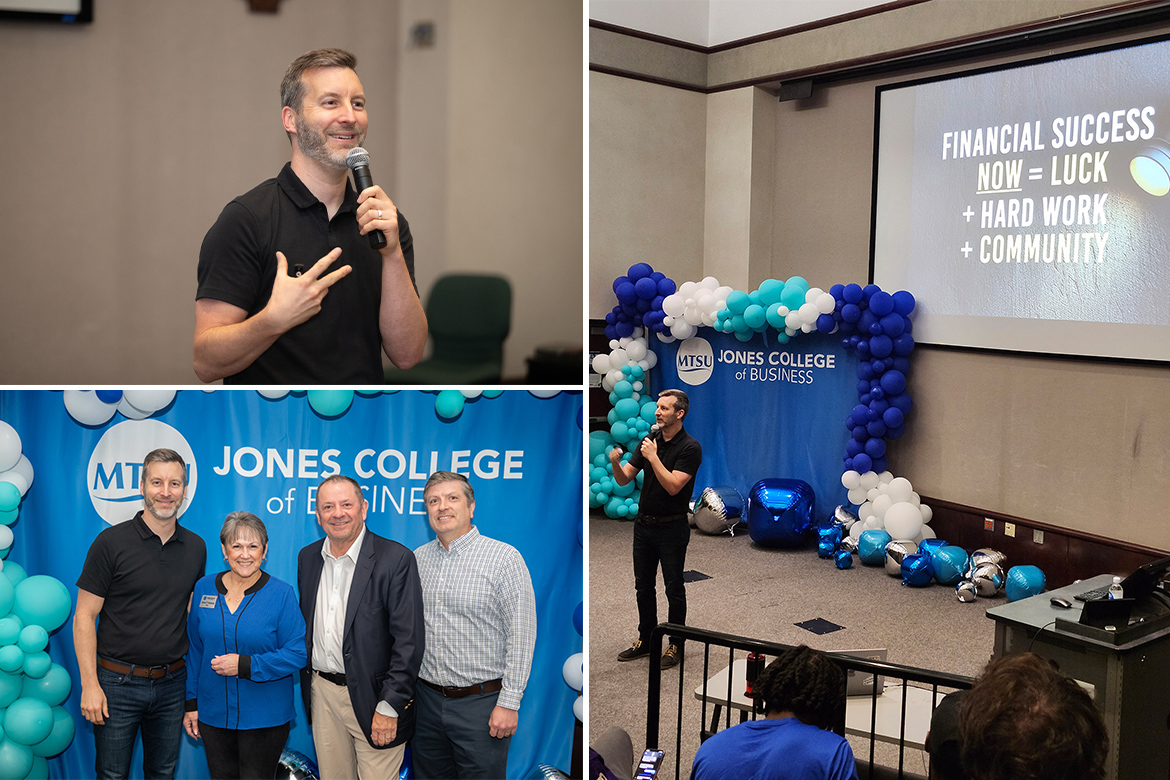
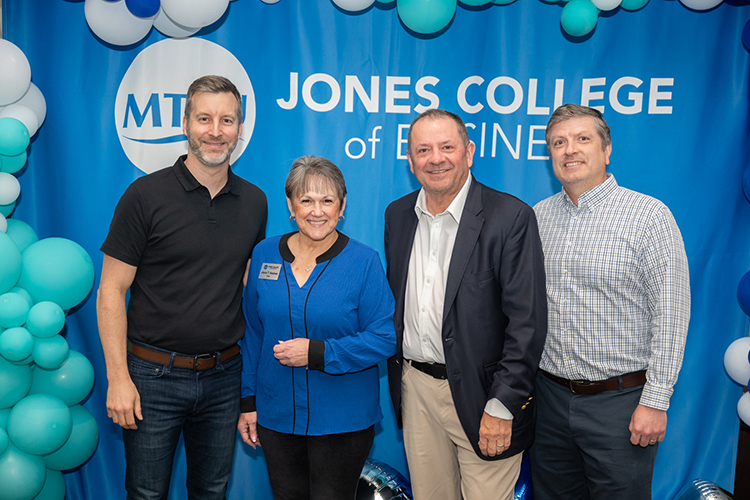
MURFREESBORO, Tenn. — With a mix of humor, personal reflections, practical tips and audience interaction, guest speaker Colin Ryan presented a potential financial roadmap for Middle Tennessee State University students during a recent stop on campus to provide the keynote for the university’s observance of Tennessee Financial Literacy Month in April.
Hosted by the Jones College of Business, the mid-April event drew dozens of students to the Business and Aerospace Building’s State Farm Room to learn about ways to put and keep their financial houses in order while navigating the unique challenges of today’s economy for so many recent and soon-to-be college graduates.
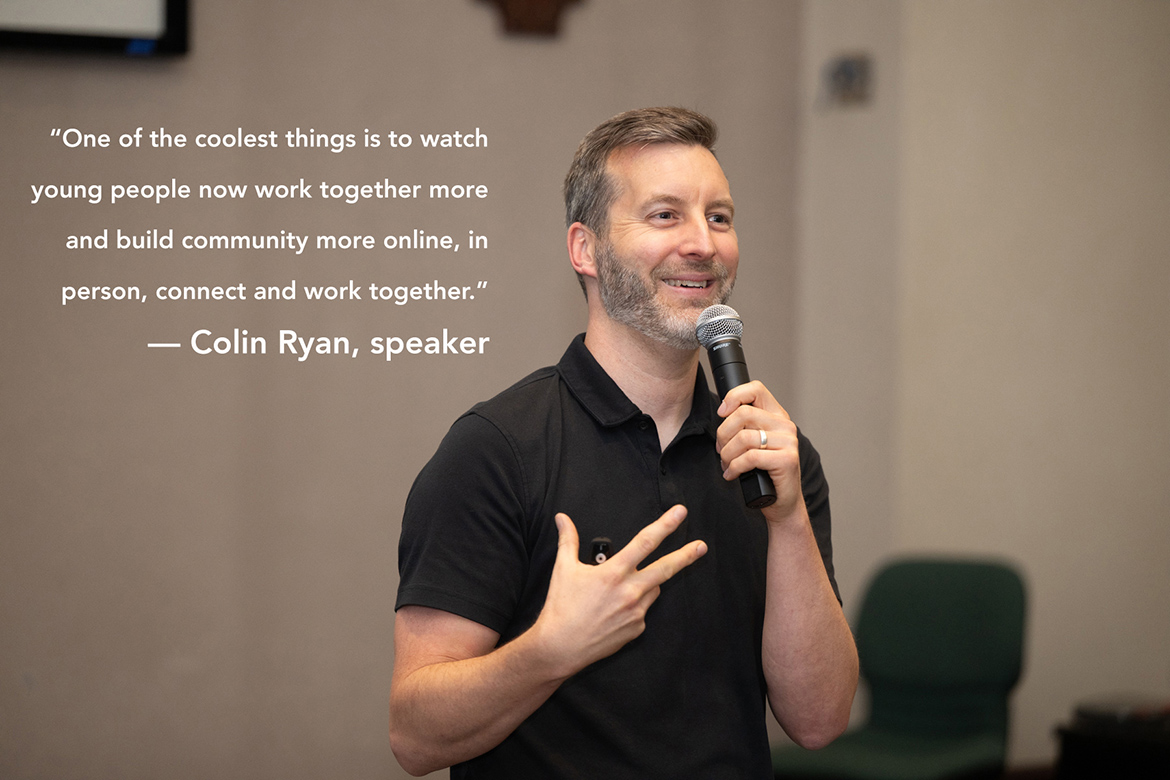
With more than a decade of experience as “a humorous speaker on financial success,” Ryan says he helps students and young professionals “embrace imperfection, chase momentum, and find opportunity in challenges.”
“I think that a lot of us grew up uncomfortable talking about money. So I have a very unusual job: I go around and I talk to strangers about money,” Ryan said before his remarks. “And what I have learned is that everybody wants to talk about it. But they don’t want to feel judged. They want to feel respected. They want to feel heard. But they do have questions. They do want to connect and share and learn.”
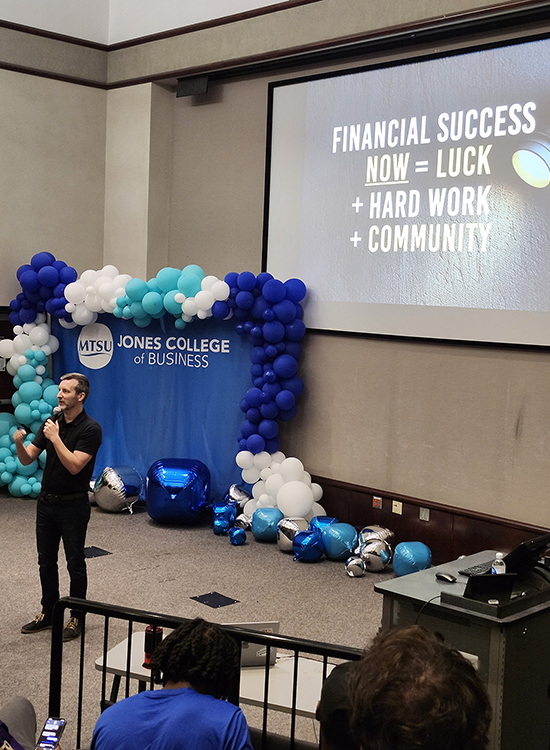
During his presentation, which included PowerPoint slides with photos, videos and graphics, Ryan shared stories about life lessons learned during his childhood, his journey to becoming a financial literacy speaker, writing a book about personal finances, but also writing one about mental health and his own depression and anxiety.

Ryan acknowledged the increasing mental health challenges for today’s younger generations who are dealing with economic pressures such as technological and workforce disruptions, housing affordability and other cost-of-living challenges.
“I’m not going to stand here and pretend that it’s as easy as it used to be. I think the challenges are bigger. I think the challenges are real,” Ryan told the students. “I’m not here to gaslight you and be like, oh, if you start a budget, everything’s going to be great. No, the challenges have really increased, haven’t they?”
As a part of that changing reality, Ryan said he wanted to share a new definition of financial success with students.
“For a lot of our lives, it was work hard. Work hard and things will happen for you. But I now believe it’s ‘work hard.’ It’s ‘be lucky’ — we’ve got to be real; there are things you cannot plan for or avoid. And it’s ‘build community.’ Don’t do it alone,” he said.
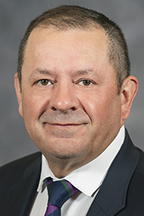
Stuart Fowler, chair of the Department of Economics and Finance, said bringing Ryan to campus aligns with the university’s goal to help students manage their finances better as they approach graduation and move into their professional careers.
“A lot of times, financial problems can cause stress. His taking a comedic approach to it breaks the barriers, breaks the stigma around financial problems, and allows us not only to learn about smart financial decisions but also have fun with it and make it more relatable to students,” Fowler said.
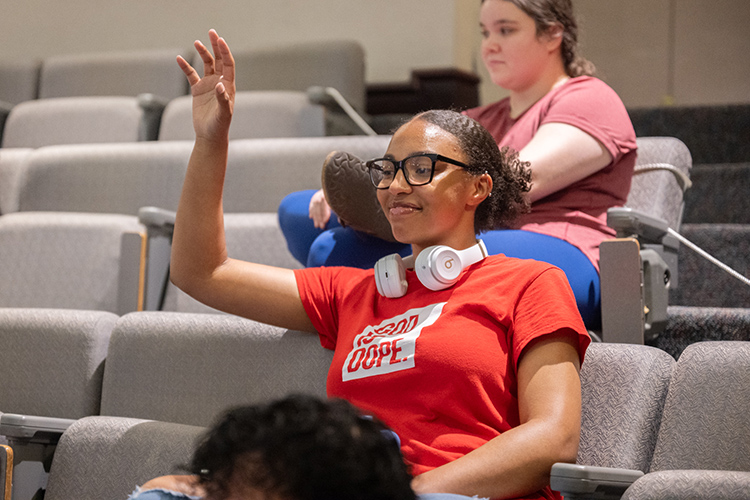
Ryan asked students and other attendees to share their perspectives on money and personal finances through word association, with “bills,” “assets,” “freedom,” “shopping cart,” and “social status” among the words and phrases offered when asked what comes to mind when they think about money.
He told the students that financial perfection isn’t the goal and that “mistakes are teachers” because “you may not have learned it any other way.” He encouraged them to use three strategies to build better financial habits: build momentum “one brick at a time” by taking small, achievable steps “to get a win”; reframe blocks (you can’t always change what’s happening, but you can change how you respond); and team up by building a community to talk about financial issues.
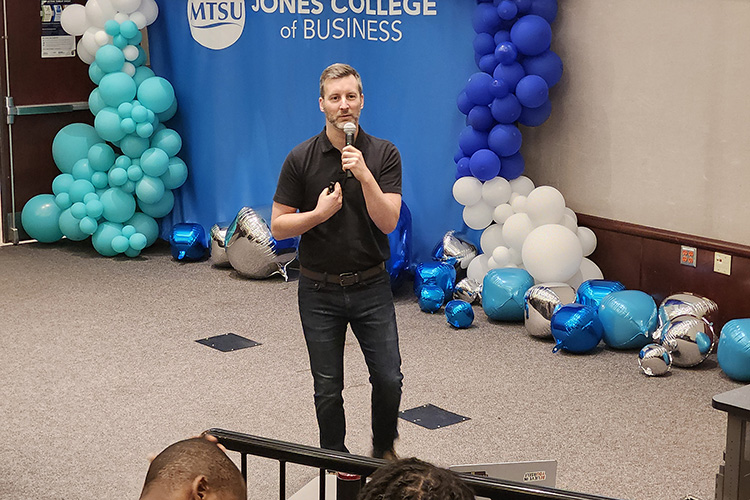
Ryan applauded the more community-oriented ethos he’s seeing among younger generations.
“One of the coolest things is to watch young people now work together more and build community more online, in person, connect and work together,” said Ryan, who provided students with a sample of apps that could help them with budgeting and tracking spending and also directed them to training videos on his website, colinryanspeaks.com, for those interested.
“Part of what you’re doing right now … is investing an hour of your time into having this financial conversation and thinking about your finances,” he said. “Research shows that if you put three to five of those hours together, you start to see some measurable, verifiable results in your decision-making and in your knowledge. So take another workshop.”
Before introducing Ryan, Keith Gamble, professor of economics and finance and holder of the Weatherford Chair of Finance, reminded students of $10,000 in scholarships available for those who attended at least two events during the month of scheduled activities, such as the recent “Game of Life” event in the Student Union, and submitted a video of reflection on Ryan’s keynote. Ascend Federal Credit Union sponsored the scholarships.
MTSU’s Tennessee Financial Literacy Month events were sponsored by the Jones College of Business, Department of Economics and Finance, Weatherford Chair of Finance and the college’s Ignite career development program.
— Jimmy Hart (jimmy.hart@mtsu.edu)




COMMENTS ARE OFF THIS POST