
MURFREESBORO, Tenn. — Middle Tennessee State University recently brought together faculty, students and MTSU Board of Trustees members for a collaborative Faculty Showcase designed to highlight the depth and impact of academic work across campus.
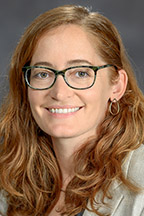
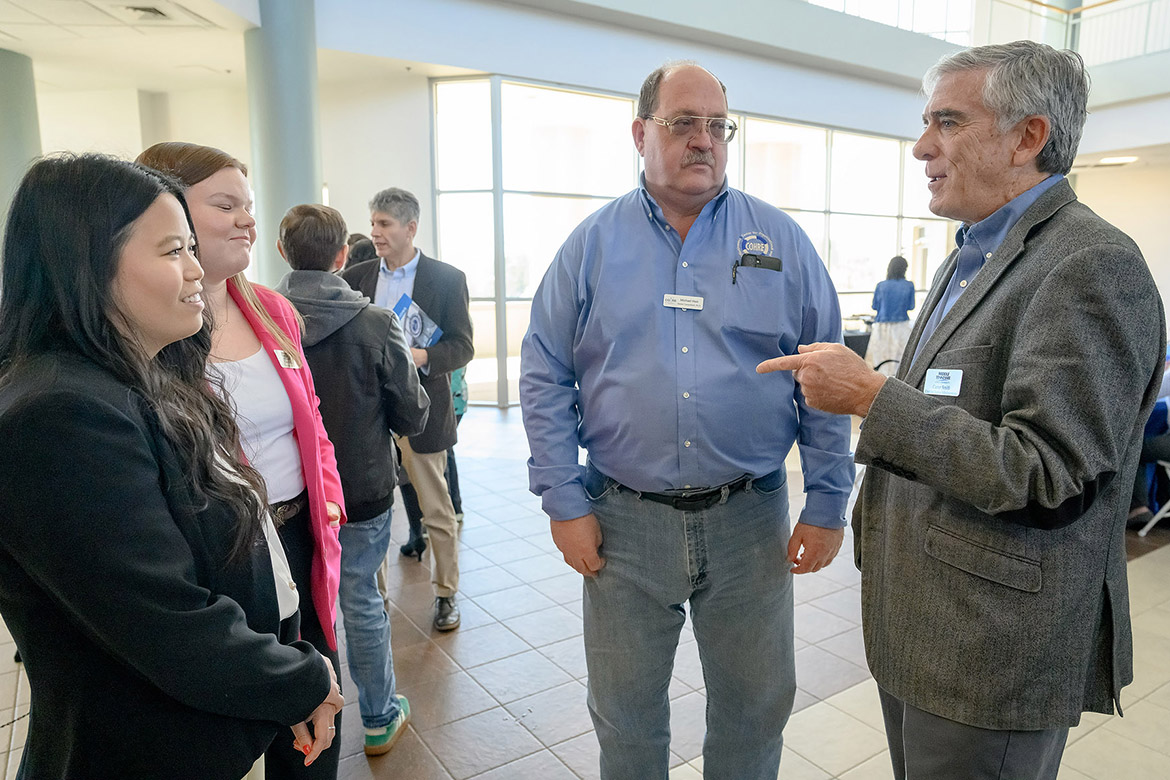
Held in the Miller Education Center atrium following the quarterly MTSU Board of Trustees meeting, the event featured a series of posters illuminating 10 faculty-led projects selected through a competitive nomination process.
“We wanted to showcase the excellent work MTSU does in preparing students for careers and helping the community. These projects reveal how closely connected research, community engagement and teaching really are,” said history professor Suzanne Sutherland, event organizer and past president of the MTSU Faculty Senate.
The showcase was organized as a joint initiative between the MTSU Faculty Senate and the Office of the President, underscoring the university’s shared governance model. Faculty senators and department chairs submitted nominations, with a committee selecting the final 10 projects to represent a wide range of disciplines across multiple colleges, departments and campus centers.
Sutherland said the event was about more than simply displaying research.
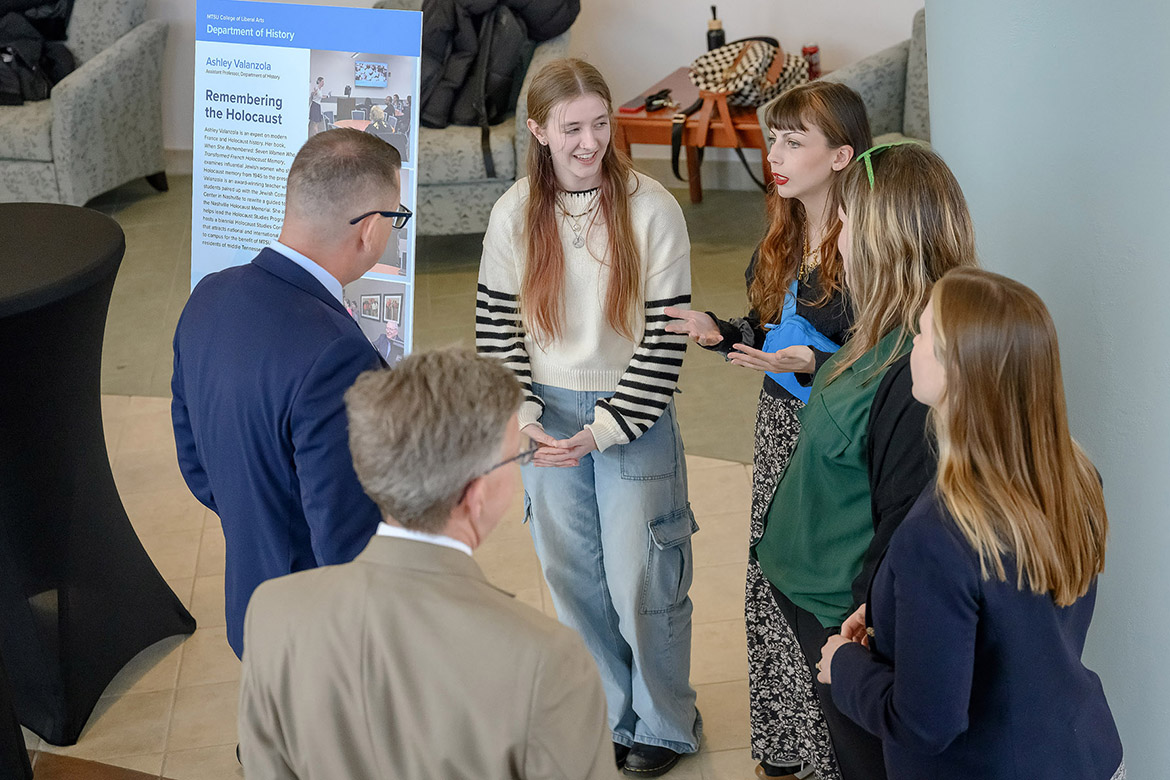
“This is a way to show what happens at MTSU in a meaningful way,” Sutherland said. “Faculty are not only experts in their fields, but they’re bringing students into these projects, giving them real-world research and career experience.”
Many of the featured projects demonstrated how students engage directly with community issues, reinforcing MTSU’s commitment to hands-on learning. By participating in faculty research and outreach, students gain practical skills, professional networks and a deeper understanding of their chosen fields, Sutherland said.

“It’s one thing to sit in a classroom,” Sutherland added. “But engaging in research and community work is where career preparation really happens.”
Will Langston, professor of psychology who served on the organizing committee, said the selection process reflected the breadth of excellence among MTSU faculty.
“The Faculty Senate Governance Committee was honored to help plan this event,” Langston said. “So many outstanding proposals were submitted that it was very difficult to choose the final 10 that would be shared with the trustees. As always, MTSU faculty members are doing so many amazing things that it’s impossible to share it all in a single showcase.”
Project summaries
• Making Tennessee Stronger: Center for Health and Human Services, under the direction of Cynthia Chafin, CHHS director, and a multidisciplinary team from various departments have garnered over $13 million in grants for Tennessee Strong, an initiative addressing opioid use disorder through prevention, treatment, and recovery projects. In cooperation with Kahler Stone, associate professor in Health and Human Performance, and Keith Gamble, professor, Economics and Finance, Tennessee Strong has provided unique hands-on learning and outreach experiences to over 30 Public Health and Data Science students.
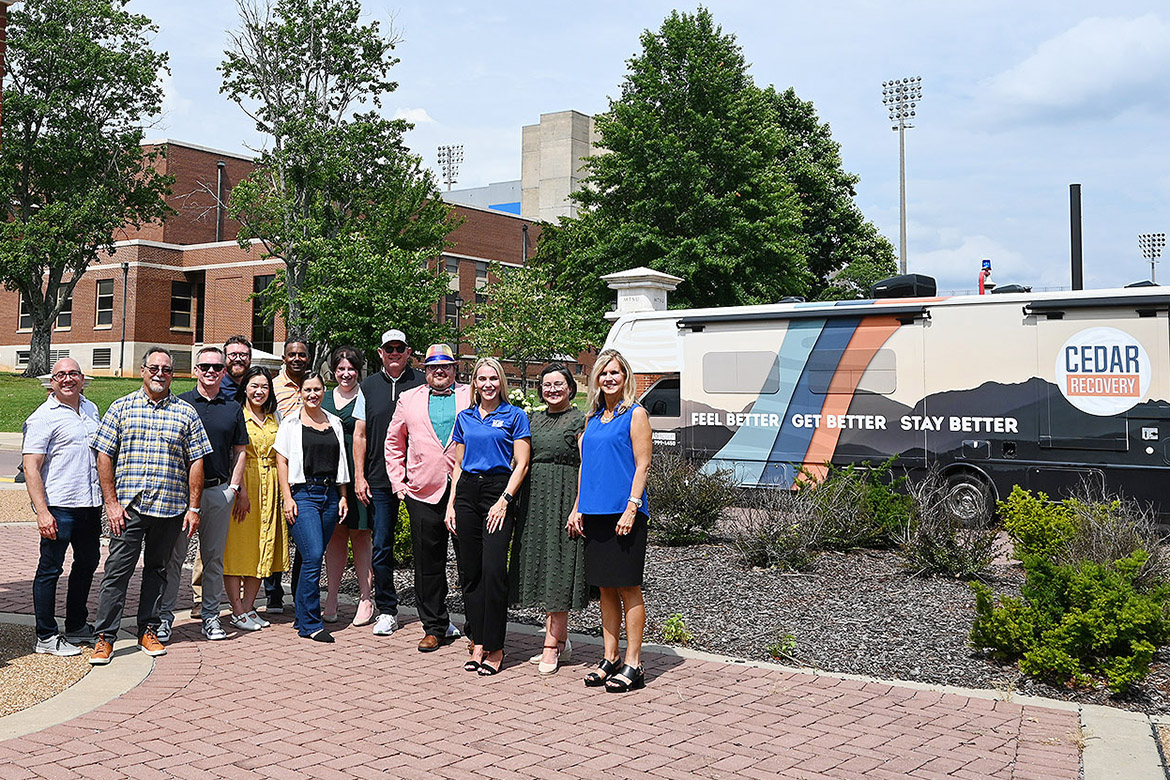
• Helping with Disaster Recovery: Department of Social Work lecturer Violet Cox-Wingo’s Empathy on the Line project trains students in disaster relief, equipping them with skills in case management and crisis intervention. The initiative has trained 109 students, many of whom continue volunteering with the American Red Cross.
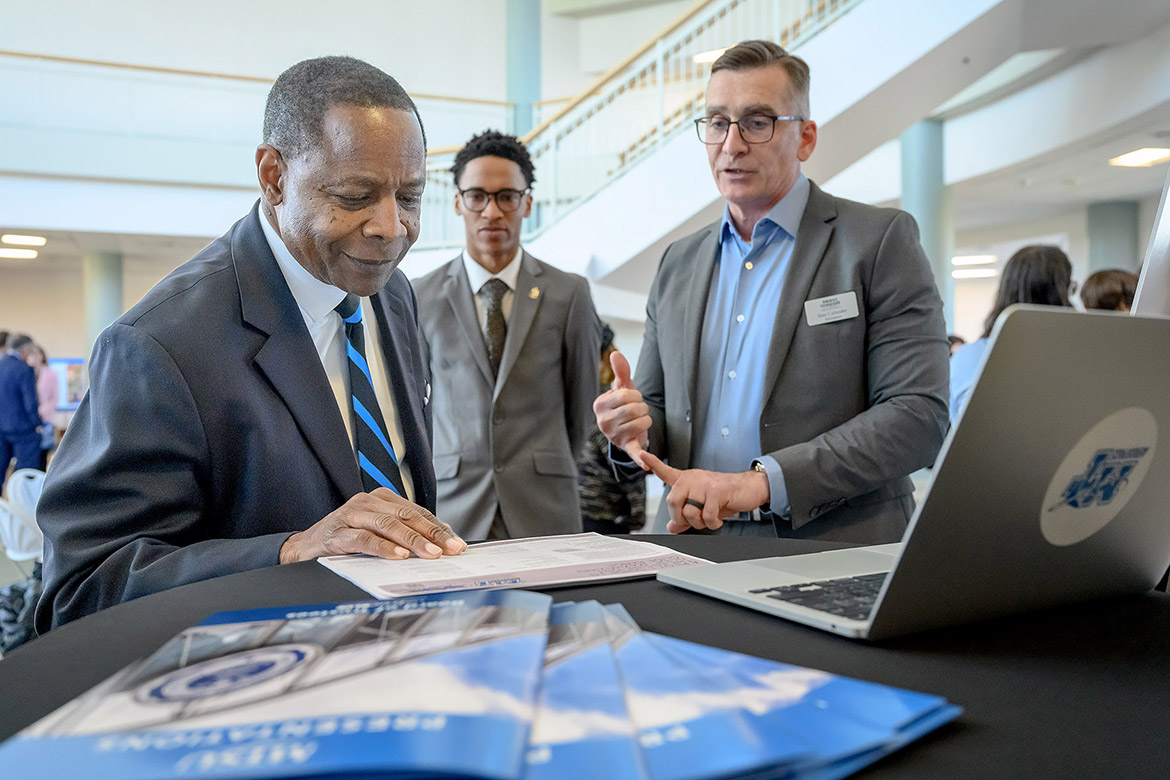
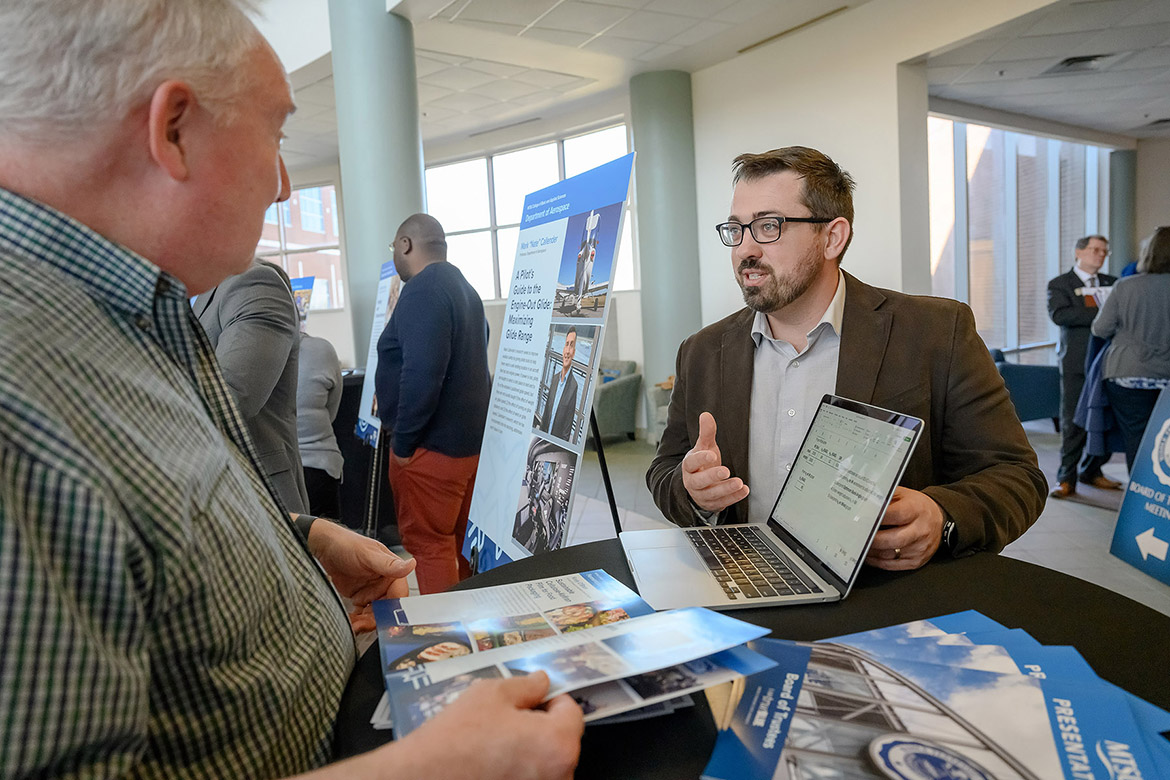
• A Pilot’s Guide to the Engine-Out Glide: Maximizing Glide Range: Aerospace Department professor Nate Callender’s research aims to improve aviation safety by providing pilots with tools to reach a safe landing location in a powerless aircraft. His research addresses the effects of weight, turning, and wind on glide speed and distance.
• Training Future Law Enforcement: Department of Criminal Justice associate professor Carter Smith and professors Ben Stickle and Thomas Jurkanin teamed up with Industrial-Organizational Psychology Program professors Michael Hein and Patrick McCarthy to redesign the curriculum used in basic police officer training academies across Tennessee. Graduate students from Criminal Justice Administration and Industrial-Organizational Psychology perform background research and logistical planning.
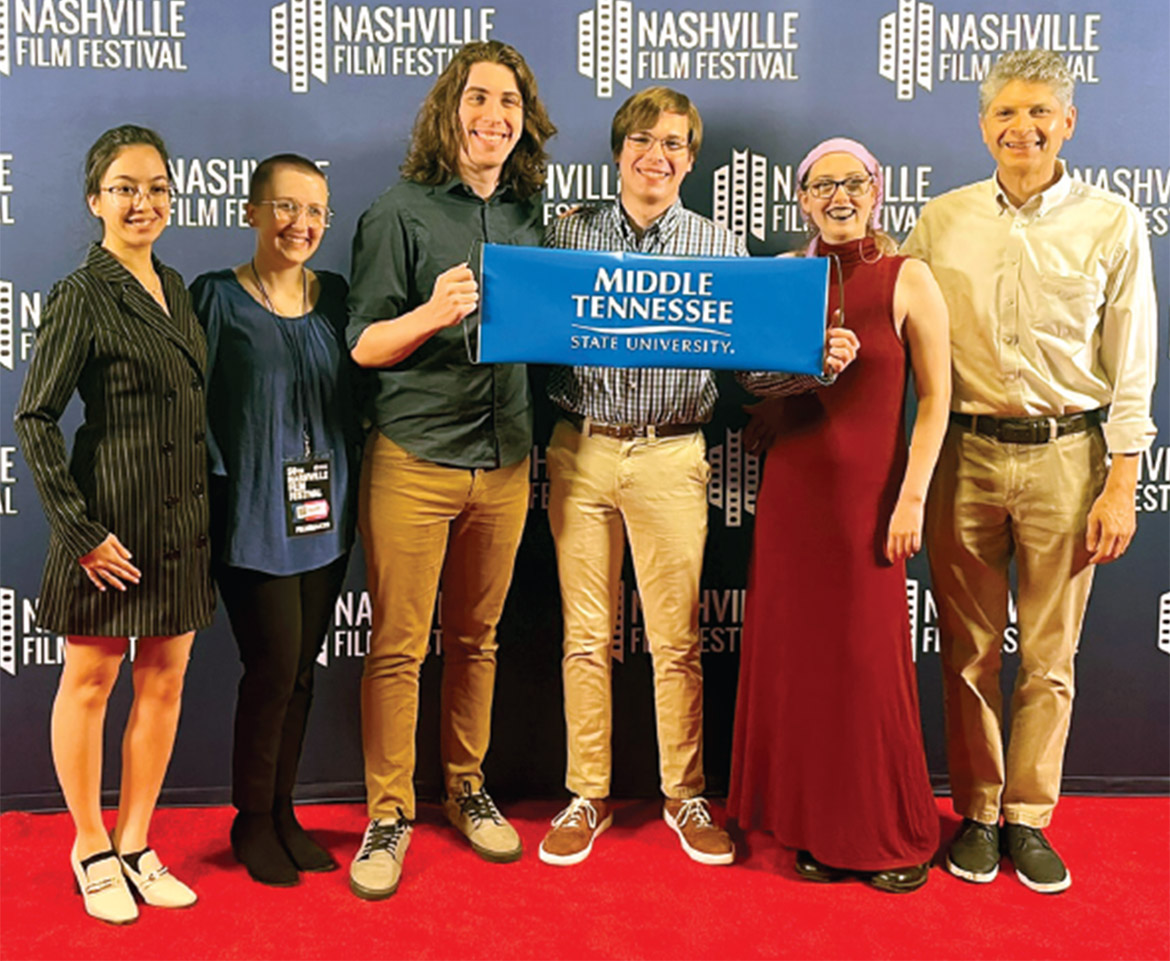
• MT IMAGINE Animation Studio: Under the direction of Department of Media Arts associate professor Rodrigo Gomez, the MT IMAGINE Animation Studio has secured $90,000 in grants and contracts, offering over 50 project-based paid internships. The studio’s client projects and accolades include a Silver Telly Award and official selection for multiple international festivals, including the 2025 Nashville Film Festival.
• Lighting Up Middle Tennessee Theatre: Department of Theatre and Dance professor Darren E. Levin has served as a lighting designer for over 160 productions, including partnerships with Nashville Repertory Theatre and Studio Tenn Theatre Company. He is committed to fostering the next generation of lighting design and technology professionals, with 50-plus students working with him as assistant and associate lighting designers.

• Transforming Brain Research into Real-World Solutions: The Psychology Department’s Brain and Language Lab, under the direction of professor Cyrille Magne, is leading transformative neurodevelopmental research, translating brain-computer interface science into real-world impact. Backed by more than $1 million in external funding and 150-plus students, the lab integrates imaging and genetics to develop diagnostic tools for reading and communication disorders. A key project leverages mobile electroencephalograms, or EEG, to decode imagined speech in nonverbal individuals, advancing the university’s commitment to research-to-impact innovation.
• Sustainable Cellulose-Kefiran Film for Food Packaging: Fermentation Science Program assistant professor Keely O’Brien developed a biodegradable food film packaging made from natural materials. The cellulose-kefiran films extend food shelf-life and offer health benefits.
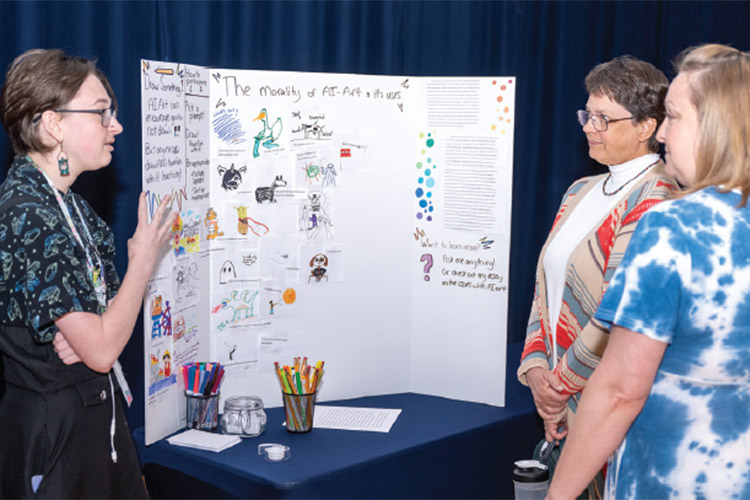
• Writing the Textbook and Saving Students Money: English Department professor Kate Pantelides has published four low- to no-cost open educational resources, or OERs, for general education English students and faculty, saving students more than $500,000 in textbook costs, earning $70,000 in supporting grants and including 14 authors.
• Remembering the Holocaust: Department of History assistant professor Ashley Valanzola is an expert on modern France and Holocaust history. She authored “When She Remembered,” examining influential Jewish women shaping Holocaust memory. She collaborates with the Nashville Holocaust Memorial and leads the Holocaust Studies Program at MTSU.
— Nancy DeGennaro (Nancy.DeGennaro@mtsu.edu)




COMMENTS ARE OFF THIS POST