
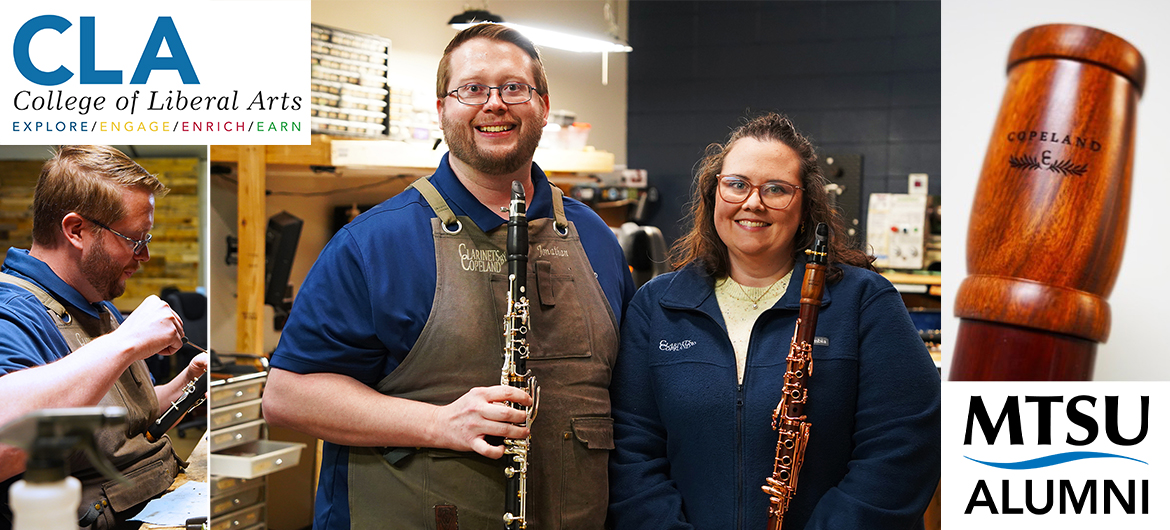
SHELBYVILLE, Ky. — When the door opens at the Clarinets by Copeland workshop in this small Kentucky city resting between Louisville and Frankfort, the first thing you notice is the quiet — not silence, but focus.
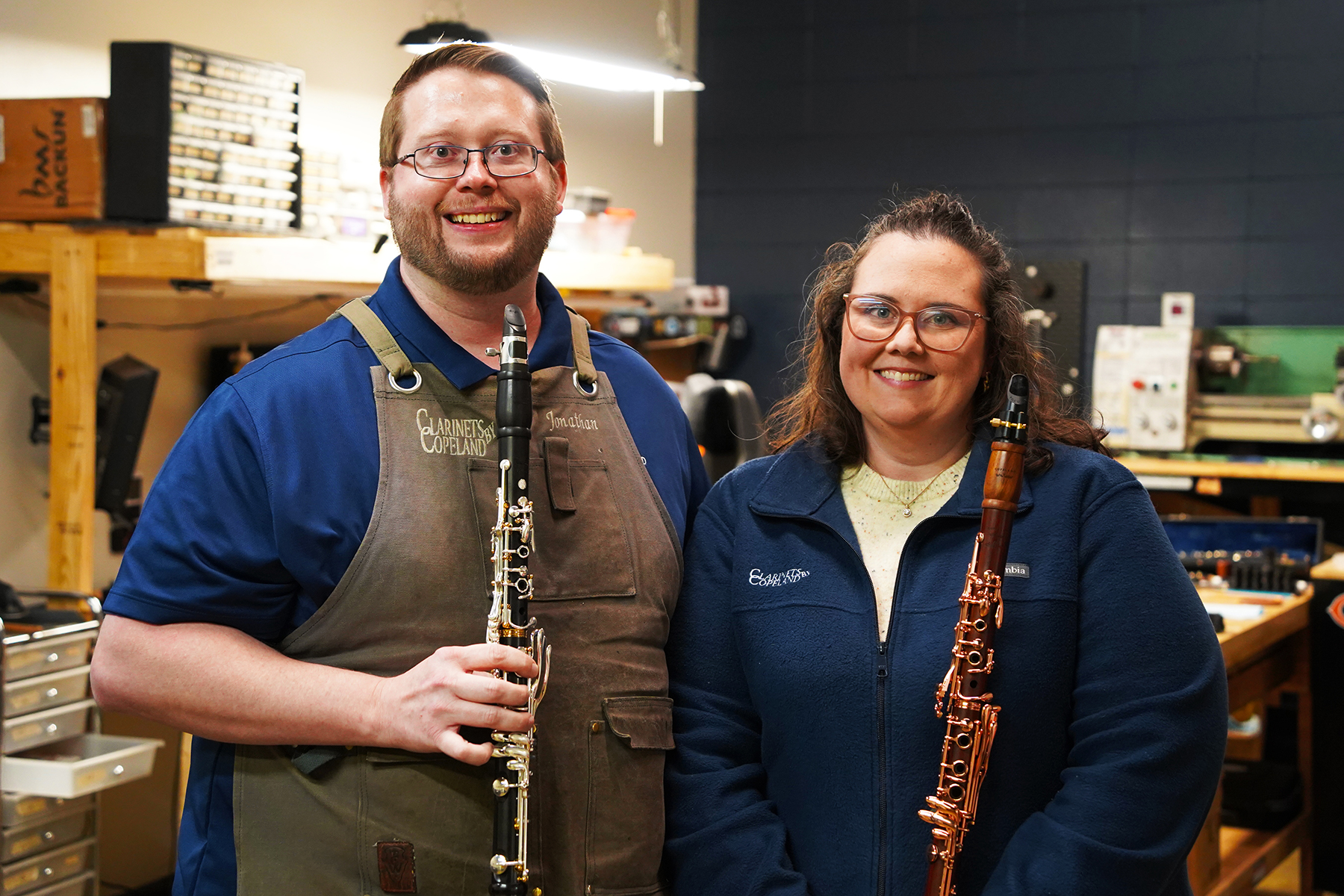
Jonathan Copeland sits at his workbench, adjusting a clarinet part with the same patience he developed years earlier in practice rooms at Middle Tennessee State University’s campus in Murfreesboro, Tennessee. Nearby, fellow MTSU alum and wife Ashley Copeland answers questions from a parent whose child is trying an instrument for the first time.
Their business serves professional musicians, students and school programs across the country and internationally. It is not the path either imagined when they arrived at MTSU more than a decade ago, but it is one shaped by the habits and discipline they developed in college.
Making their way at MTSU
Jonathan and Ashley met long before enrolling at MTSU, growing up minutes apart near Knoxville. Both played clarinet and both were first-generation college students. They married while still in college, balancing coursework, rehearsals and performances.

In the MTSU School of Music within the College of Liberal Arts, they were immersed in an environment that demanded precision and accountability. Faculty expected preparation, ensemble work required collaboration.
Jonathan tested himself early, entering an international solo competition multiple times.
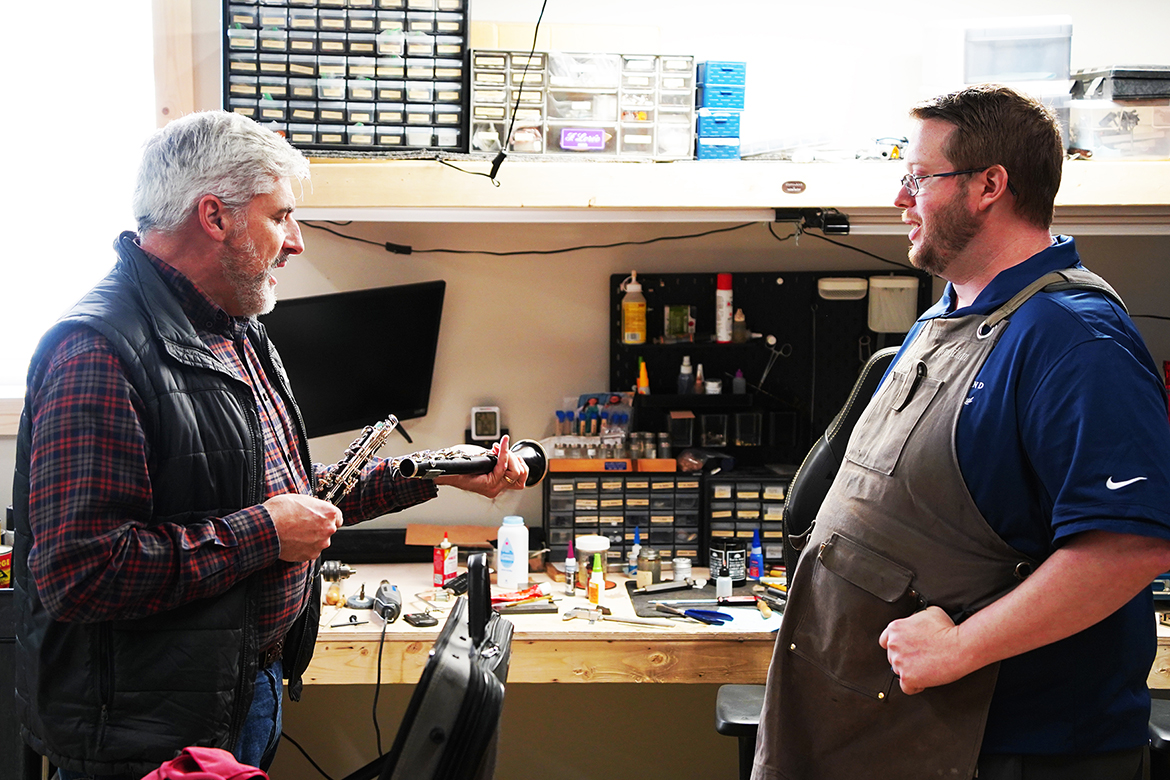
Todd Waldecker, a professor of clarinet at MTSU who taught both Copelands, remembers the pattern.
“He just kept entering the competition,” Waldecker said. “Finally, his fourth time, he made it to the international finals.”
Jonathan did not win, but Waldecker said the process mattered more than the result.
“That’s the only way to learn,” Waldecker said. “He’s not someone who wants to live with regret for not trying.”
Ashley’s education emphasized a different but equally demanding skill set. As a future music educator, she learned classroom management and how to connect with students.
“Ashley was a real people person,” Waldecker said. “She was always involved in service and community opportunities.”
Paths take different turn
After graduation, neither followed a traditional career path.
Jonathan pursued woodwind repair while continuing graduate studies at MTSU. Ashley entered the public school system, teaching in Title I schools where access to quality instruments was often limited.
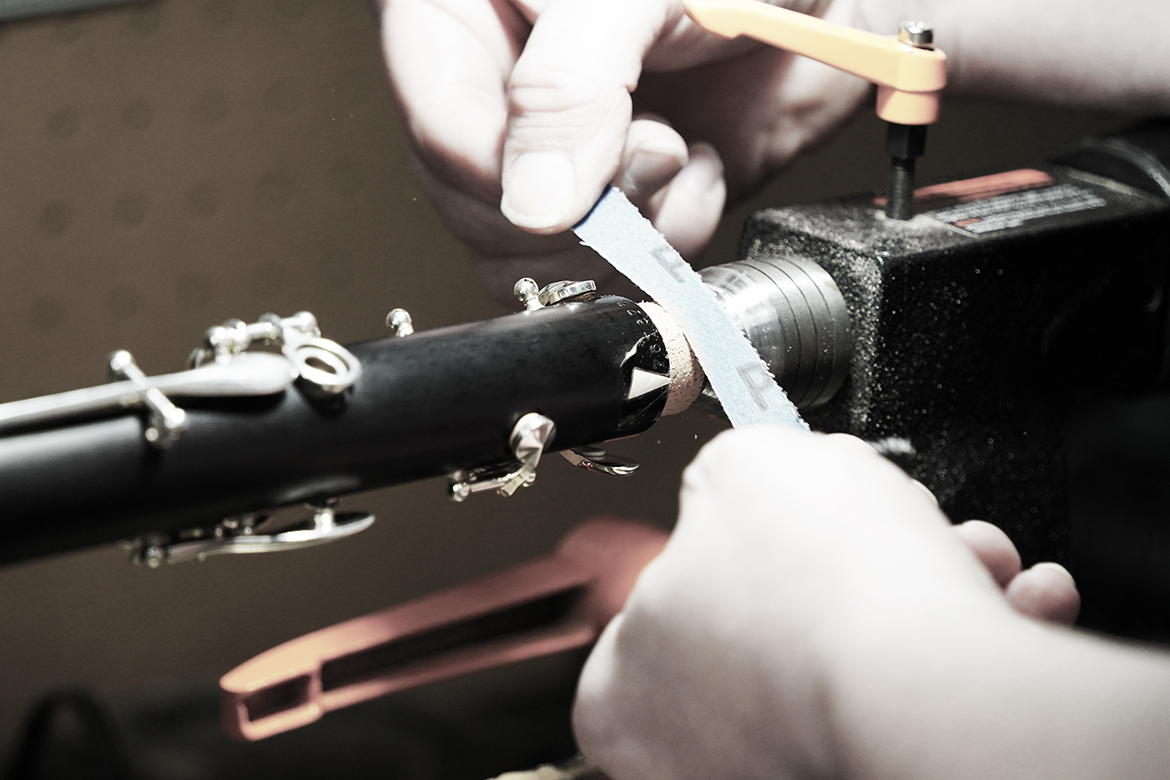

In 2019, the Copelands moved to Kentucky as Jonathan attended seminary and transitioned toward full-time work in the business they had been building. Shortly after the move, Ashley was diagnosed with cancer before her new teaching position’s health insurance had taken effect.
“The first moment I thought we made a mistake was actually moving day,” Jonathan said. “We had built a nice life for ourselves in Murfreesboro, and we sold it and downsized quite a bit to make the move.”
Ashley completed treatment while Jonathan worked long hours to sustain the business. When the COVID-19 pandemic shut down performances and schools, uncertainty returned.
“There actually was a silver lining,” Ashley said. “People were forced to stay home, but many turned to music and other things that are beautiful.”
One early client proved especially significant when the U.S. Army Band trusted Jonathan with a large repair project.
As Jonathan worked on instruments, patterns emerged.
“I started seeing a lot of new instruments coming in that weren’t really ready to be played,” he said. “People were spending a lot of money and still needed work done.”
Making beautiful music
That cycle of testing and refinement mirrored what he learned at MTSU and led to the Copelands’ own line of clarinets designed to meet professional expectations while remaining accessible.
“When we sell our instruments, it’s not just affordability,” Ashley said. “It’s quality and affordability together.”
Jonathan still relies on habits formed during his MTSU years.
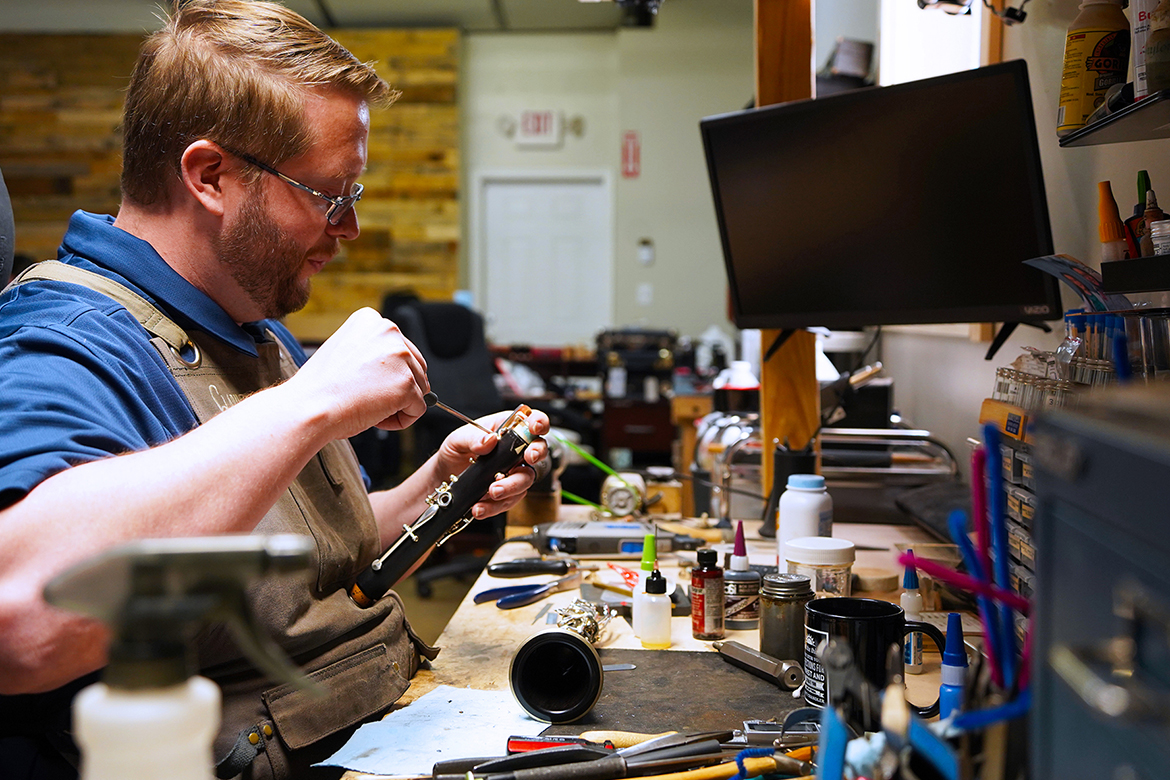
“When things start to feel overwhelming, I have to write it down and work through it like a checklist,” he said.
Waldecker sees the connection clearly.
“The same discipline that makes a strong musician makes someone capable of building something like this,” he said. “They didn’t do this by themselves. They had a lot of people along the way, and they were always coachable.”
Ashley and Jonathan Copeland did not leave music behind. They carried it with them — still practicing, still refining and still building, just in a different way.
— Mike Davis (Michael.Davis2@mtsu.edu)




COMMENTS ARE OFF THIS POST