
By Zoee McDow
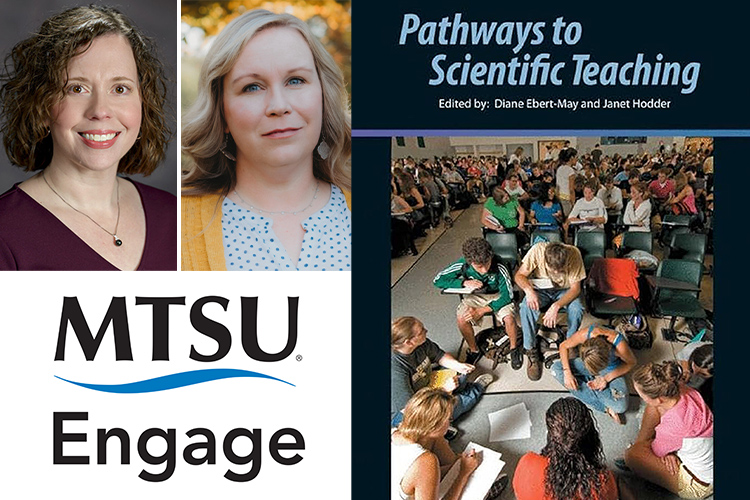
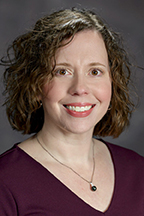
MURFREESBORO, Tenn. — Middle Tennessee State University’s Sarah Sewell Pierce, an instructor and coordinator in the Department of Chemistry, will serve as the Engage program’s Faculty Fellow this academic year.

Engage faculty are encouraged to utilize active learning techniques in their teaching, and Pierce will serve as a resource for colleagues interested in adopting active learning techniques in their classrooms. Pierce’s presentation is available for faculty to view on the Engage website at mtsu.edu/engage.
In the video, she details her journey into active learning as well as its benefits. She said in the beginning of her teaching career, she was not satisfied with how her students viewed her class.
“I wanted students to be excited to come to class,” Pierce said. “I wanted to think a lot about the culture of the classroom.”
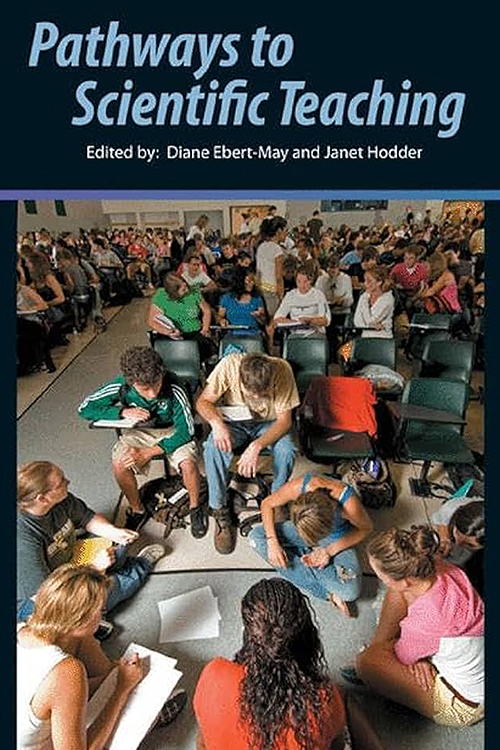
Her first step was reading a book called “Pathways to Scientific Teaching,” edited by Diane Ebert-May and Janet Hodder.
After this, Pierce said, “I dove into educational literature and discovered active learning. I attended workshops and conferences. I completely changed my teaching style, adding things like group work and personal response systems.”
This interest in active learning eventually led her to Engage — an academic enhancement program dedicated to promoting students’ integrative thinking and reflection.
Pierce spoke of the impact Engage has had on her teaching.
“For me, as a professor, it makes me excited about these out-of-the-classroom experiences and these signature assignments. I can see where having those things helps students make connections between their classes,” she said.
Engage Summer Institute
Pierce described the Engage Summer Institute, where professors work with each other to design their Engage courses.
“That support really helped me get started,” Pierce said. “Talking to other faculty and seeing what they were doing really gave me the confidence to say, ‘OK, I think I can do an Engage course.’”

Pierce utilizes Plickers, a personal response system that gives real-time data about students’ comprehension of material, in her classroom. This technique keeps students engaged while helping her tailor the lesson to the class’s needs. She also uses a flipped classroom model in which students watch brief recorded lectures before class and complete work during class.
Pierce said student reactions to these techniques have been overwhelmingly positive.
“They say, ‘I’ve never had a class like this, and I really liked it. I’ll look around and I’ve got engaged students at 8 o’clock. I really think that’s a win,” she said.
Pierce has two suggestions for professors looking to start using active learning techniques in the classroom — observe colleagues who use these techniques and be open to trying multiple methods.
“There are a lot of different types of active learning out there. There’s going to be something that fits your personality and your students,” Pierce said. “I honestly think there’s an active learning technique for every faculty, you just have to figure out what it is. Talk to people who are doing active learning. Go sit in their classes and see how they are doing it.”
Pierce also encouraged professors to persevere as they implement techniques.
“I think not giving up is really important,” Pierce said. “I tried a lot of things that didn’t quite work for me or my students, so it took me a while to land on the thing that worked for everybody.”
She emphasized that the only way to find the technique that works best for your classroom is to try it out.
To find out more about Engage or how you can attend the Engage Summer Institute, go to https://www.mtsu.edu/engage/ or email Julie Myatt, Engage director, at julie.myatt@mtsu.edu.
— MTSU student Zoee McDow is a senior from Fayetteville, Tenn., studying Religious Studies and Public Writing and Rhetoric.




COMMENTS ARE OFF THIS POST