
by Brian Hudgins, Drew Ruble, and Stephanie Wagner
When Liz Barnes researches the most effective ways for faculty members to teach students, she has her own storied personal and educational history from which to draw.
Barnes, an associate professor of Biology, dropped out of high school and moved away from home at 16 years old. Her mother was a single teenager when Barnes was born—and Barnes’ mother later struggled with addiction to prescription painkillers.
Barnes took a full-time job as a waitress at a local Denny’s to financially support herself during her own teenage years.
“But a couple of years after that, I knew I wanted to do something different than wait tables,” Barnes said.
She found out she could enroll at a community college without a high school diploma or even an equivalency.
“I went in and tested, and they put me in classes that were at the level I needed,” Barnes said. “I actually had to spend a lot of time taking basic algebra and things like that to catch up. But it was totally worth it.”

Barnes discovered her affinity for science while at Glendale Community College in Arizona. Considering her childhood had been chaotic and lacked structure, Barnes said, science gave her a path to make sense of the world.
“I fell in love with that idea,” Barnes said. “Of course, science is not certain . . . but it was much more certain than what I had experienced in my past. I felt like I could know some things with a level of certainty, whereas before, I felt like there wasn’t a lot of truth in my life.”
Attending college also provided Barnes the opportunity to meet a new peer group.
In addition to missing the academic milestones associated with high school, Barnes had missed the social connections made during a final year or two of school.
“I had been an outcast, but when I found the scientific community, they were the people who seemed to think like me, and I fit in,” Barnes said. “That was something I previously did not have.”
Finding Her Footing
Barnes first enrolled in biology because it was a pre-med requirement and she thought she wanted to become a medical doctor.
It was in that class, though, that she discovered her true academic passion—evolutionary biology.
Concepts like the common ancestry of all life on Earth—the idea that every person and animal comes from a common origin from billions of years ago that began as a chemical reaction—inspired her.
“It’s a beautiful idea because it made me realize just how related everything is and how all of life is just one big family,” Barnes said.
“I also discovered I really fit in with academia, so I switched my goal from being a doctor to pursuing a role as a professor.”
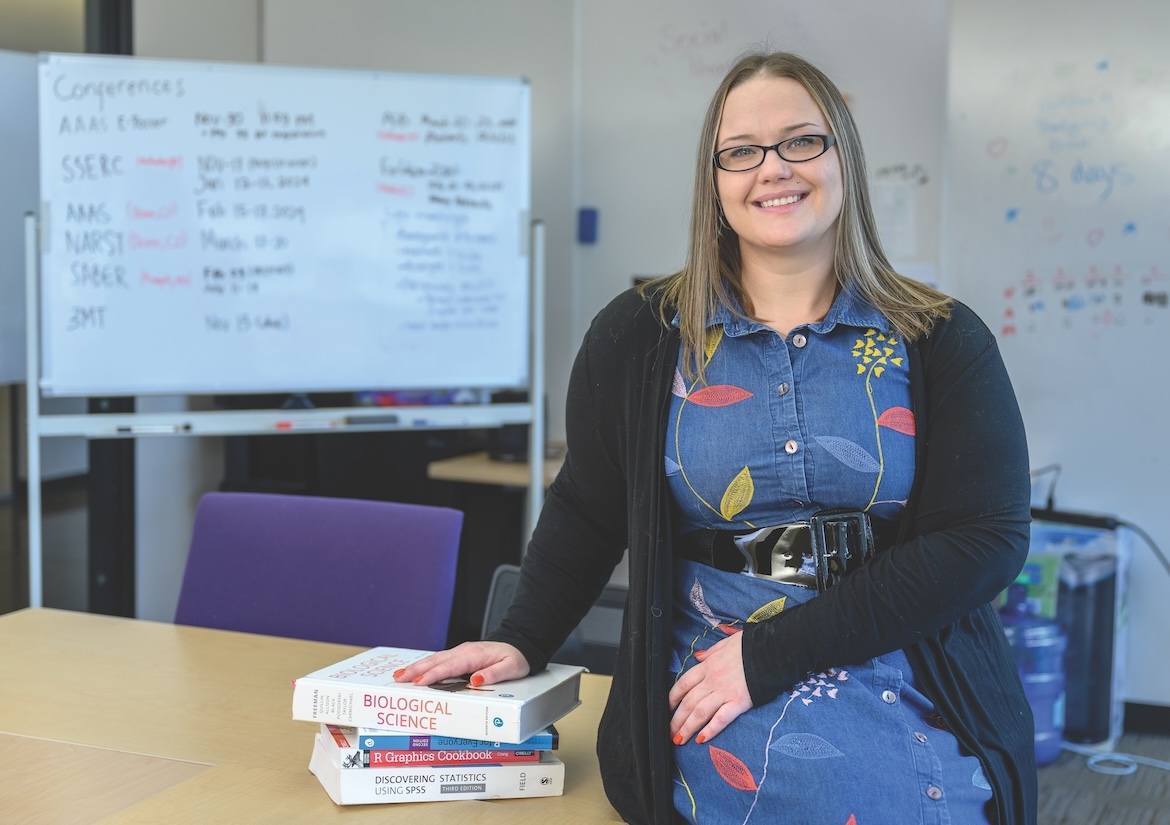
CONSIDERING HER CHILDHOOD HAD BEEN CHAOTIC AND LACKED STRUCTURE, BARNES SAID, SCIENCE GAVE HER A PATH TO MAKE SENSE OF THE WORLD.
Barnes had found her calling. A first-generation community college student, she achieved excellent grades and eventually transferred to Arizona State University and became part of the Biology and Society program there.
Doing so meant Barnes now interacted not only with faculty members and peers in the biology department, but also with historians, philosophers, and education researchers, solving problems in an interdisciplinary way. Barnes became fascinated with the biological evidence about evolution and the societal controversy surrounding competing viewpoints about it.
Barnes received her first opportunity to do research with Arizona State’s Sarah Brem, an evolution education researcher who has since retired. Brem gave Barnes a job as a research assistant.
“I was still working at Denny’s at this point,” Barnes said. “As soon as she gave me the research assistantship, I quit my job at Denny’s. That was so big for me because I could actually focus on my studies.”

Forging a Career
Barnes completed her undergraduate, graduate, and doctoral studies at Arizona State. While there, she landed a prestigious National Science Foundation (NSF) graduate research fellowship (early CAREER grant), one of the most well-known and highly sought-after grants for pre-tenured faculty across the country. Awarded to Barnes in 2023, it amounted to a five-year, $1 million grant to pursue research—a dream come true that Barnes said she never could have imagined earning as a high school dropout.
Upon completion of her doctorate, Barnes said, she found the opportunity to join MTSU appealing in part because of the presence of Michael Rutledge, a prominent evolution education researcher, on the Biology faculty.
Tennessee’s rich history in evolution education also intrigued Barnes. The State of Tennessee v. John Thomas Scopes, a case better known as the 1925 Scopes Monkey Trial, centered on Scopes’ being accused of violating state law by teaching evolution in public schools. Scopes was found guilty; the Tennessee Supreme Court later overturned the verdict.
“It really shows how this topic captures the public’s attention because a lot of it was on the conflict between religion and evolution,” Barnes said. “And that was 100 years ago!”
As an instructor, Barnes encourages back-and-forth discussion about complex science and evolution aspects—a contrast to traditional faculty-student lines of communication from decades ago. Barnes said as classrooms have become larger and more diverse, students from various backgrounds share a wider variety of opinions.
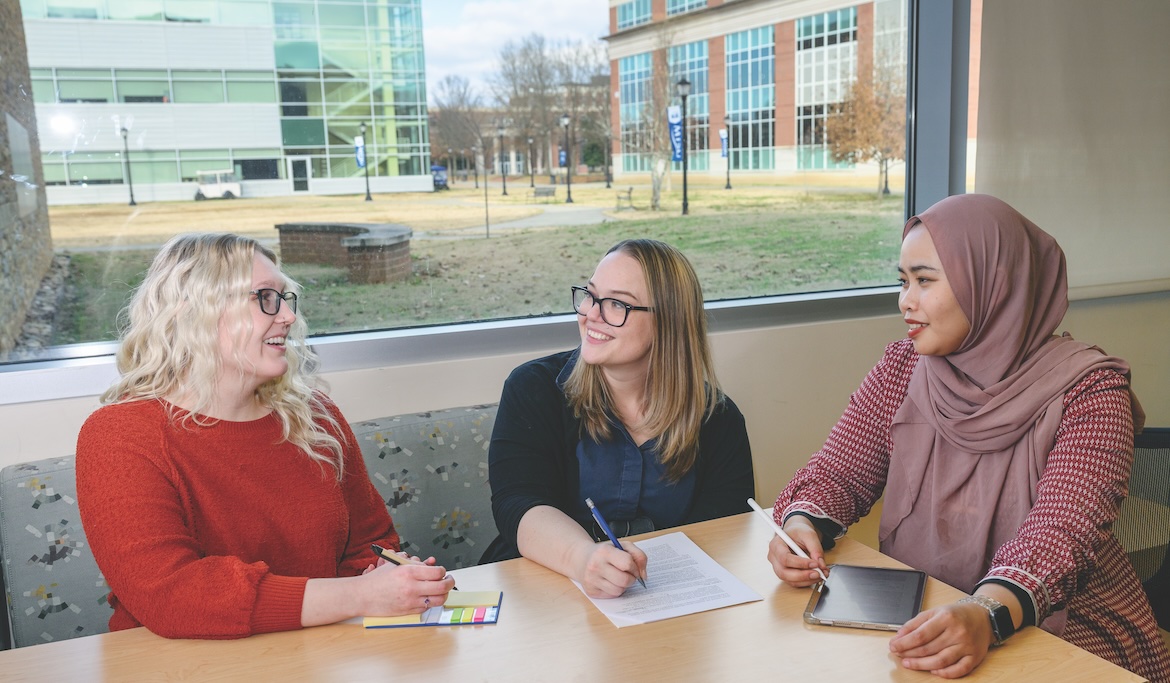
SIMILAR TO BARNES, MTSU’S CURRENT STUDENT POPULATION IS MADE UP OF MANY FIRST-GENERATION AND LOW SOCIOECONOMIC STATUS STUDENTS.
“My position is meant to do research on how to teach a wide range of students effectively about biology topics,” Barnes said. “Back in the day, we very much took this stance of the ‘sage on the stage.’ It was this idea of a professor up at the front of class talking at the rest of the class. What we are finding is that is not always the most effective way to reach students. More effective approaches are to be more student-centered and get them active in their learning.”
Barnes’ personal background certainly helps her communicate effectively with students. Similar to Barnes, MTSU’s current student population is made up of many first-generation and low socioeconomic status students. As such, her success serves as a real-life testament to the dreams of many of her students. (Barnes is also actively using her $1 million NSF grant not only to further her own research but to offer MTSU students—many with stories similar to her own—research positions and opportunities.)
Jenefer Husman, a professor in the College of Education at the University of Oregon, worked with Barnes when Barnes was an undergraduate at Arizona State. Husman said she has always marveled at Barnes’ intrinsic knack for teaching.
She related a personal story about the time she climbed in a cab following the American Educational Research Association’s annual conference and had a driver excitedly start telling her about what a professor named Liz Barnes had just told him about her work supporting students’ learning of biology and evolution alongside strong religious convictions.
“He was so excited about her work that he said he was telling all his rides about it. This is what Liz does: She excites people and inspires them,” Husman said.
Speaking the Language
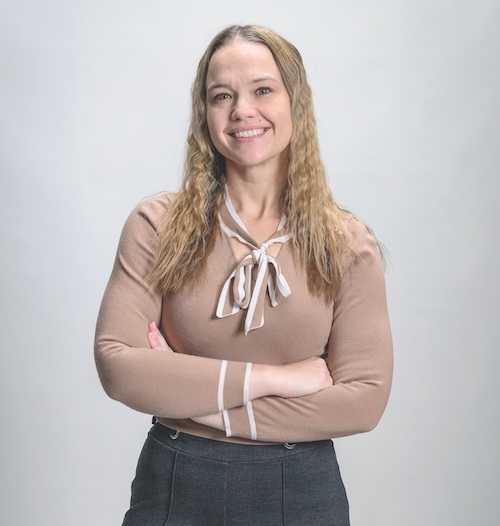
Given Barnes’ ability to relate—and communicate—it should come as no surprise that her other research specialty is in fact science communication.
Barnes is a noted scholar on the attempt to remove heavy jargon that makes science feel mysterious, complicated, or out of reach and to bridge the gap between scientists and society, thereby building trust in science.
According to Barnes, neither students nor the public can deeply engage with critical yet contentious science issues like climate change or vaccine safety (or evolution) if they have to first overcome an insensitive or even condescending delivery.
WE NEED A SCIENTIFIC WORKFORCE THAT BUILDS A POSITIVE RELATIONSHIP BETWEEN SCIENCE AND SOCIETY TO COLLABORATIVELY SOLVE THE ISSUES THAT FACE US TODAY.
“People tend to trust scientists, which is great,” Barnes once told MTSUnews.com. “They see scientists as wanting to contribute positively to society. But people also say that scientists are not the best communicators. They can come off as cold and use inaccessible language that alienates people.
“We want to change this, to bridge this divide by teaching undergraduate science students—the next generation of science communicators—to be more relatable and collaborative with the public. We need a scientific workforce that builds a positive relationship between science and society to collaboratively solve the issues that face us today.”
Barnes recently earned a $75,000 NSF grant to help develop the Science Communication Education Research Network (SCERN), alongside colleagues from the University of Minnesota, Colorado State University, and Northern Illinois University and integrating other researchers in the field from across the country. (In all, Barnes’ ever-expanding catalog of research totals over $3 million in funding from multiple prestigious grants.)
It’s an impressive résumé for a high school dropout. And the 30-something Barnes is far from done. From serving flapjacks to helping demystify the world around us, Barnes’ own evolution serves as a testament to the fact that curiosity and strong intention can indeed overcome imperfect circumstances.
Watch full episodes of “The Research Minute” podcasts





COMMENTS ARE OFF THIS POST