
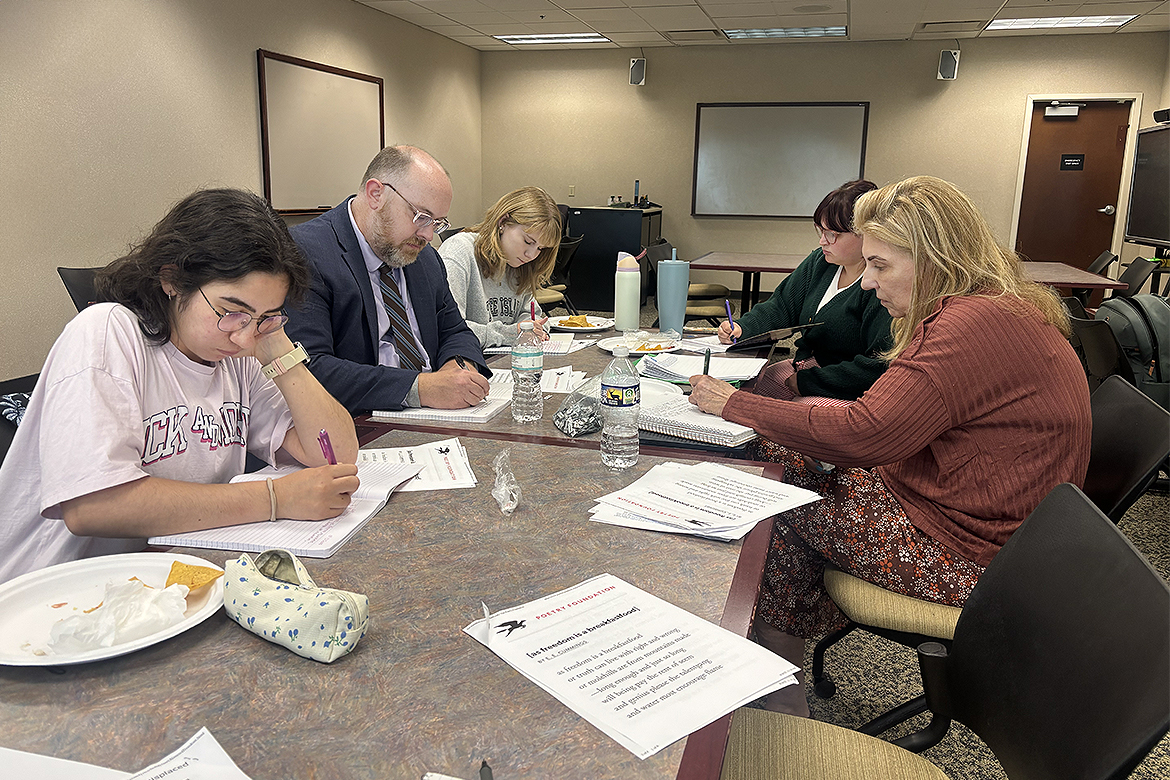
MURFREESBORO, Tenn. — Every week throughout the semester, a small group of Middle Tennessee State University students gathers in a room on the third floor of James E. Walker Library for a quiet hour of writing, reflection, craft-making — and yummy tacos.
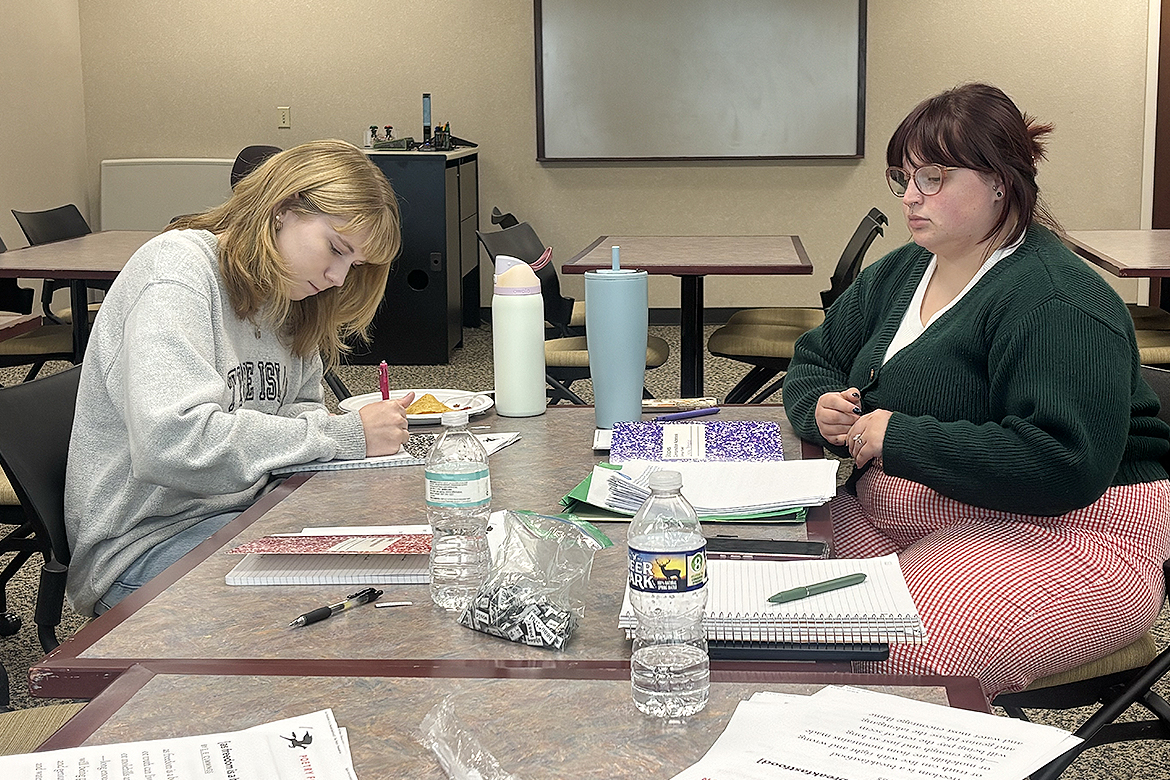
The free educational workshop, “Tacos and Trauma,” was created by MTSU graduate student Hillorie McLarty, who wanted to combine creativity, mindfulness and conversation around mental wellness. Sessions continue through the third week of November from 1-2 p.m. each Friday in Room 387 of Walker Library and are open to anyone on campus.
“It’s a safe space where I can express myself, away from the familiar noise and crowd, along with people who are there to listen and not judge,” explained Gamze Mert, a senior psychology major with minors in neuroscience and family studies. “Of course, free tacos also always bring comfort. I also love Hillorie’s approach, understanding and the environment she created for students on campus.”
During each session, McLarty invites participants to listen to songs tied to that week’s theme — such as family, relationships, or resilience. Then the group does a 10-minute free write. Participants are encouraged to write freely, without worrying about grammar, structure, or even sharing their work aloud.
“This isn’t about producing Hemingway,” explained McLarty, who also works in the Margaret H. Ordoubadian University Writing Center at MTSU. “It’s about helping people who think they can’t write — or don’t want to — realize that they can.”
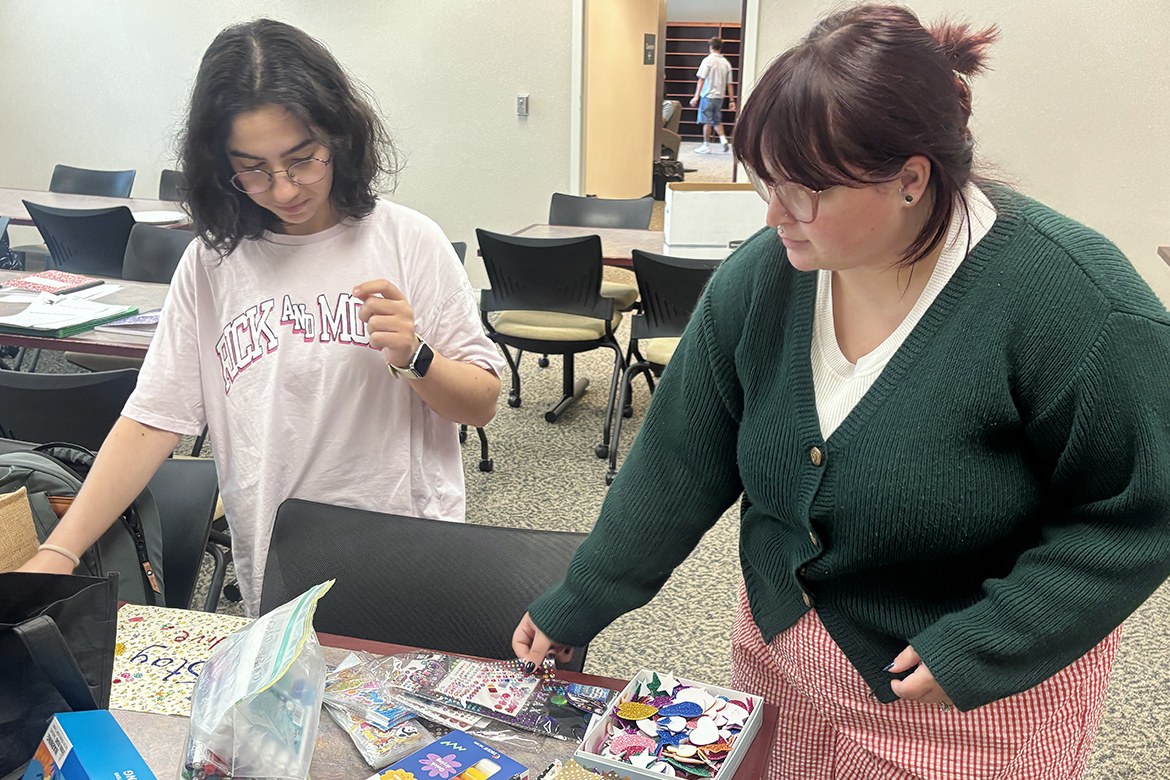
Participants enjoy free tacos while they work. After the writing portion, the group members are encouraged to decorate quilt squares that will eventually be assembled by a fabric artist.
Methods rooted in science
For McLarty, the workshop combines years of academic study and personal experience. A breast cancer survivor and lifelong writer, she has spent much of her graduate work studying trauma-informed writing and how storytelling and reflection can help people process difficult experiences.
“I cannot thank Dr. Elizabeth Myers (assistant director of the writing center) enough for her belief in my work. Both Dr. Myers and I are dedicated to the idea that writing can help people reconnect with themselves after trauma,” McLarty said. “I’d also like to thank Dr. James Hamby, director of the writing center, for his support of this project. He has attended every session.”
McLarty’s methods draw on neuroscience and mindfulness as well. She believes in the power of neuroplasticity — the brain’s ability to change through positive, repetitive actions.
“Rather than just focusing on improving your writing skills, it becomes a way to let your thoughts and feelings flow onto the page with your pen,” said Mert, an undergraduate researcher at the Tennessee Center for the Study and Treatment of Dyslexia at MTSU. “This expression can lighten your mind, letting you see your emotions take shape and giving you a moment of clarity as your inner world finds a place in the real one.”
Mert, who has attended each of the sessions throughout the semester, said the hourlong meetings have become an essential part of her week.
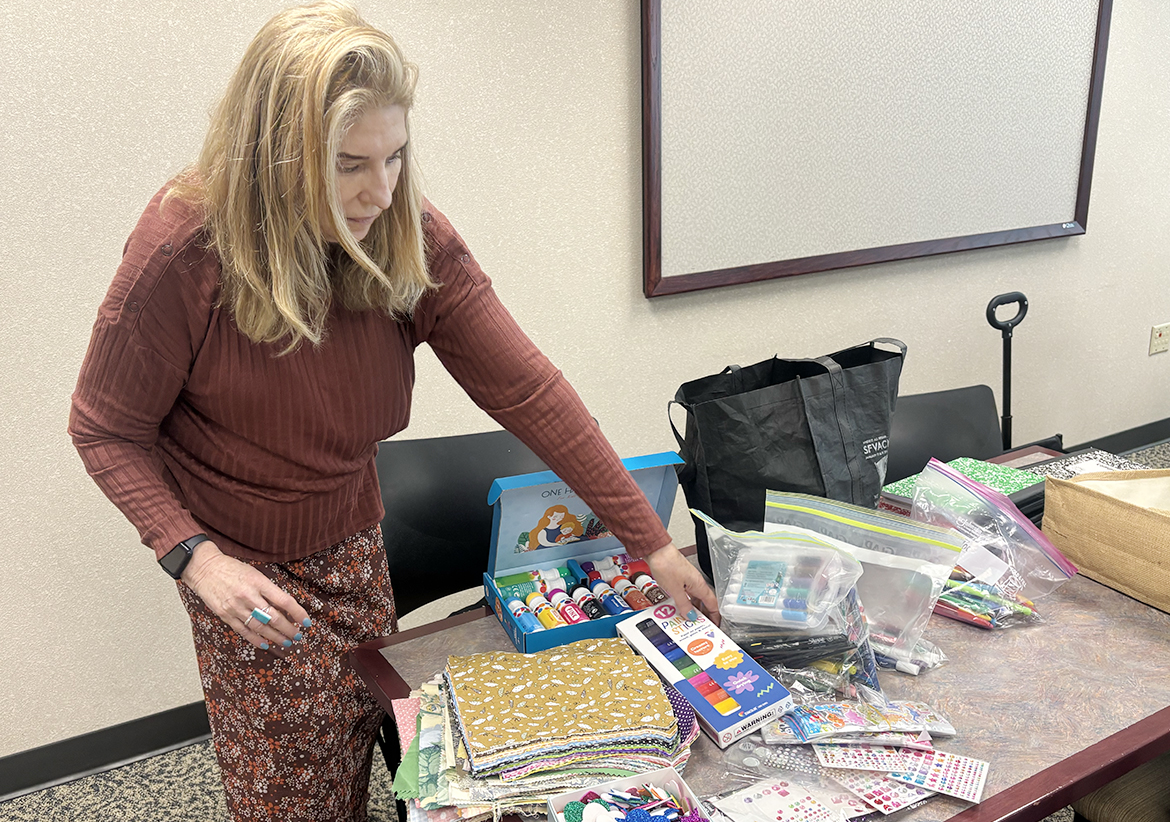
“I make it a priority to keep my schedule clear every Friday for this mandatory ‘me-time,’” said Mert, an Honors College Buchanan Fellow and Honors Ambassador. “I engage in writing, listening, crafting, and enjoying good food. I also appreciate the friendships I’ve earned through this activity.”
Whether it’s through words, art or the small craft project, “Tacos and Trauma” invites students to explore emotion and creativity in a space that’s equal parts writing workshop and emotional recharge, McLarty said.
“I’ve seen students who were afraid to write gain confidence,” McLarty said. “One told me she got an A on a 20-page paper because this group took the pressure off and helped her find her rhythm again.”
No registration is required to participate in the free writing sessions each Friday, which McLarty plans to continue into next semester. “Just show up,” she said. For questions, email McLarty at hsm3c2mtmail.mtsu.edu.
— Nancy DeGennaro (Nancy.DeGennaro@mtsu.edu)




COMMENTS ARE OFF THIS POST