
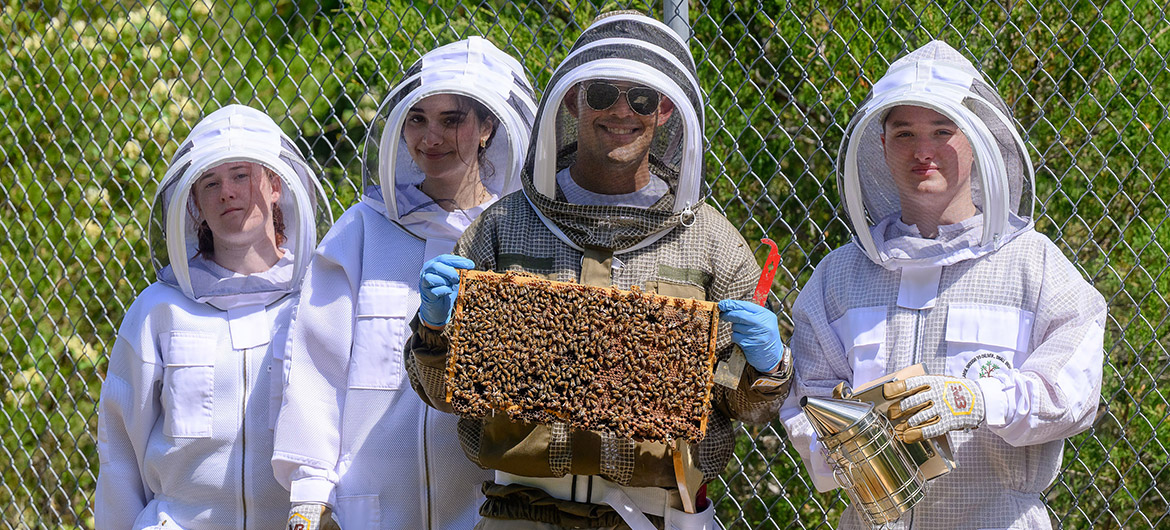
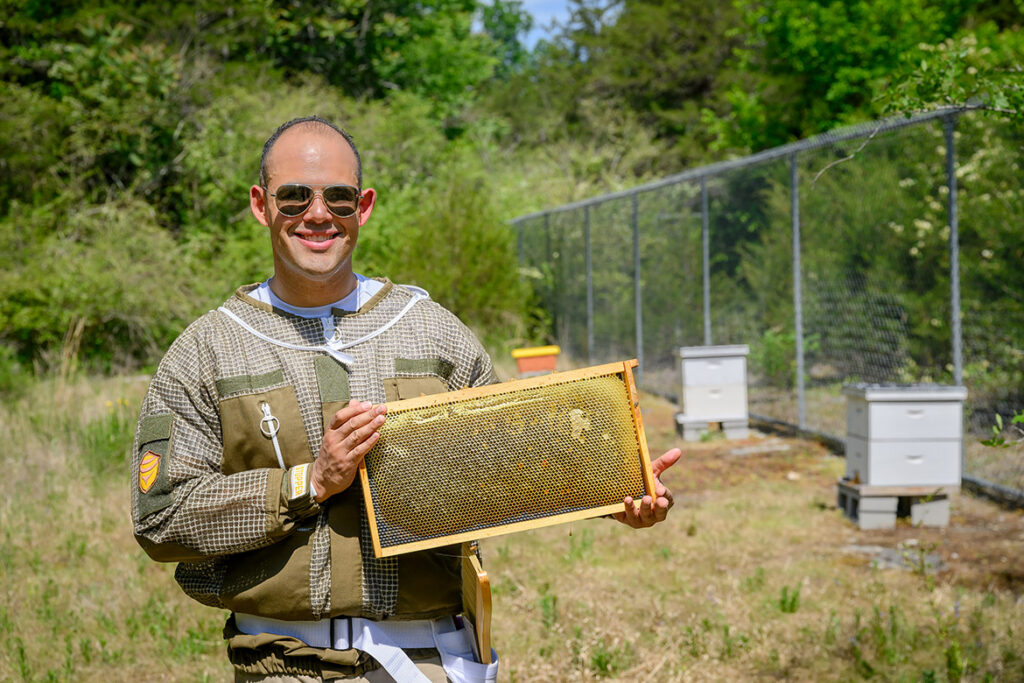
MURFREESBORO, Tenn. — Standing beside a handful of buzzing honeybee hives at Middle Tennessee State University’s Small Farm facility, assistant professor of biology Manuel Giannoni-Guzmán isn’t just watching nature’s mighty creatures collect pollen at this outdoor lab.

He and his team of researchers are studying the circadian rhythm of these honeybees.
“Our lab is interested in looking at how bee brains process and encode time of day information,” explained Giannoni-Guzmán, wearing his beekeeping jacket, “and how brains, including ours and those of other animals, keep track of time and use that information.”
Through a recently awarded $200,000 USDA National Institute of Food and Agriculture, Giannoni-Guzmán and his student research team hope to develop ways to better understand the biological clock inside honeybee brains — research that could ultimately help protect pollinators responsible for producing about one-third of the world’s food. The data could also bleed into research that benefits humans.
The grant supports researchers — many of them MTSU students and alumni — working alongside Giannoni-Guzmán at the honeybee colonies tucked away in a remote area of the MTSU farm located in Lascassas. The team currently maintains 10 colonies and plans to establish an apiary next to the MTSU Science Building for educational and research purposes.
Why study honeybees?
Honeybees serve as perfect models for research because they exhibit many time-dependent behaviors in nature, the biology professor explained.

“They know exactly when to forage, when the queen should take a mating flight and when to stay inside to regulate temperature. Their internal biological clock controls all of that,” explained Giannoni-Guzmán as the colonies hummed with the nearly deafening sound of 100,000 buzzing honeybees.
To track the “how” and “why” of the bees’ behavior, researchers will engineer viruses to deliver fluorescent markers that reveal when these neurons are active and how they respond to changing environmental conditions.
“We’ve known for more than a century that bees remember the time of day associated with a food source, but until recently the underlying neuroanatomy and molecular mechanisms of how that time memory is stored and communicated in their brains have remained a mystery,” Giannoni-Guzmán said. “That’s where my lab comes in.”
But long-term goals for the research extend well beyond the laboratory.
Bees serve as an early warning sign
Once the markers are mapped, researchers can begin testing how environmental conditions like climate instability and pesticides affect the development and rhythms of these neurons.

“The pesticide industry has the approach, ‘Well, it doesn’t kill bees, so it’s absolutely safe for them,’ which is just probably not true. It’s important to understand how pesticides might affect behavior, even if they’re not killing our bees,” said Jocelyn Bransford, of Murfreesboro, a doctoral student and researcher at the Bee Lab.
Honeybees serve as Mother Nature’s “canary in a coal mine” and can be a warning signal for any detrimental changes.
“Bees are environmental biomarkers,” Giannoni-Guzmán explained. “When they’re doing great, we know they’re in a healthy environment. When they’re not doing great, they’re a call sign that something in the environment isn’t OK.”
By identifying changes in bees’ internal clocks before colonies begin to fail, the research could provide early warning signs for beekeepers and agricultural producers.
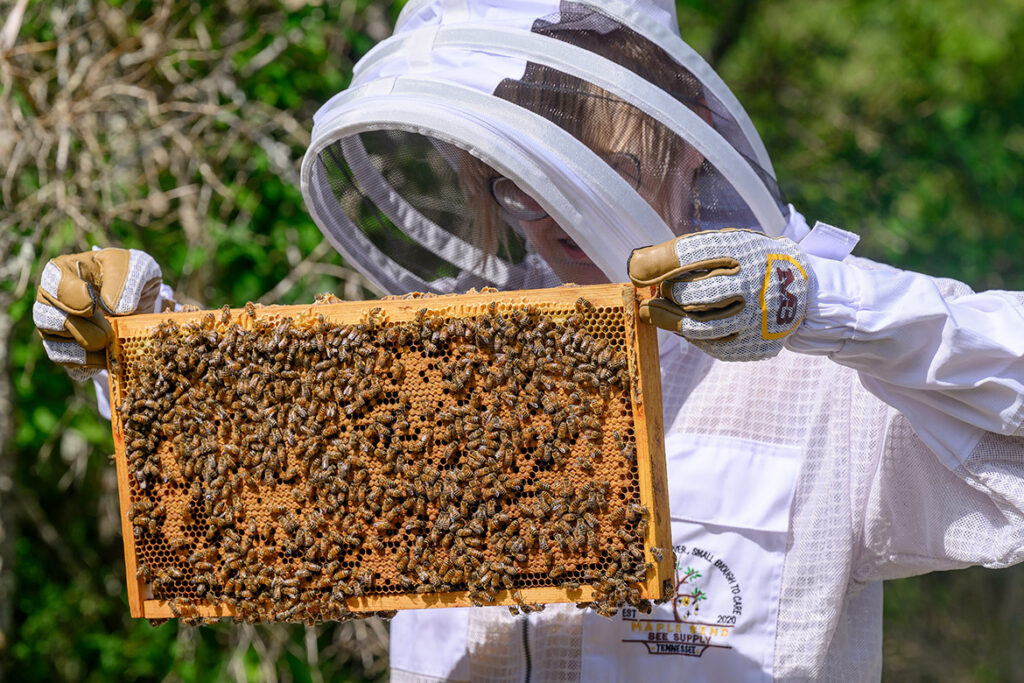
“Most people measure colony collapse by death, but there are a bunch of things that happen that will actually stress the hive out, leading to its collapse,” Giannoni-Guzmán said. “One of them is foraging decline. Another one of them is loss of ability to navigate.”
Both those behaviors are tied and linked to the circadian clock of bees.
“So the things that we’re looking at in the lab are five, six steps before the colony actually collapses. And while we’re measuring it in the lab, we can also measure it in the field,” the biology professor and neuroscientist said. “From that agricultural perspective, we’re trying to figure out a way to keep bees healthy and even make them healthier if possible.”
Outdoor lab provides ‘hands-on’ learning

For insect specialist and MTSU alumnus Jack Huckabay, a plant and soil science major who graduated in 2025, the experience has provided valuable hands-on research experience as he plans for the next phase of his academic journey.
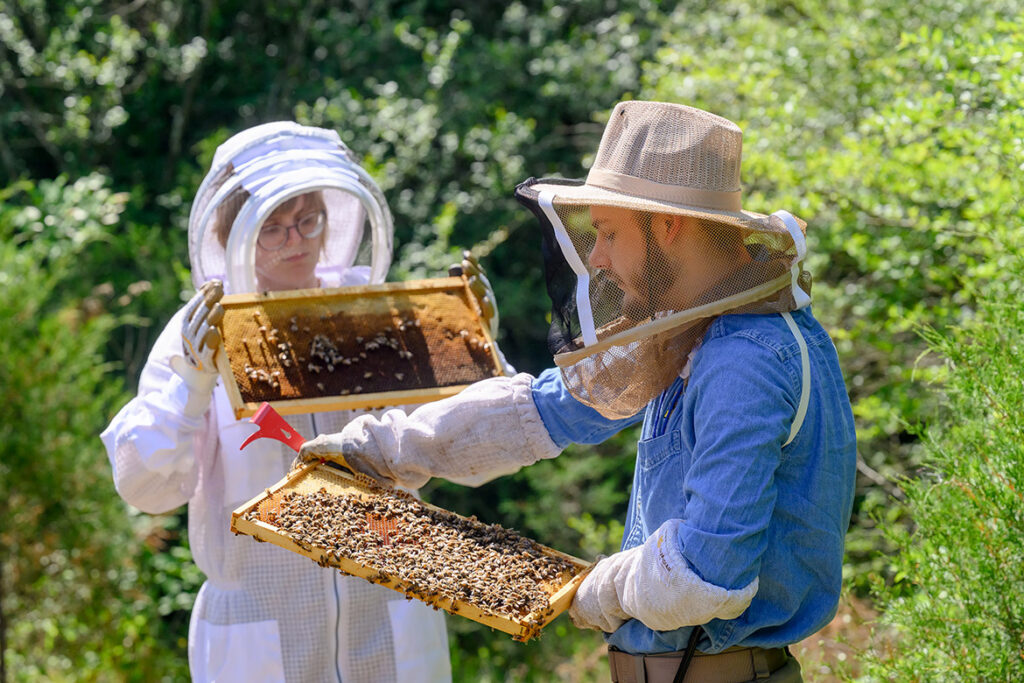
“Often, our field time is limited,” said Huckabay from underneath his beekeeping hood. “So working in the bee lab has taught me a lot about not only beekeeping, but real science as well. We’ve learned how to study the neurons in bee brains, how to monitor behavioral activity, and how to analyze data.”
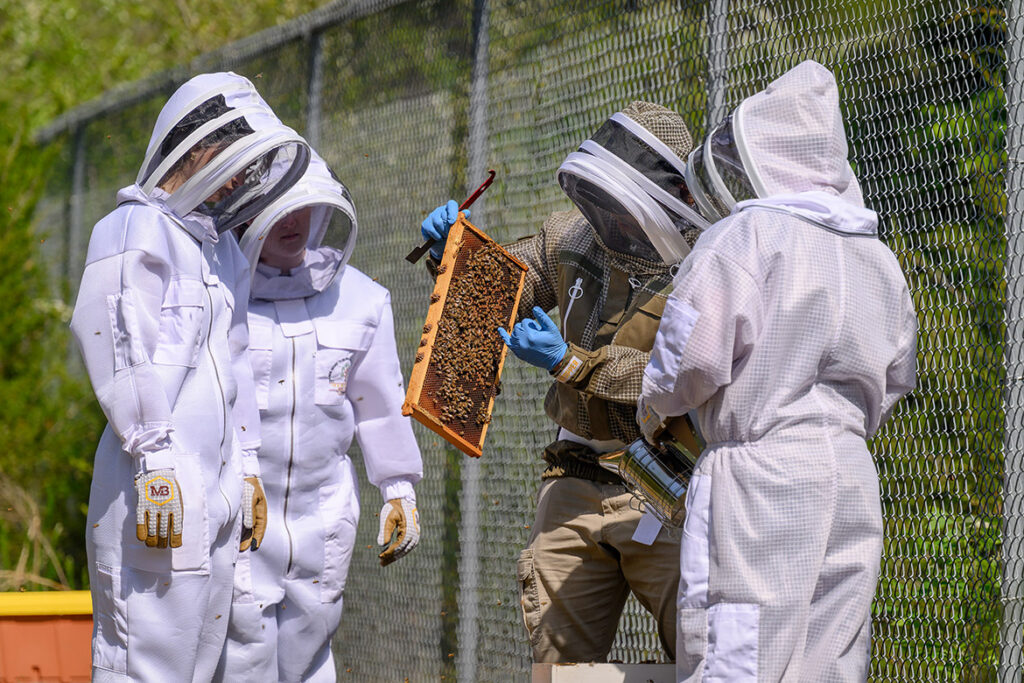
Out in the glade where all the hives are located, students regularly inspect colony health as they track honeybee behavior.
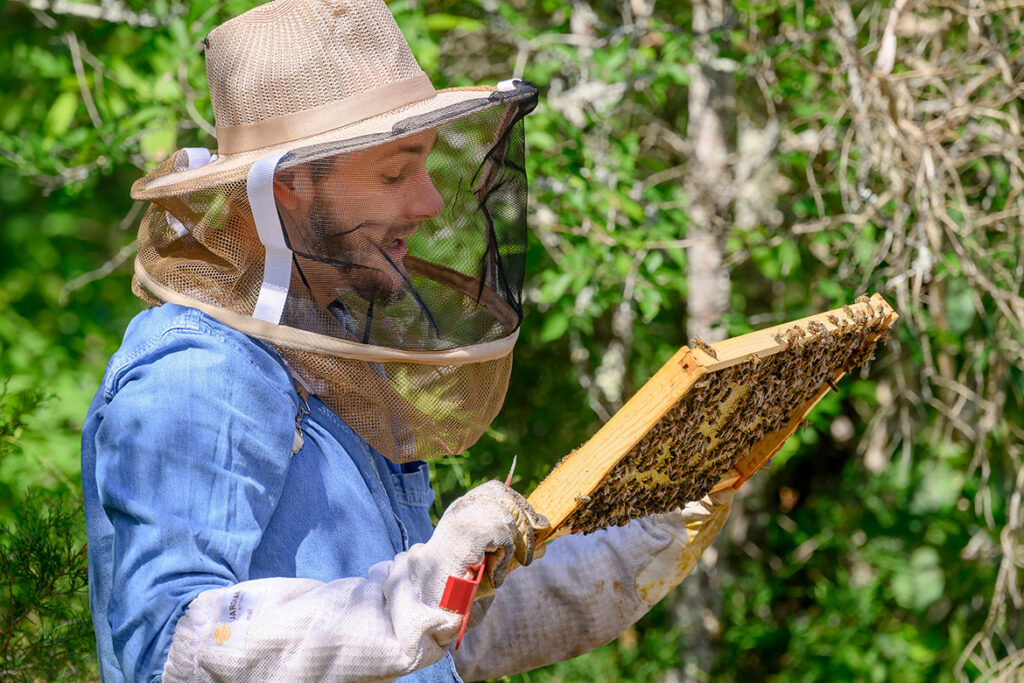
“We’re looking for proof there’s a queen, making sure she’s laying eggs and that new bees are developing,” said Huckabay as he used a notched tool to lift a honeycomb frame from a hive to examine it.
While honey is perhaps the bees’ most recognizable product, Giannoni-Guzmán said pollination is their greatest contribution.
“People often think the honey industry is where the money is, but the biggest service bees provide is pollination. Millions of bees are transported across the country every year in semitrucks to be used in pollinating crops,” Giannoni-Guzmán said.
Understanding bee behavior can help humans
The research also has implications outside of the agriculture industry.
“What’s interesting about honeybees is the fact that they’re a lot like human beings compared to other insects. They actually have several genes that are mammalian-like. Their circadian rhythm is incredibly much like ours because they can override the day-night cycle if somebody tells them to in their hive,” Bransford explained.
Because honeybees’ circadian genes share similarities with those of mammals, the discoveries could help scientists better understand how biological clocks influence health across species — including humans.
“Bees are incredibly social, and their clocks respond more strongly to social cues than to light. Humans also respond to social time-givers, so in a way, they are like us,” said Giannoni-Guzmán, who has previously studied the effects of certain pesticides on honeybees. “If you give bees a normal light cycle but provide a consistent social stimulus at night, they’ll eventually shift their internal clock to match the social cue. Just like humans do when work or family schedules override what our bodies want.”
Being “out of sync” with that natural circadian rhythm can have long-term effects on health, putting people at risk for diabetes, cardiac disease, and even cancer, Giannoni-Guzmán noted.
“What we learn from honeybees isn’t just for agriculture. Their circadian genes are more mammalian‑like than those of fruit flies, so bees sit right in the middle between classic insect models and humans. They’re a powerful system for studying sociality, genetics, and circadian evolution,” Giannoni-Guzmán said.
In the future, Giannoni-Guzmán hopes his research will help scientists understand how circadian neurons change in response to food sources, new memories, life‑cycle shifts or social isolation.
There’s also evidence that tiny genetic differences in circadian genes can influence whether individuals are predisposed to be early risers or “night owls.”
“We see similar variations in honeybees, and that’s the subject of another grant I have under review,” Giannoni-Guzmán said. “We hope tools we develop will not only be useful to ourselves as scientists but also to the greater beekeeping community.”
— Nancy DeGennaro ([email protected])




NO COMMENT