
How MTSU’s College of Liberal Arts is preparing students to thrive in an age of artificial intelligence

The email is written before you finish typing the prompt. A marketing plan appears in seconds. A few more words produce an image, summarize a research paper, translate text to another language, or compose a piece of music.
Artificial intelligence (AI) has moved from novelty to everyday tool with remarkable speed. Students use it. Businesses rely on it. Entire industries are rethinking how work gets done.
Its rise has also revived an old question.
What is the value of a college education when information has never been easier to access?
Faculty across MTSU’s College of Liberal Arts approach that question through the lenses of their different disciplines, but their answers share a common thread. As technology continues to evolve, human judgment has become more important, not less.
“There is no replacement for human judgment and ethical reasoning,” CLA Dean Leah Tolbert Lyons said. “The liberal arts teach us about the human experience through disciplines such as language, literature, history, and philosophy. They help us understand how and when emerging technologies should be applied for everyone’s benefit.”
Those qualities have long defined a liberal arts education. What has changed is the environment in which they are applied.
“The key here is information literacy,” Lyons said. “Once facts are established, we can assess whether they have been interpreted in context and applied appropriately. A liberal arts education develops critical thinking. It helps us understand what sources are credible, identify fallacies, and draw reasonable conclusions.”
Philosophical Questions of AI
For Greg Slack, an assistant professor of Philosophy, those questions reach far beyond artificial intelligence.
“Critical thinking is one of our last lines of defense against being lied to, manipulated, and made the playthings and guinea pigs of forces over which we have no control,” he said.
Philosophy has always wrestled with questions that resist easy answers. What is truth? What constitutes knowledge? What makes an argument persuasive? AI did not create those questions, but its rapid adoption has made them harder to ignore.
It is a tool to support your work—not a substitute for your work.
“If we offload our abilities to read, comprehend, assess, and interpret difficult texts,” Slack said, “we forfeit the exercise of those mental powers that both shield us from error and help to make our lives satisfying and meaningful.”
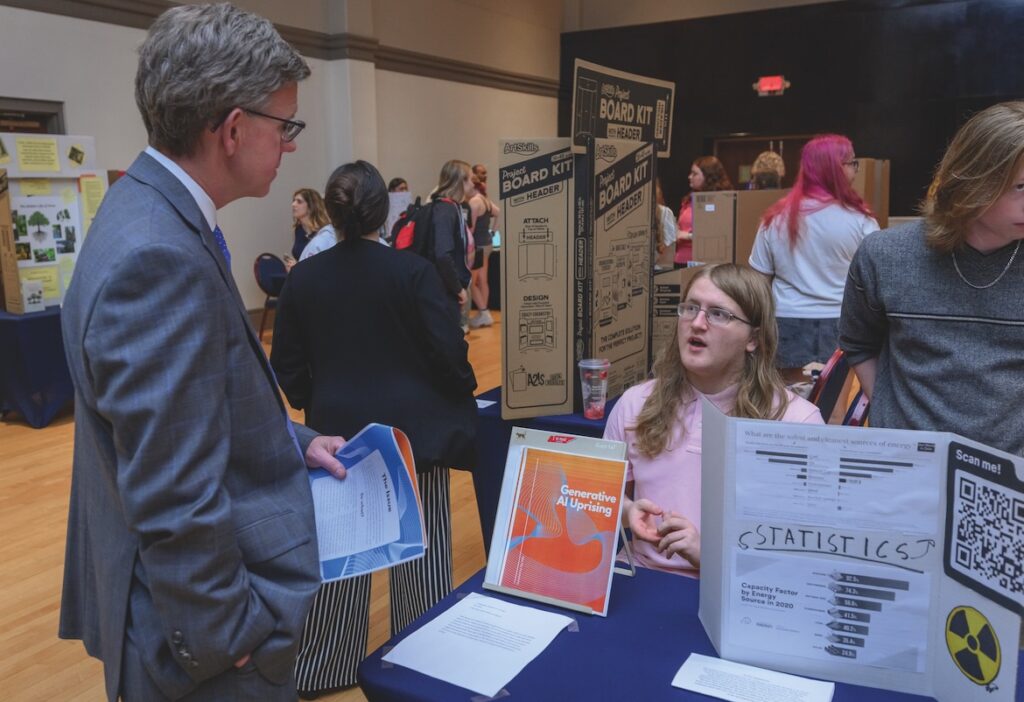
Those conversations are increasingly becoming part of the curriculum.
Kaity Newman, a lecturer in the Department of Philosophy, is developing a course on AI and ethics that will examine issues ranging from bias and privacy to environmental impacts and the broader social consequences of artificial intelligence.
“I think we have an obligation to our students to prepare them for the world they will be living and working in,” Newman said. “For better or worse, that world now includes AI.”Rather than offering simple answers, the course is being designed to help students wrestle with complicated questions.
“I hope that students who take this class will leave with an appreciation of the nuance and complexity that is often involved in ethical problems,” Newman said.
Lost in Translation
The same emphasis on judgment appears in a different form in the Department of Communication Studies.
Natalie Hoskins, interim department chair, sees AI as a valuable tool, but one whose usefulness still depends on the person using it. An effective prompt requires more than technical knowledge. It requires understanding audiences, anticipating concerns, and recognizing how messages will be received.
“Content created without the audience in mind is never going to be as powerful as audience-centered messaging,” Hoskins said.
As AI-generated content becomes more common, students still need to evaluate sources, recognize misinformation, and tailor messages to real people rather than simply generate words on a page.
“It is a tool to support your work—not a substitute for your work,” Hoskins said.
As technology continues to evolve, human judgment has become more important, not less.
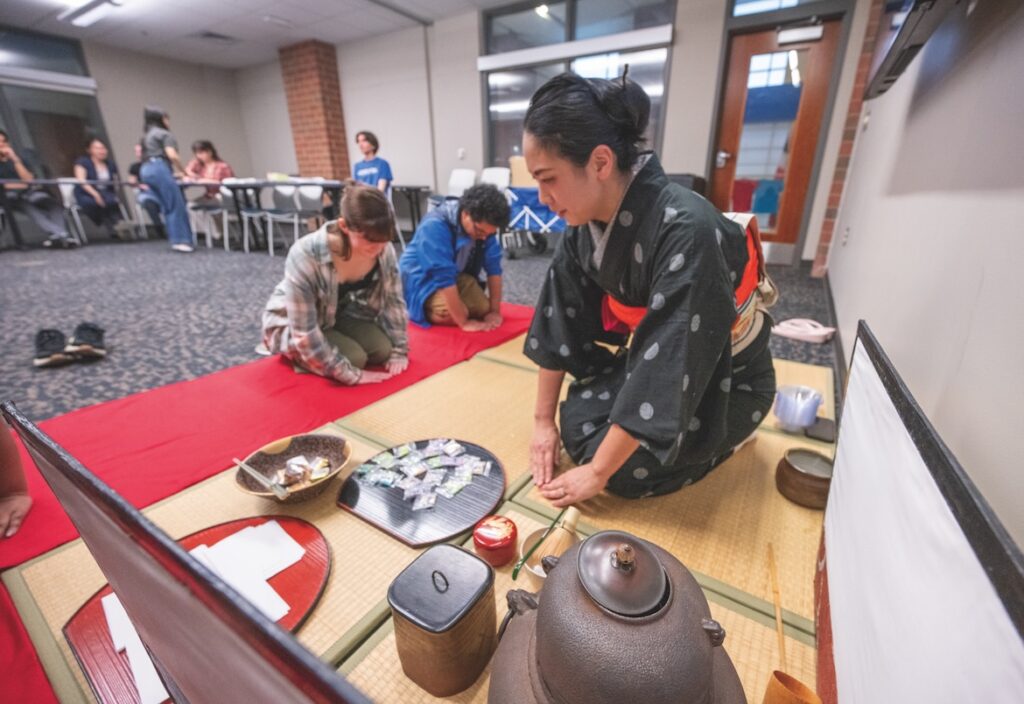
Those human-centered communication skills become even more important when ideas are conveyed across languages and cultures.
“I think it is important to first ask where, when, with whom, why, and how you are going to use another language,” said Priya Ananth, a professor for MTSU’s Japanese program. “Two-way human interaction in using a language, with errors and all, is far more authentic than artificial machine translation.”
Translation software has become remarkably sophisticated, but language has always carried more than vocabulary. Learning a language offers the opportunity to walk in another’s shoes and see the world from an entirely new perspective. Humor, history, customs, relationships, and unspoken expectations shape every conversation.
“Translating words without a cultural context is not only incomplete but also borderline misleading,” Ananth said. “Good quality translations and interpretations rely heavily on a deep understanding of the subject area.”
That understanding grows through experience. Students who study abroad navigate unfamiliar cultures, solve unexpected problems, build relationships, and gain confidence through direct interaction with others.
“Technology can facilitate the practice,” Ananth said, “but cannot substitute it.”
Music to Our Ears
Experience shapes understanding in ways technology cannot easily replicate.
Music offers another example.
Artificial intelligence can compose melodies, generate lyrics, and imitate musical styles with astonishing speed. Yet for Jennifer Snodgrass, director of MTSU’s School of Music, performance has always depended on something more personal.
Connection.
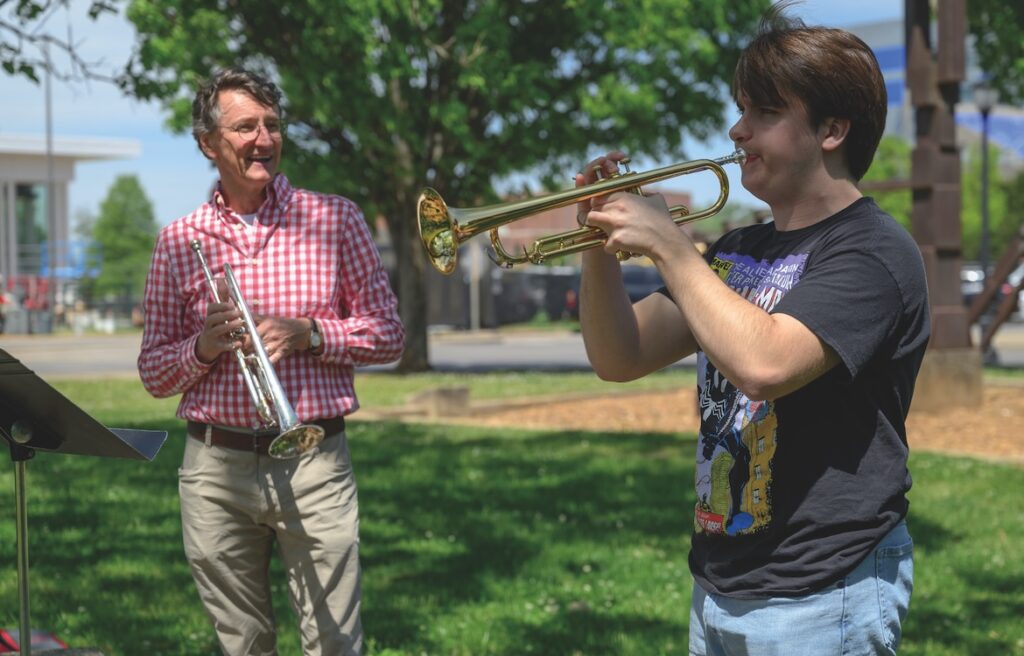
After attending a presentation by Recording Industry Association of America CEO Mitch Glazier, Snodgrass found herself thinking about what separates live musicians from the technology increasingly capable of producing music.
“The key answer here is live communication in real time,” she said.
Every performance is shaped by subtle decisions. Musicians respond to one another. They react to the room. They adjust to the audience. No two performances are exactly alike because no two audiences are exactly alike.
“While AI certainly can do many things, and in the future may do them even better and quicker, it cannot emotionally interact in a meaningful way with an audience,” Snodgrass said. “Real people in real time with real stories.”
Humans continue to value and desire other humans’ artistic interpretations and creativity.
Technology has changed music education, as well, and Snodgrass has embraced many of those changes. Students use online tools, watch performances from around the world, and practice foundational skills outside the classroom, creating more time for discussion, analysis, and collaboration during class.
She also encourages students to explore AI directly. One assignment asked students to compare their own musical analysis with one generated by AI.
“It did a tremendous job on the facts,” Snodgrass said.
The software identified lyrics, structure, and musical terminology with impressive accuracy. What it struggled to explain was why a performance resonated emotionally or how musical choices shaped the listener’s experience.
“At the end of the assignment, students were frustrated that AI couldn’t communicate what was happening beyond the basic facts,” she said. “That was the point of the whole assignment.”
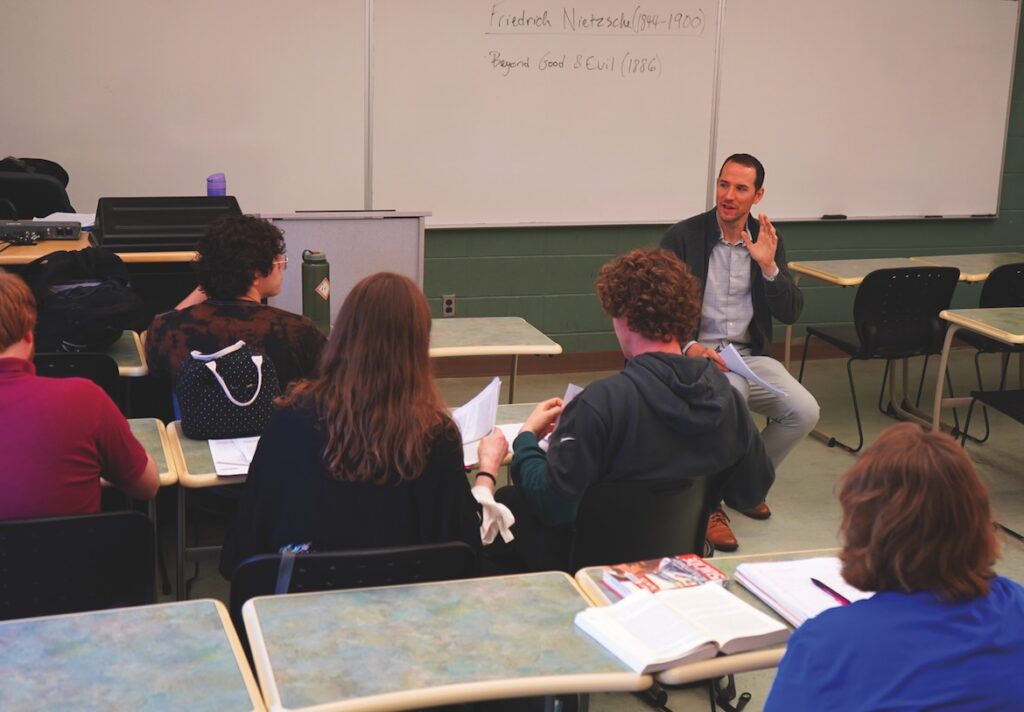
Connection and Collaboration
Facts matter, but interpretation matters, too.
Sheri Selph, a Graphic Design associate professor, sees artificial intelligence as part of a much longer history of technological change.
Graphic design has weathered major shifts before, from desktop publishing to digital illustration. Each changed the tools designers used without changing the purpose of design itself.
“What we know is that it’s the standards held by human consumers of design that still dictate its value and desirability,” Selph said. “Humans continue to value and desire other humans’ artistic interpretations and creativity.”The enduring value of art lies in its ability to tell human stories and create shared experiences.
“Centuries of art and art movements have told the stories of humans and created connection between us,” Selph said.Across the College of Liberal Arts, such conversations often intersect.
Historians are exploring digital methods of interpreting the past. Communication scholars are studying how emerging technologies shape public discourse. Philosophers are examining the ethical questions surrounding artificial intelligence. Artists, musicians, linguists, and social scientists continue asking questions that technology alone cannot answer.
That collaboration reflects the future of higher education.
“Liberal arts and STEM [science, technology, engineering, and math] are complementary because together they help us make sense of the world and understand both concrete and abstract concepts,” Lyons said. “STEM requires collaboration, working across differences, and the ethical application of findings. Those are areas where the liberal arts excel.”
Creating the Future
The same conclusion is emerging beyond college campuses.
The World Economic Forum’s Future of Jobs Report 2025 found that artificial intelligence is more likely to augment human abilities than replace them entirely. Employers continue to rank analytical thinking, creativity, resilience, leadership, and curiosity among the most valuable qualities in the workforce.
Those qualities are not tied to a particular profession. They prepare graduates to navigate change.
“Creativity, ethical reasoning, critical thinking, collaboration, and communication are liberal arts skills. They are human skills,” Lyons said.
“AI may be able to imitate some of what human ingenuity can produce, but it is not a substitute. We play a role in the futures we create, and as we step into the future, those who have been trained in the liberal arts will always have a place in it.”
Employers continue to rank analytical thinking, creativity, resilience, leadership, and curiosity among the most valuable qualities.
Artificial intelligence will continue to change how people work, create, and learn. Higher education will continue to evolve alongside it.
What is far less likely to change is the need for people who can make sense of complexity, cultivate trust and understanding across differences, and exercise thoughtful judgment.
Those qualities have always been at the heart of a liberal arts education.
The tools may change. The human advantage of people who know how to use them wisely will not.
The software students use today will evolve. Many of the careers they enter will evolve with it. Some of the jobs they will eventually hold have yet to be imagined.
The habits of mind they develop remain valuable regardless of the tools they use.




NO COMMENT