
MURFREESBORO, Tenn. — Middle Tennessee State University’s biannual drug and vape pen disposal event took in 55 pounds of vaping devices, over-the-counter drugs and prescription pharmaceuticals this week, according to Tabby Ragland, pharmacy director at MTSU Health Services.

“We’ve had a lot of people, especially faculty and staff, who have a parent that either passes away or gets put into assisted living or a nursing home and they need to clean out the medicine that’s in the home,” said Ragland. “If you have a medication change for a parent, if they’re getting older and they get confused, it’s much better to just get (unused medication) out of their way.”
The items were collected on Wednesday, Oct. 21, by Ragland and volunteers April Britton and Annabella Koetter, MTSU master’s students of public health; Morgan Verdeck from Prevention Coalition for Success, which partners with MTSU for a collegiate addiction recovery program; and Addison Morton, a pharmacy student from Lipscomb University who is rotating under Ragland for clinical hours.
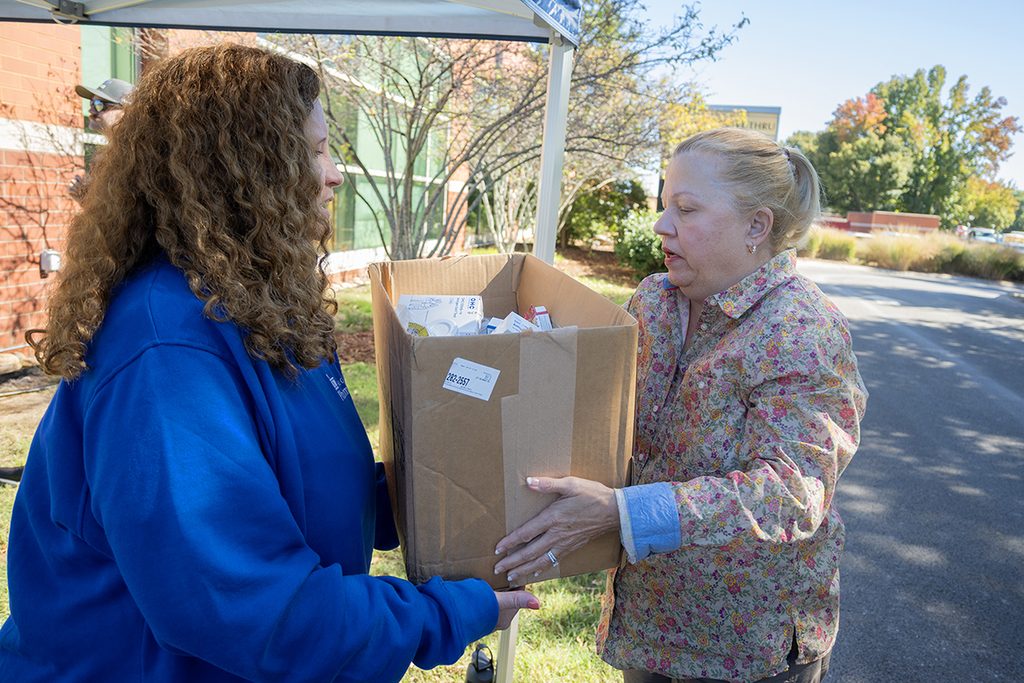
“This is very helpful,” said Health and Human Performance executive aide Julie George, whose brother-in-law recently passed away from a long illness. He left behind a grieving family and a great deal of medication.
“My niece was like, ‘What do I do with all this stuff?’” said George. “I said, ‘Well, I just got an e-mail that they’re taking medicine on campus. If you want to box it up, I’ll take it for you.’ It’s one less thing on the list.”
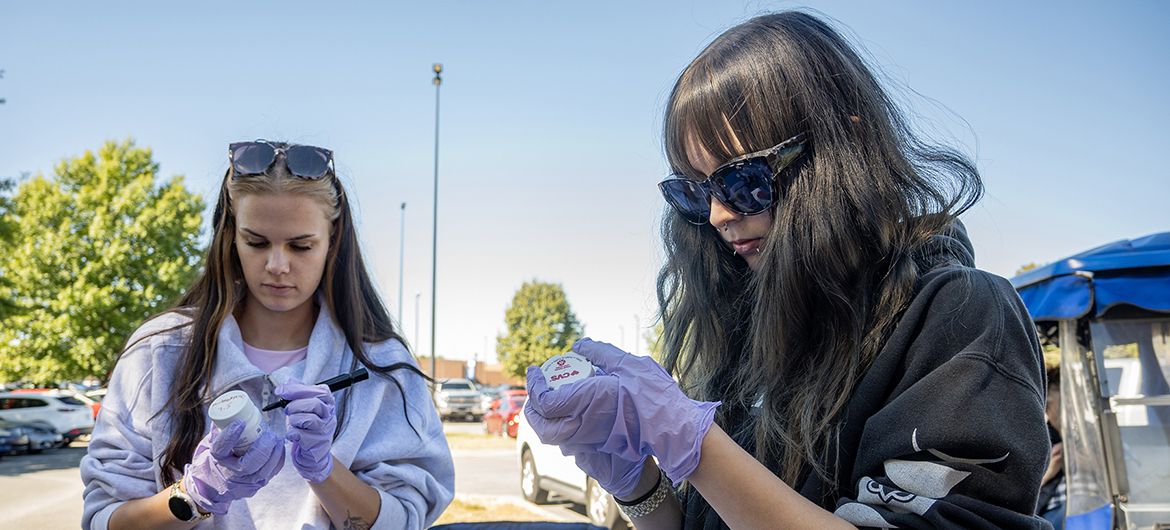
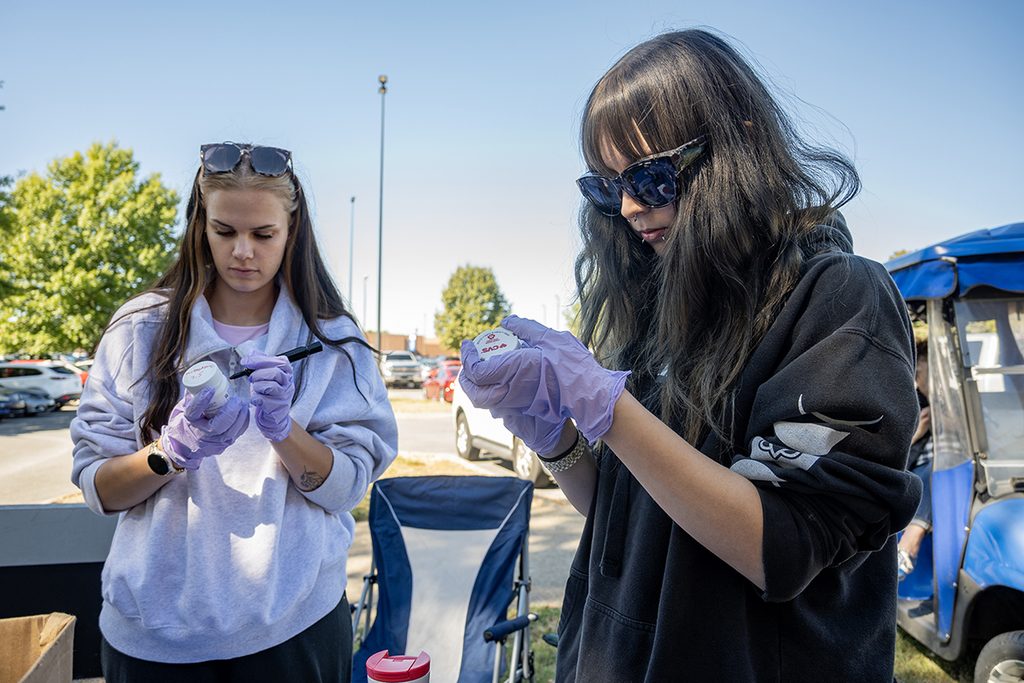
Volunteers staffed a tent outside of the campus pharmacy drive-thru, where they marked out any identifying information on prescription bottles. Items were sorted into barrels and taken by the University Police Department to their evidence room, where the Drug Enforcement Administration picked them up for incineration. This process is a safe way to dispose of potentially harmful chemicals, keeping them away from folks who might misuse them without the risk of polluting the environment.
“If the DEA does a true, complete incineration of the materials, there will be nothing left but carbon dioxide and water,” explained Frank Bailey, an MTSU biology professor whose research often focuses on the effects of chemicals in the environment. “Whether the incineration is complete, leaving only carbon dioxide and water, or just mostly complete, there should be no water contamination potential.”
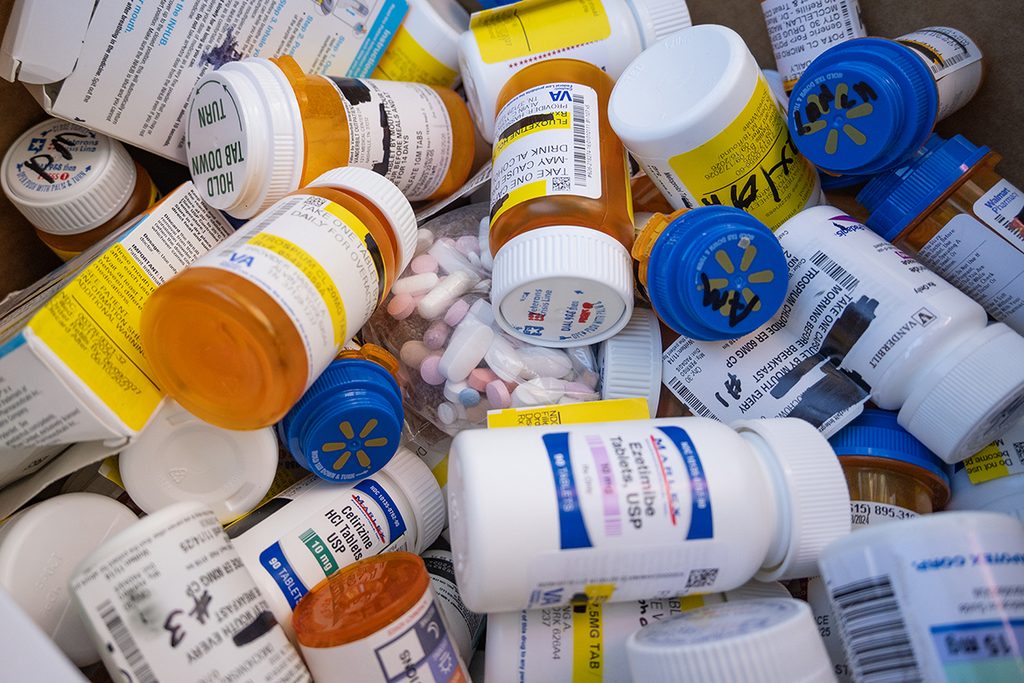

In addition to the risks posed by pharmaceuticals, over-the-counter drugs and vaping juices, the lithium-ion batteries in many vape pens cannot be safely disposed of in household garbage due to the risk of chemical fires.
“We are very fortunate at MTSU to have an opportunity for students, faculty and staff to properly dispose of medications and vape devices,” said Chipper Smith, health promotion coordinator for MTSU Health Promotion. “This not only helps reduce our environmental footprint but also helps prevent substance misuse.”
MTSU’s biannual disposal event occurs every April and October, but there are permanent disposal boxes at the Rutherford County Sheriff’s Office and the Murfreesboro, Smyrna and LaVergne police departments.
— Cat Curtis Murphy ([email protected])




NO COMMENT