
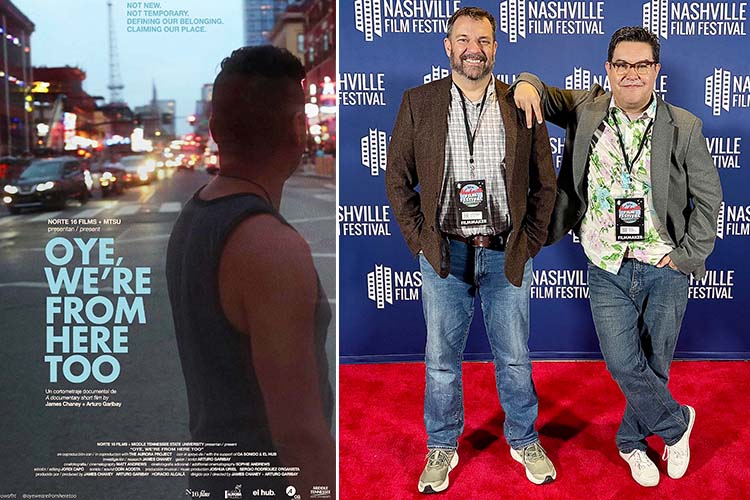
MURFREESBORO, Tenn. — Crossing cultures to find a sense of belonging is at the heart of a new award-winning documentary film from Middle Tennessee State University geography professor Jim Chaney.
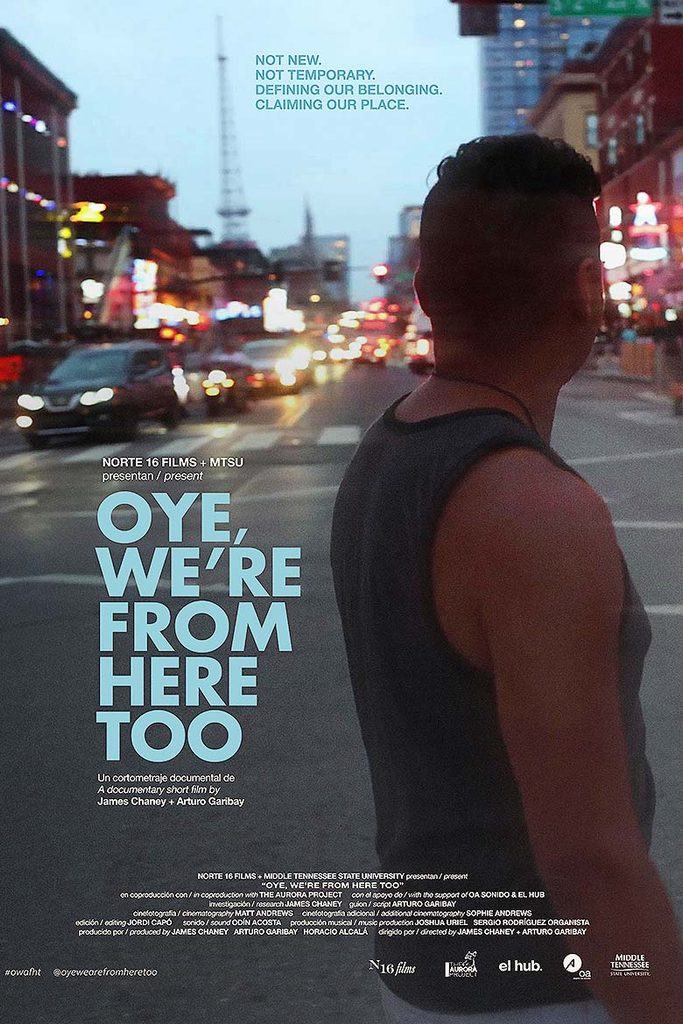
“Oye, We’re From Here Too,” a 15-minute documentary co-directed by Chaney and Guadalajara, Mexico-based filmmaker Arturo Garibay, earned the Nashville Area Hispanic Chamber of Commerce Best Hispanic Film Award at the Nashville Film Festival in late September.
The film examines the experiences of Latinos born or raised from an early age in the United States — specifically focused on the Metro-Nashville area — who navigate the cultures of their immigrant parents and the communities they call home.
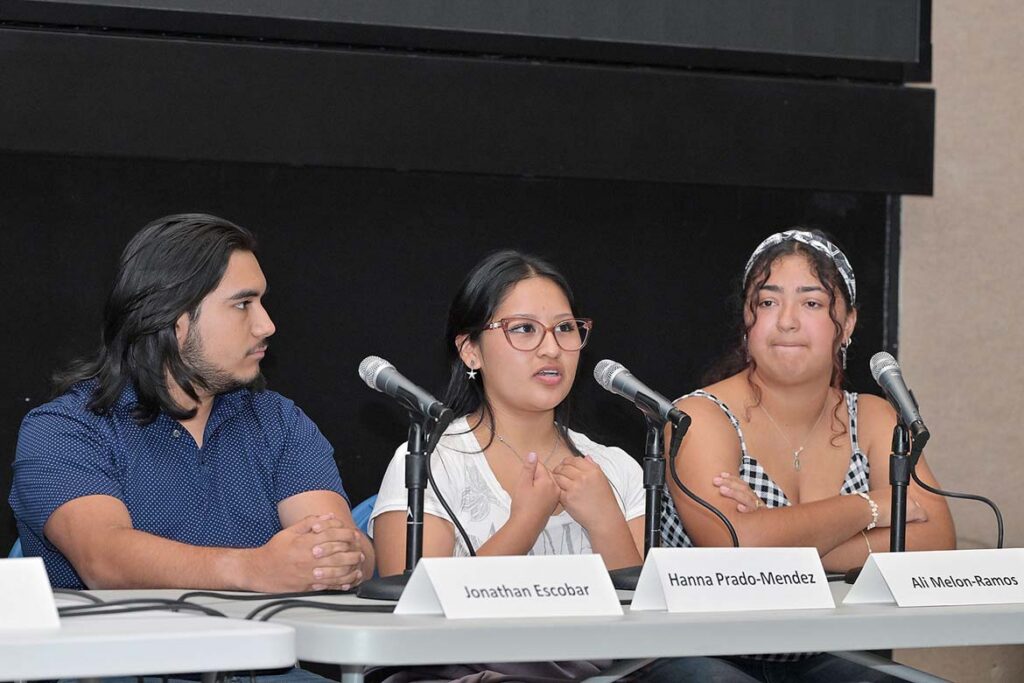
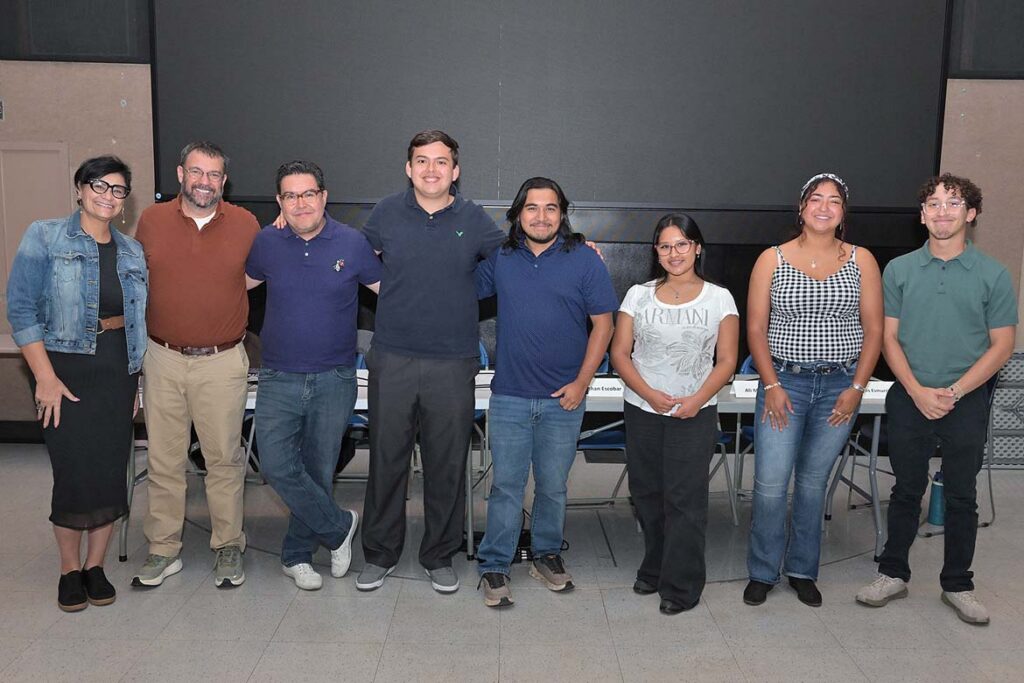
“They’re caught between two worlds,” said Chaney, who hosted a screening of the film on campus in late September along with a panel of five Latino students who spoke about their experiences growing up in Middle Tennessee.
The tension between those two worlds is central to the story.
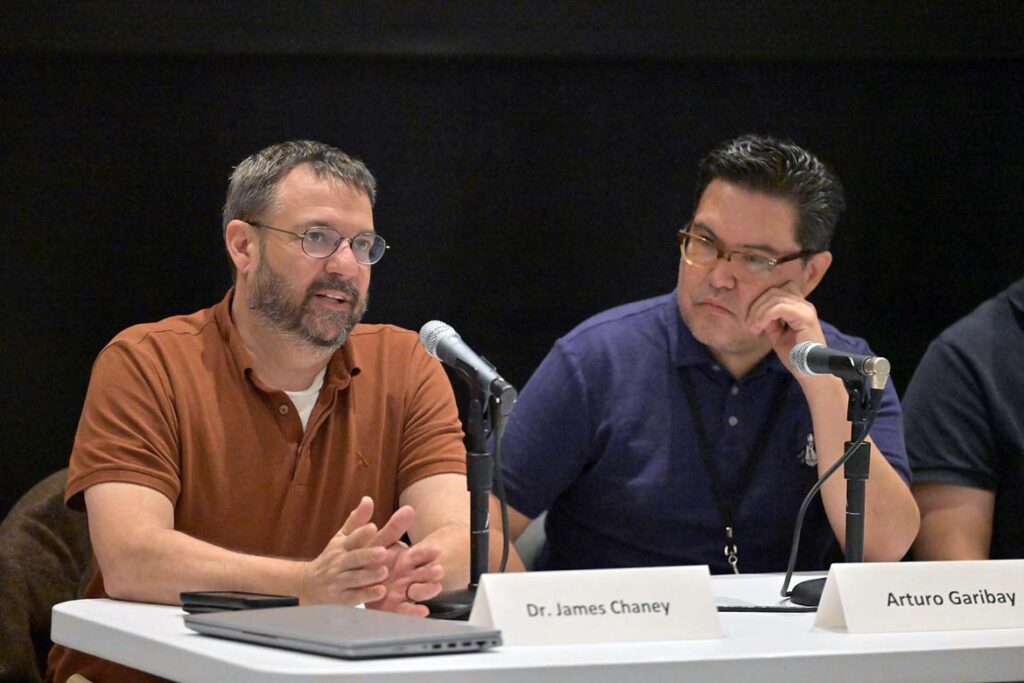
State University in Murfreesboro, Tenn., shares the backstory about “Oye, We’re From Here Too,” a documentary he made with Mexican journalist Arturo Garibay, at right, during a discussion panel held Monday, Sept. 28, 2026, on campus following a screening of the film. Five Latino students from MTSU also joined the discussion. (MTSU photo by James Cessna)
Born, raised in the U.S.A.
“This project became the intersection between geography and film. Both elements were equally important,” said Garibay, who traveled from Mexico to speak at the screening alongside the student panelists.
Growing up in Columbia, Chaney remembers when Latino communities were only beginning to emerge in many parts of the state. Returning home after college in the late 1990s, he began documenting the experiences of immigrant and refugee families and the communities they were creating.
“There was this new wave of Latinos coming in and changing the cityscape and the cultural landscape,” said Chaney, who followed around 200 families.
That experience led Chaney to examine the identities of second-generation immigrants — those born in the U.S. to immigrant parents — and the so-called 1.5 generation, who immigrated as young children.
“A lot of their children came when they were 5, 6 or 7 years old,” Chaney said. “Spanish was their first language, but then they started attending public schools, became acculturated and went on to college. A lot of them ended up at MTSU.”
Those stories became the backbone of the documentary.
Garibay, who often works as a translator, was helping Chaney translate his research into Spanish so he could present at a conference. Interested in turning the research into a film, Garibay helped shape the project into a collective narrative told through individual stories and reflections.
“I wrote an adaptation because I love film and I just fell in love with that research and that story,” Garibay said. “Ultimately, it was about finding the right balance between geography and film, between academia and filmmaking. We were lucky enough to find a way.”
Through a series of personal testimonies, the documentary explores life between cultures. The filmmakers made the deliberate choice not to show the faces of the people represented, allowing their experiences to speak for a broader community.
“I wanted to create a balance between the individual stories and a collective voice,” Garibay said. “People in the audience could connect with the personal testimonies, but at the same time, I wanted all of those stories to come together as one larger voice resonating throughout the film.”
Participants describe feeling too American for the countries of their parents and too often viewed as outsiders in the places where they were raised.
Upcoming screenings
The film’s reach extends beyond Nashville. It has screened at the Contra el Silencio Todas las Voces documentary festival in Mexico City and Semana de Guadalajara en Madrid in Spain.
Its festival tour continues Nov. 14 at FILM FEST KNOX in Knoxville. The documentary will screen at 11:30 a.m. at Regal Riviera, 510 S. Gay St. in Knoxville, as part of the Made in Tennessee competition.
For Chaney, the film’s message is a declaration that Middle Tennessee is home to generations of Latino families, and their stories are part of the region’s story, too.
— Nancy DeGennaro ([email protected])




NO COMMENT