
By Charlie Reed
MURFREESBORO, Tenn. — At Middle Tennessee State University, some of the most interesting work is happening after the first research breakthrough.
From new antimicrobial compounds to plant-based crop treatments to a biodegradable film that could replace plastic wrap, researchers across campus are reaching the point where discovery gives way to a different question: “How does the work move out of the lab and into the world, beyond academic publishing and conferences?”
At MTSU, that transition is exactly what the Tennessee Technology Advancement Consortium, or TTAC, is built to support.
An initiative of Launch Tennessee, the public-private partnership that supports startups and innovation across the state, TTAC is helping MTSU researchers with funding and support to further test, protect, and position their ideas for the marketplace.
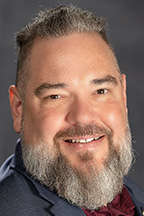
David Butler, MTSU’s vice provost for research and dean of the College of Graduate Studies, works with faculty at exactly that stage, helping them think about funding, strategy, and what happens after a project shows promise.
“We’re very good at helping them get funded and carry projects through. We’re also getting better at recognizing patentable ideas early,” Butler said. “The harder part is commercialization and getting those ideas visible and in front of the right people so they can build a path beyond campus.”
That challenge extends well beyond MTSU. In 2025, Tennessee recorded $1.18 billion in venture capital investment, a sign of momentum in the state’s innovation economy.
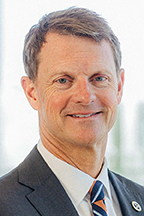
For Deputy Gov. Stuart McWhorter, commissioner of the Tennessee Department of Economic and Community Development, university research is an important part of that larger state story.
“Tennessee’s universities are producing ideas with real potential,” McWhorter said. “The next step is turning those ideas into impact by leveraging Tennessee’s strength as a hub for design, innovation and production to connect them with the industries, communities and markets that bring them to life.”
At MTSU, that broader opportunity often depends on what happens after a strong idea first emerges.

“A lot of promising university research stalls because the next steps are harder to navigate for many scientists. They need the right partners, the right support, and somebody helping connect the dots,” TTAC Director Charles Layne said.
The Tennessee Innovation Exchange, or TNIX, is part of that effort. Developed by Launch Tennessee and TTAC, the online platform went live in early 2026 and makes university research easier to find for companies, investors, and collaborators.
“For MTSU and TTAC’s other partner schools, TNIX creates a clearer line of sight to the work,” Layne said. “It helps people outside the university see what’s there, what stage it’s in, and where there may be room to build or invest.”
At MTSU, that challenge looks different from lab to lab.
Faster than the market
In Kevin Bicker’s chemistry lab, the science is doing what it should. The market is another matter.
Bicker, MTSU’s associate dean of research and a professor of chemistry, works on one of the earliest stages of drug discovery. His team has developed a platform that allows thousands of compounds to be generated and screened at once, quickly narrowing the field to the most promising candidates.

At the center of that work is his Peptoid Library Agar Diffusion, or PLAD assay, which helps the lab identify antimicrobial compounds much faster than testing molecules one by one.
The platform has been patented and licensed on a limited basis. Bicker and his collaborators are also working with a biotech partner to develop antimicrobial compounds identified through PLAD.
His technology is proven and protected but not yet a natural fit for the market.
Most products are built to sell at scale. Antibiotics are different. The best new ones may need to be used carefully and infrequently, Bicker explained, which makes them harder to justify as large commercial investments.
“You can have something novel and non-obvious, a superior product to what’s already out there. But the market still may not have an appetite for it,” he said.
“You can have something novel and non-obvious, a superior product to what’s already out there. But the market still may not have an appetite for it.”
Dr. Kevin Bicker, Department of Chemistry
With support from TTAC, Bicker’s lab is now pushing several new compounds into early animal testing, because difficult markets don’t make the need any less urgent.
A TTAC grant helped support larger-scale synthesis and the early testing needed to find out which compounds are worth carrying forward.
Bicker’s work sits in the gap between promising compounds and actual treatments, generating possibilities faster than the current system can carry them forward.
“We can find promising compounds. Far fewer get developed. Fewer still make it to patients,” he said.
Rethinking food packaging
Keely O’Brien didn’t start her research with a packaging problem. The MTSU professor and fermentation scientist started in her own kitchen, trying to get rid of plastic wherever she could.

Living on a farm, she could preserve most food without it, using glass and other methods. But wrapping meat still meant plastic-lined freezer paper or shrink bags. That lingering personal problem led her to start experimenting with fermentation-derived materials that could do the same job without the plastic.
Now, the material exists. The challenge is making it usable.
In the lab, her work is still improvised and hands-on. O’Brien coats and turns fruit by hand, testing how the material behaves and how long it lasts.
“We’re still figuring out how we’re going to apply this at large scale. Do you spray it? Do you dip fruits? I don’t know those answers yet,” she said.
And the questions don’t stop with application. The material may have different uses, and each one comes with a different path.
“How you sell this to fruit and vegetable folks is going to be different than how you sell it to somebody manufacturing freezer paper,” she said.
With support from TTAC, O’Brien has started working through both sides of that problem. A proof-of-concept grant helped her bring on a graduate student to refine application methods and run shelf-life studies. TTAC also supported the patent filing as the project moves closer to possible use beyond the lab.
“I couldn’t do all this by myself,” she said. “It’s out of my wheelhouse, which is why TTAC is so helpful.”
“I couldn’t do all this by myself. It’s out of my wheelhouse, which is why TTAC is so helpful.”
Dr. Keely O’Brien, Fermentation Science
Beyond the greenhouse
In agriculture, a discovery has to survive more than the lab. It has to hold up across crops, shifting conditions, and grower costs.
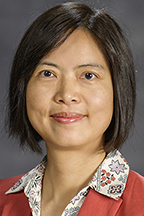
Iris Gao, a professor of agriculture at MTSU, is working on alternatives to chemical fungicides using organic plant-derived substances. In her greenhouse, one focus is powdery mildew in cilantro, a fast-spreading fungal disease typically managed with repeated applications of synthetic chemicals.
“Growers are dealing with this threat constantly,” Gao said.
Her team has found that a specific plant-derived organic formulation can suppress fungal growth without the same chemical load. It’s part of Gao’s broader efforts to reduce the use of synthetic treatments on crops.
The discovery should also reduce treatment costs. Substituting chemicals with a lower-cost organic formulation could provide an excellent alternative for increasing organic production yields, according to Gao.
“There’s definitely a market for this,” she said.
“There’s definitely a market for this.”
Dr. Iris Gao, School of agriculture
The project has moved beyond early proof but not yet into its next phase. The treatment still needs broader testing and refinement. It also raises a harder question: “Does the work belong in a paper, in a patent, or in continued development?” TTAC is helping Gao and the university think that through.
At MTSU, the research varies as much as the obstacles it faces. What O’Brien, Bicker, and Gao share is the stretch after discovery, when promising work has to prove its use, survive its next tests, and keep moving. With TTAC support, all three are finding ways to do that.
Charlie Reed is a freelance writer for LaunchTN and the Tennessee Technology Advancement Consortium.




COMMENTS ARE OFF THIS POST