
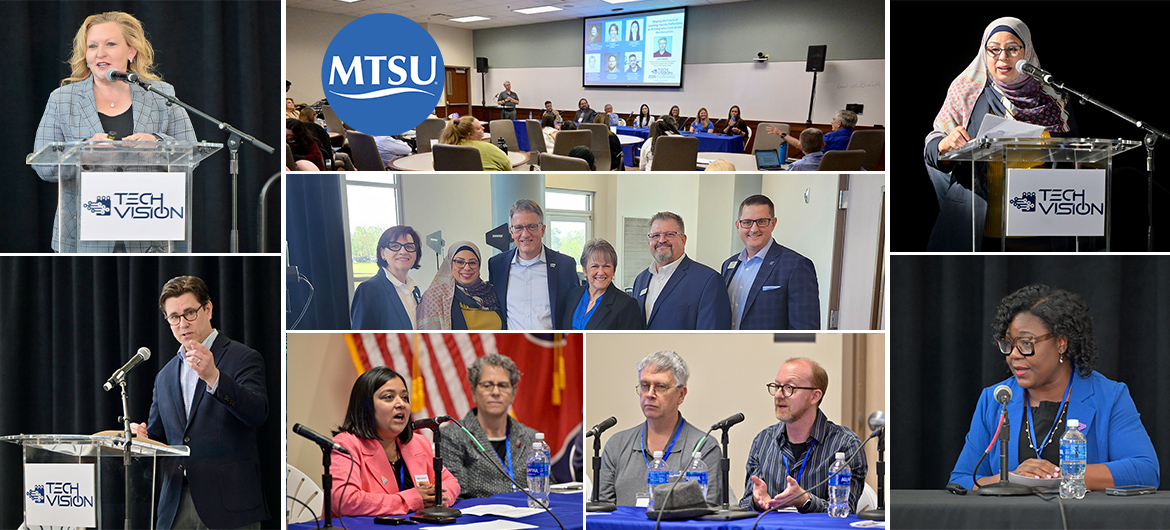
MURFREESBORO, Tenn. — Middle Tennessee State University hosted just over 300 attendees at this year’s Tech Vision conference, where the status and future of topics such as artificial intelligence, quantum science and cybersecurity were explored.
Held at the Miller Education Center and hosted this year by the Business and Economic Research Center in the Jones College of Business, Tech Vision 2026 featured guest speakers, panels and sessions throughout the day that brought together industry professionals, government officials, higher education faculty and leaders, as well as students wondering what their professional futures may hold.
With a theme of “Preparing for an Accelerating and Emerging Future with AI,” this year’s event built on last year’s AI focus by, among other things, further exploring its ethical implications and its impact on higher education, industry, government (local and state), the workforce, and society in general.
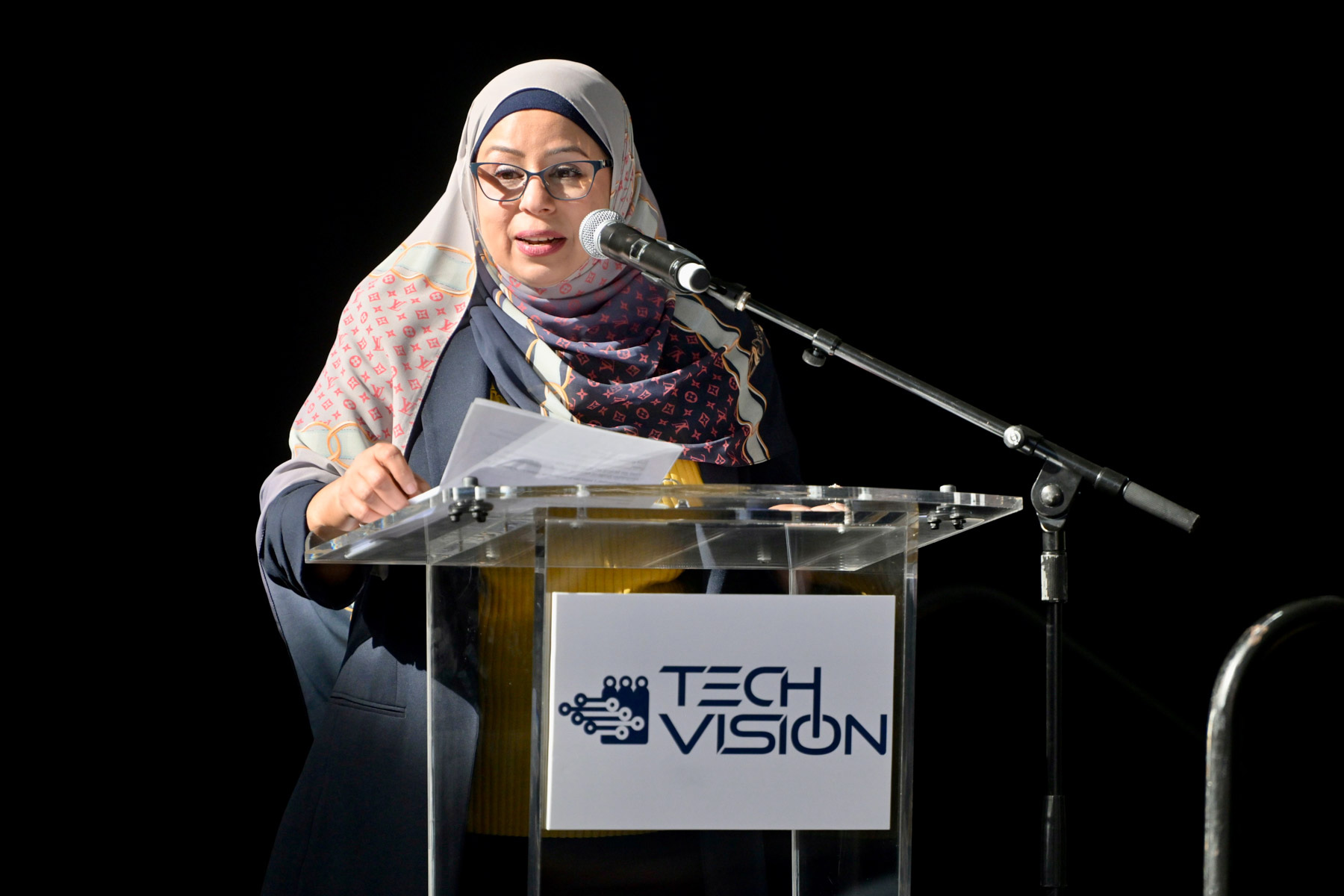
“Technology is moving, requiring us to be agile, to adapt, and that is exactly what this room matters today,” said Tech Vision founder and organizer Sam Zaza, associate professor of Information Systems and Analytics, in welcoming remarks. “Tech Vision brings people who are building, shaping, and responding to that change. That vision was created two years ago to break silos and to create ideas where we can move forward across sectors and into execution.”
MTSU’s College of Education, with its critical role in shaping the future workforce, was the academic college spotlighted at this year’s conference. Breakout session topics throughout the day included workforce readiness, open education resources and student engagement, AI infrastructure, the human element in technology, the innovation pipeline, and more.
“AI is not going to take our jobs. These areas are shifting how organizations operate and how people work and live,” Zaza continued. “Today’s program reflects what matters now: artificial intelligence, cybersecurity, quantum technology, workforce development, ethics — a big topic — and the human element in technology.”
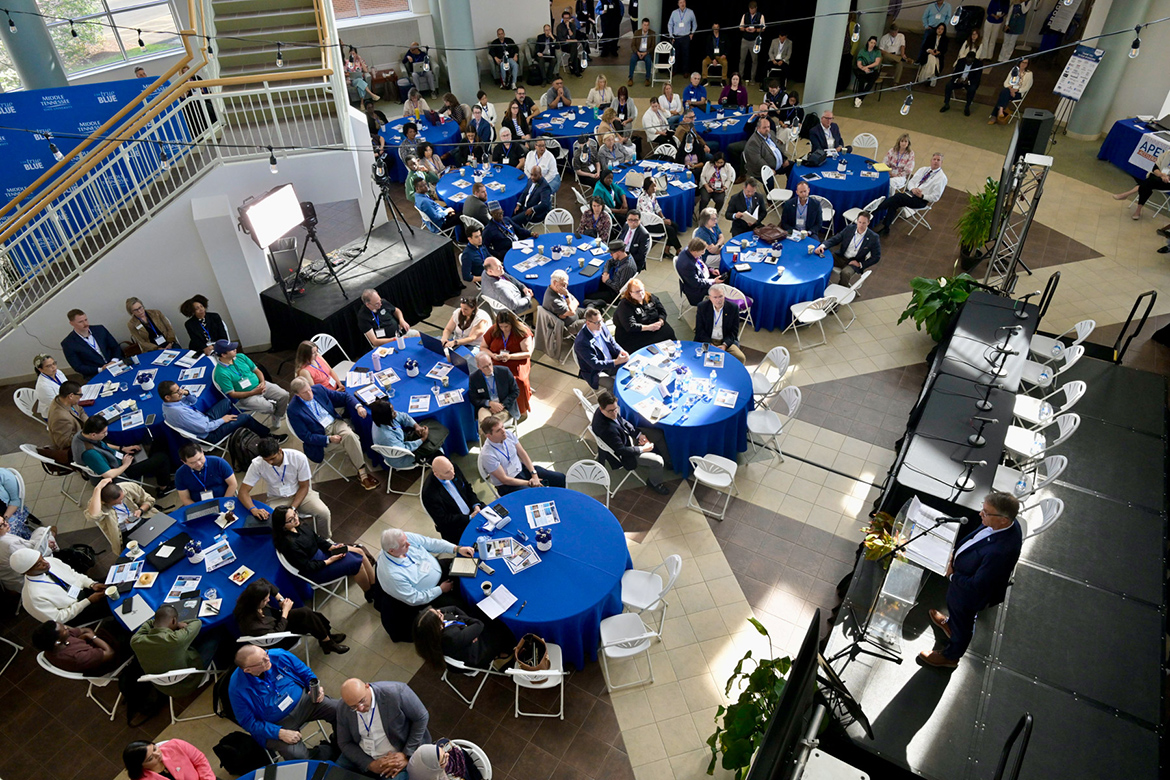
MTSU Provost Mark Byrnes told attendees that the university is proud to take a leading role in integrating new technologies into the curriculum. He praised Yvette Clark, MTSU’s chief information officer in the Information Technology Division, for her partnership in ensuring the university remains up to speed on the latest and best technological tools.

“In higher education, it’s really our job to figure out, ‘How do we grapple with these technological challenges, but particularly, how do we build them into the curriculum? How do we shape what we do to help students?’” Byrnes said. “It’s obviously very important for them, but it’s also important for the broader community because our students are going out there in the community and will be working and contributing in all sorts of ways.”
Among curriculum enhancements, Byrnes noted the creation of a master’s degree in digital media, bachelor’s and master’s degrees in cybersecurity management, as well as new concentrations in AI, esports, cybersecurity systems, quantum science and computing.
The university has also added centers focusing on evolving technologies, including the Undergraduate Research Center, the Center for Cyber Security Management, and the Quantum Research Interdisciplinary Science and Education Center, better known as QRISE.

Zaza noted that with the increasing emergence of quantum technologies, Tech Vision has partnered with the QRISE Center to permanently embed quantum as a topic of discussion at the conference each year.
“Tech Vision is a platform to keep the technology and research ecosystem in the region informed about what is happening,” Zaza said.
‘Research muscle is critical’
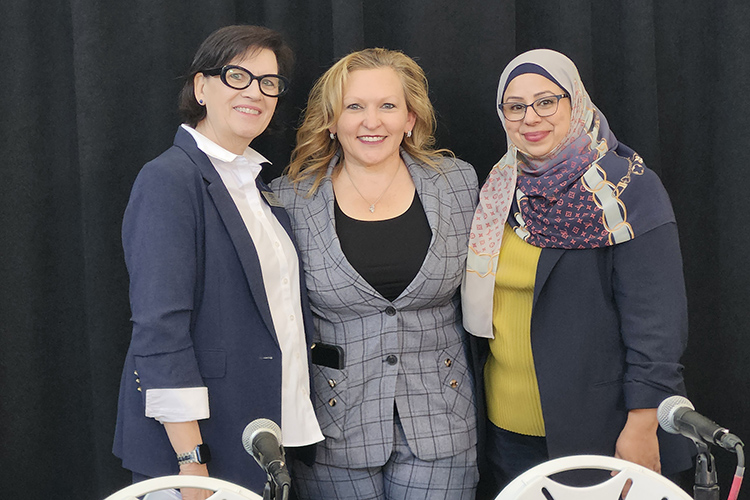
QRISE Center Director Hanna Terletska and Tasia Malakasis, CEO of The Company Lab, stylized as CO.LAB, shared the conference stage to underscore the importance of partnerships and collaborations in bridging gaps that sometimes exist between academia and industry.
Terletska noted the ongoing collaborations and networking that MTSU has with universities across the state regarding quantum research — from Tennessee State and Fisk universities in the Midstate to the University of Chattanooga and Oak Ridge National Laboratory to the east — efforts that have already secured millions of dollars in federal grants.
“We are all working together across Tennessee to make Tennessee a national leader in quantum,” Terletska said. “… The goal of this conference is to connect and collaborate.”
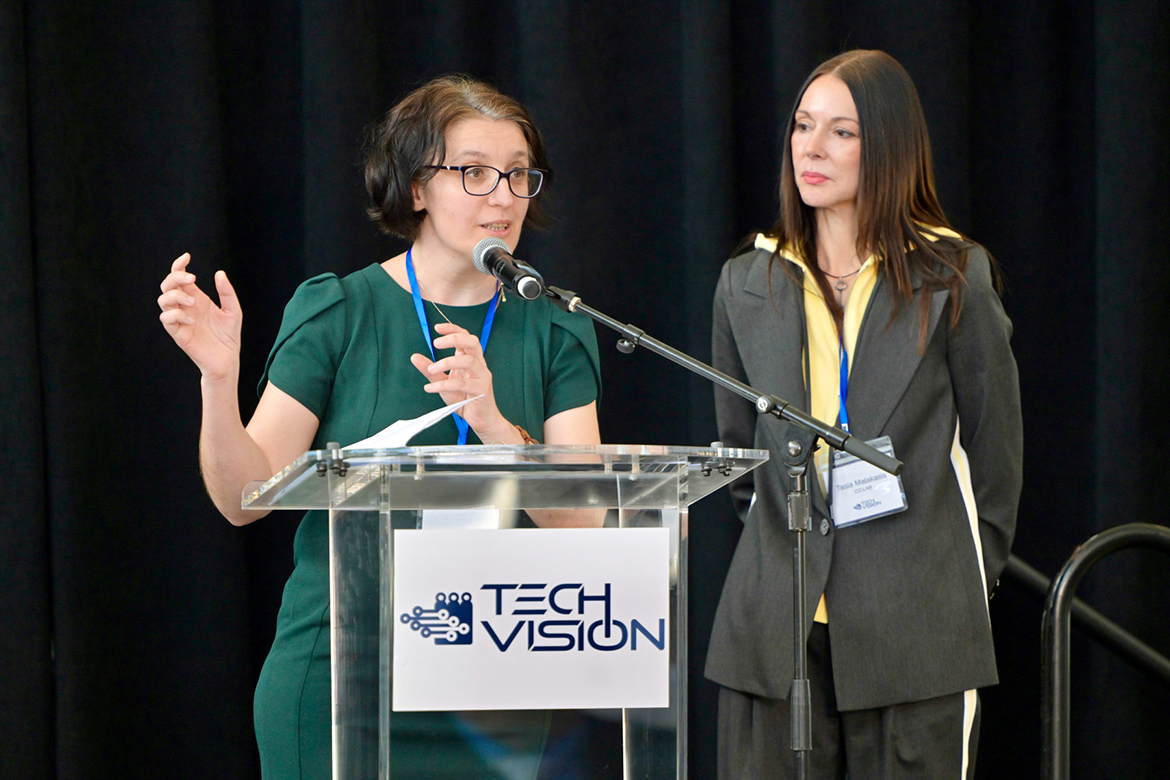
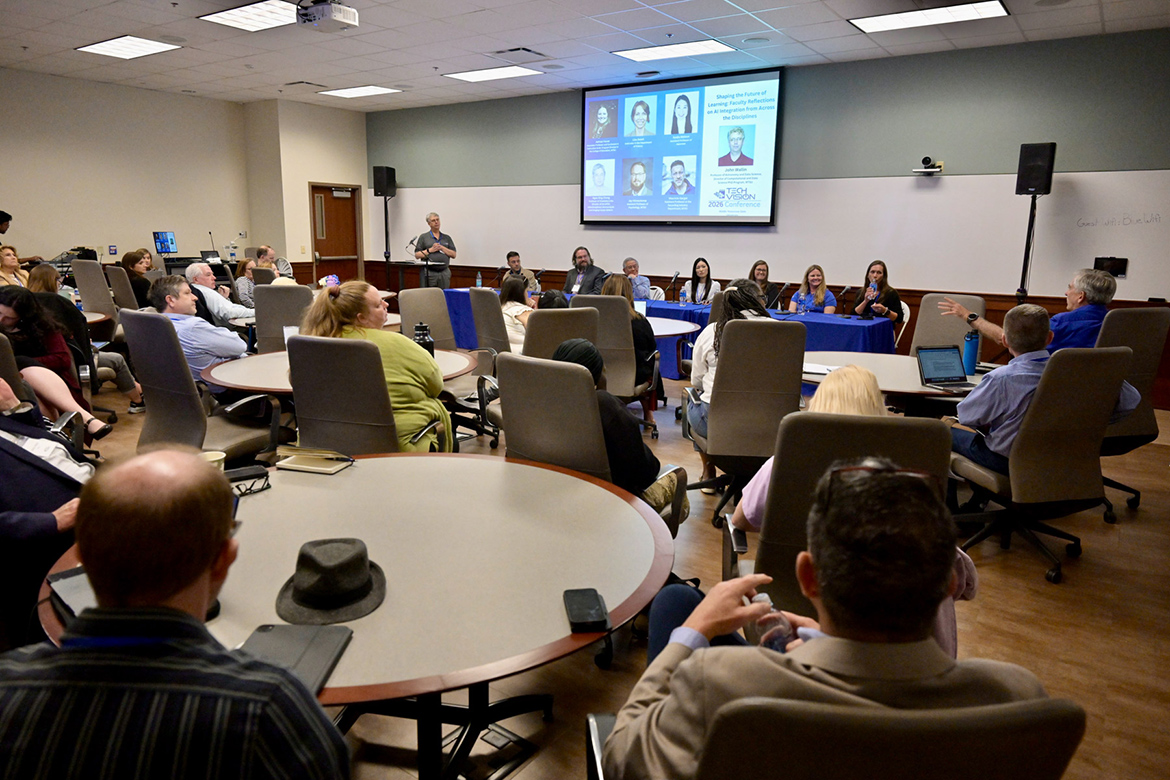
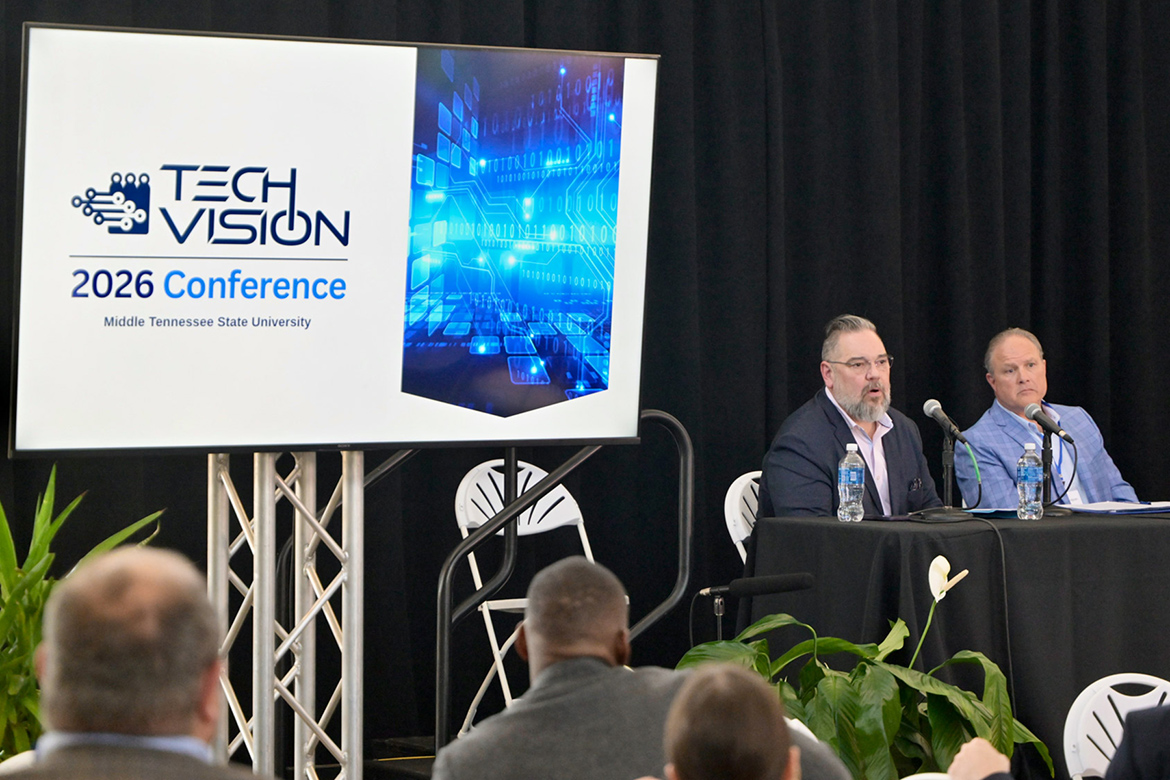
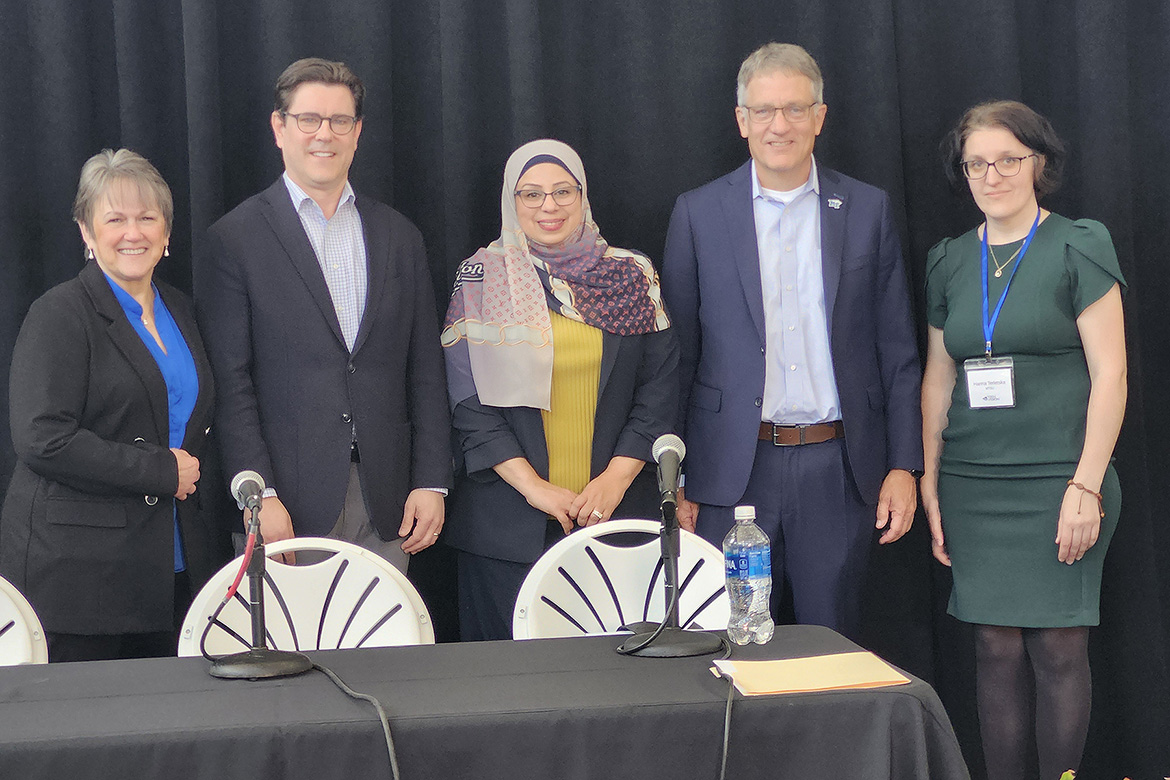
MTSU faculty from across multiple disciplines — from business to education to recording industry to computer science — served as panelists in breakout sessions throughout the day, often paired with panelists from the private sector, government and community organizations.
Malakasis echoed that collaborative spirit as leader of the Company Lab, which touts itself as a place-based entrepreneurial support organization that focuses on accelerating early-stage startups in the energy, mobility and quantum industries.
“I’m not an academic, I’m not a researcher, I’m not a scientist, but I do run a lab. And so I run the Company Lab, where we translate research into revenue,” she said. “And Tennessee has very strong research muscle here at MTSU, Oak Ridge National Lab, TTU, UTC, Vanderbilt, and more. That research muscle is critical, it’s foundational, and it’s where the future begins. … We’re here to open that up, get it into the market, turn that into jobs, turn that into companies, and turn that into an economy.”
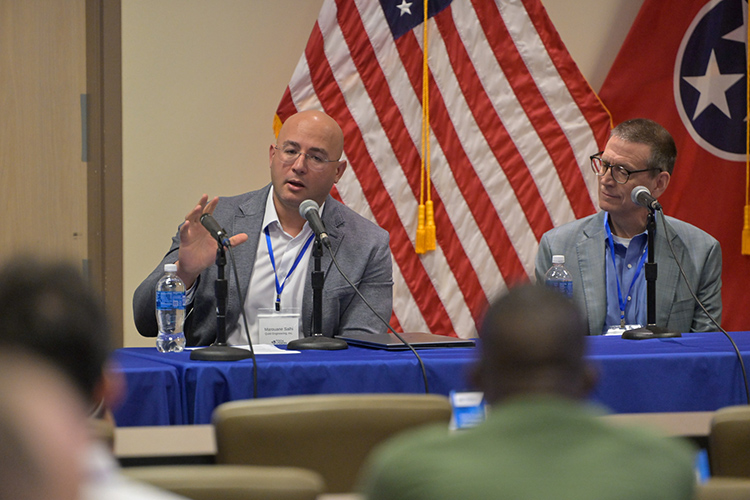
Panelist Ryan Harring, director of partnerships and alliances at IonQ, a quantum computing hardware and software company, said the state has an opportunity to bring its expertise and resources together to forge its own path in the quantum sector.
“If you’re a researcher, think about things translationally. If you’re an entrepreneur, think boldly. If you’re in industry, think long-term. And if you’re a student, think about building your next quantum career here in Middle Tennessee,” Harring said. “Because quantum advantage is not going to be measured in the qubits. It’s going to be measured in companies launched, jobs created, capital attracted, and whether Tennessee becomes the next exporter of quantum innovation.”
Keynotes: State pushing collaborations, security
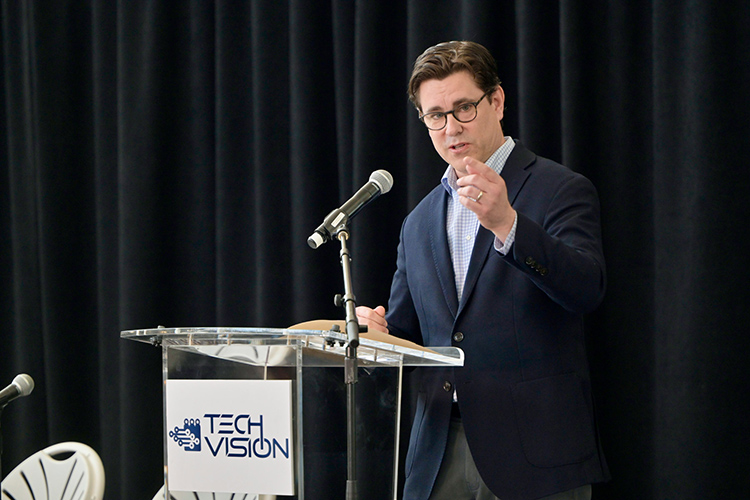
Expanding on that research-to-market mindset was the event’s first keynote by Nathan Buttrey, a senior advisor to Stuart McWhorter, Tennessee Department of Economic and Community Development commissioner and deputy governor. He was appointed last August to lead the state’s newly formed Office of Innovation.
Backed by Gov. Bill Lee’s $63 million investment in innovation, Buttrey is tasked with helping position Tennessee as a place where companies research, test and build for the future in their own backyard.
Buttrey’s address focused on the state’s interest in developing quantum technologies such as quantum computing, covering the “what, who, where, when, and why” of quantum research and development.
“Our approach to the challenge of leading and serving the state is very similar to the way academics and researchers in this room explore the concepts of their disciplines. We recognize the value of convening the right principled experts to assess our challenges, our resources, and goals,” Buttrey said.
“We form hypotheses and enact solutions, which are always an experiment. We measure the outcomes, intended or otherwise, and then do our best to learn and iterate quickly from the results we observe — lather, rinse, repeat — all the while trying to maintain our funding and prevent unintended consequences.”
Buttrey said the governor and state legislature have proposed $43 million in the current budget to support the state’s quantum efforts, which include the creation of a Tennessee Quantum Initiative to convene discussions with Tennessee quantum stakeholders. The initiative is planning a workshop in late May “to map out our state’s resources, challenges and opportunities around quantum,” he said.
“The state is researching the best strategies to support these industries. Gatherings like we are attending today are key to the success of our efforts,” he said. “Your participation in events like these helps us do our background research, create our hypotheses, administer our experiments, measure, learn, and iterate towards our department’s goals of fostering economic growth through job creation and community development.”
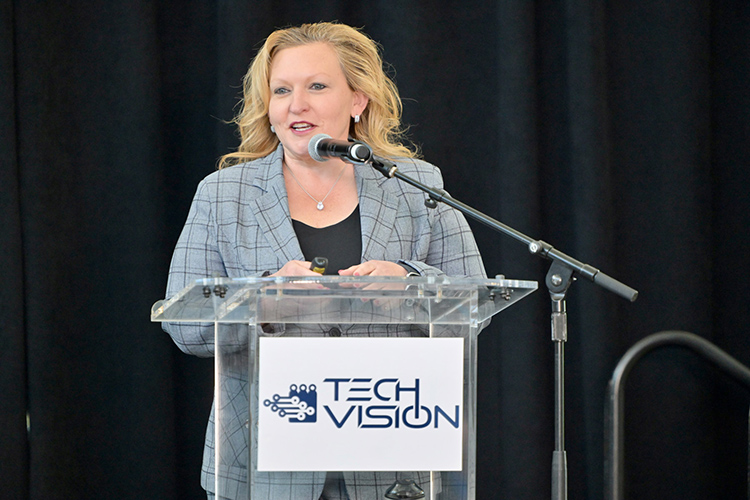
In presenting the second keynote, Kristin Darby, chief information officer for the state of Tennessee, tapped her 25-plus years of experience across the public sector, health care, finance, and cybersecurity.
Darby took on her CIO role with the state last summer and co-chairs both the state of Tennessee AI Council and the Tennessee Cybersecurity Advisory Council, in addition to serving on the Tennessee Homeland Security Council.
She cautioned attendees about the cybersecurity threat on the horizon as artificial intelligence and quantum tools continue to advance, making it more difficult to secure sensitive data against cyberattacks.
“Quantum resistance is something we have to be planning for, because we do not know the date when certain encryption levels that we have relied on for many years will no longer be secure,” Darby said. “That date continues to accelerate and get closer and closer based on the advancements in the speed at which AI is making.
“And so it is very important that we as a society are preparing for this to ensure that data that we often, from a government perspective, have a public trust responsibility around protecting, continues to be secure.”
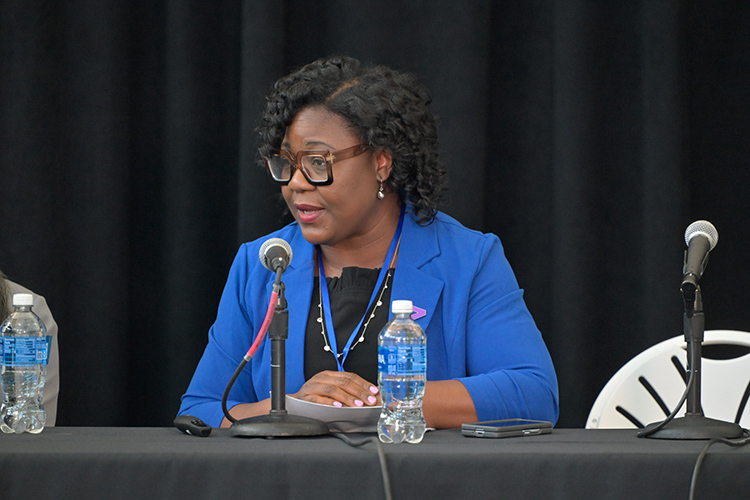
Joyce Heames, dean of the Jones College of Business, noted MTSU’s work in cybersecurity education, with plans to open a cybersecurity range in the fall modeled after an IBM range in Washington, D.C. A cyber range is a virtual environment for cybersecurity training, testing, and research that simulates real-world networks and cyberattacks, according to IBM.
“We’re going to take it to the next level of everything that we can do because this range will be a dedicated computer lab. … We will be launching live cyberattacks and malware in this space for our students to gain over 100 hours of platform time in that range.”
Student: AI ‘more than I thought’
Matthew Nunez, an MTSU junior majoring in cybersecurity management, also works as an AI engineer in MTSU’s Facilities Services Department. Zaza invited Nunez to serve on the conference’s organizational planning committee, leading to him moderating the “Open, Interactive, Affordable: OER & Student Engagement” session.

“Tech Vision’s impact on MTSU over the past two years since its inception has been amazing for the tech professional community here in Murfreesboro and for MTSU students,” Nunez said.
“The growth I’ve seen has been inspiring, and I foresee this event becoming a staple event for all Middle Tennessee tech professionals. Every year, I look forward to connecting with industry professionals, interacting with students across campus, and engaging with leaders in the tech spaces I am interested in. I invite all students to attend and be part of this experience.”
Nunez will serve as president of the student Cybersecurity Club next year and plans to have the club involved in Tech Vision 2027 next April.
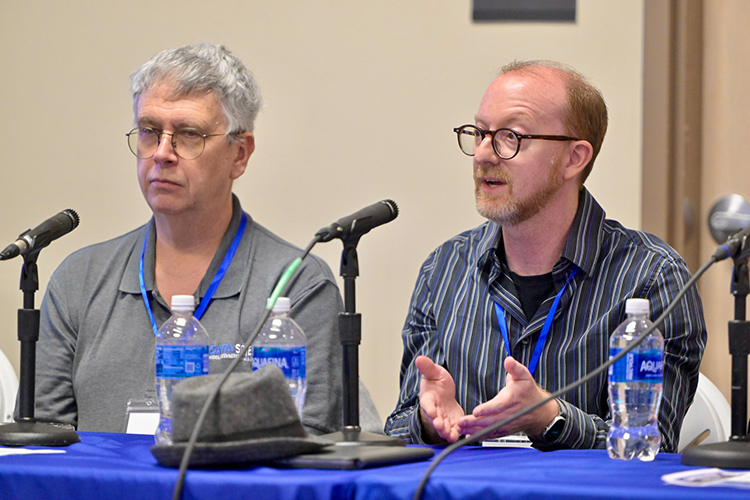
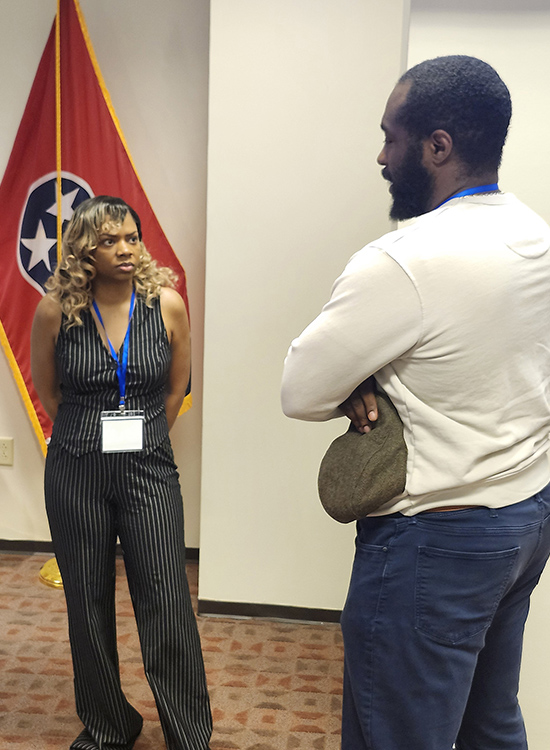
A future member of that club may be conference attendee Isaiah Carter, of Murfreesboro, who currently works as a boiler operator on campus but is positioning himself for a career shift to cybersecurity.

“I’m trying to learn about cybersecurity and just the future of AI, what it has in store for us and also the protection for security-wise as well,” Carter said of his attendance at the conference after learning about it from friend Ben Lynch, a technology administrator in MTSU’s Engineering Services.
Carter said he’s already earned multiple certifications from the Tennessee College of Applied Technology and is looking to soon enroll in MTSU’s cybersecurity management program.
“I’m still kind of new with cybersecurity, but I picked that route because I thought, ‘this is a good benefit to help protect a lot of people,’ and especially myself, family, and extended family. There are just a lot of cybercrimes happening.”
As a junior interior architecture major minoring in archaeology, MTSU student attendee Chloe Waters, of Decatur, Tennessee, had different motivations for attending. Waters is conducting research “about the housing issues we have in Nashville” as part of a scholars program cohort and came to Tech Vision to learn more about how AI tools could enhance her housing research.

“My topic is comparing the Nashville housing to Seoul, Korea’s housing and seeing if that model will actually work for Nashville. So I am here trying to figure out how AI incorporates into that and how I can use AI to … fully understand what I am reading,” she said.
With her dream job “to be a Disney Imagineer and create the interiors of their rides,” Waters said the conference gave her a new perspective on AI.
“I’ve learned that AI is not taking my job like I initially thought it was going to. And I have also learned that it is a lot more than what I thought. I originally just thought AI was something people used to do whatever they wanted. And I now know it is a better tool … And I feel like I can use it to research more effectively.
“I feel like MTSU is doing a great job in incorporating AI because it’s not going anywhere. It’s going to keep growing, keep improving. And so I feel like they have done a good job incorporating that into our studies.”
Nunez also appreciates MTSU’s investment in its students from classroom to career.
“I have heard many people say, ‘knowing is only half the battle,’ and I believe the other half for college students in any major is making connections with professionals in their fields of interest,” he said. “Throughout my time on campus, I have learned one important thing: behind each great college student is a whole swath of talented and driven professors.
“For me, a select few come to mind. Dr. Sam Zaza is one whose passion for teaching and devotion to her students really touched me when I was in her class. Beyond professors are great industry professionals with equal drive to innovate in the tech space. Two of those are my superiors, Joe Whitefield and Ben Lynch, both extremely talented and smart men who have given me the confidence and trust to help them innovate the Facilities Services Department’s vast data for a new AI-centered future.”
Darby, the state’s CIO, offered advice to students like Nunez, Carter and Waters in attendance.
“My advice would be to lean into hard things. And so the paths that you think you may have, or the traditional paths, may not be the right things,” Darby said, adding that working in state government wasn’t on her radar after experiencing career success in the private sector.
“Figure out what you’re interested in, lean in, be open to doing different things. When opportunities come up, and they ask for volunteers: ‘Will everybody raise their hand?’ Raise your hand.”
Student poster presentations
Tech Vision also included student research poster presentations judged by industry partners, along with breakfast and networking, before the formal conference began.
This year’s winners include:
• First place: Dimitri Nanmejo Sinou; Faculty advisor: Joshua Phillips, Computer Science; Poster title: “Enhancing Resilience and Safety in Multi-Agent Systems (MAS) Through Decentralized Failure Recovery”
• Second place: Hannah Osborne; Faculty advisor: Donglin Wang, Mathematical Sciences; Poster title: “Structure-Guided Adaptive Sparse Generalized Additive Models”
• Third place: Madelyn Taylor, Jessie Globerman, Kenth Martin, Nyiesha Nash, Michael Tayman; Faculty advisor: Amelia Bozeman, Management; Poster title: “Idea Ninjas”
Event sponsors
Industry sponsors for this year’s event include Co.Lab, IonQ, CQC, Middle Tennessee Electric, EPB, TTAC, Accenture, GraybaR, Cyberscape Technology, Enlighten Technologies, BePresent events, Murfreesboro Technology Council, Women in Technology of Tennessee (WiTT), ISSA Middle Tennessee Chapter, ISACA Middle Tennessee Chapter, Arista Networks and Melillo Consulting.
University sponsors include the College of Graduate Studies, MTSU Grad AI, Office of Research and Sponsored Programs, Tennessee Small Business Development Centers, Office of the Provost, College of Education, Jones College of Business, College of Basic and Applied Sciences, QRISE Center, University College, Office of International Affairs, Scott Borchetta College of Media and Entertainment, James E. Walker Library, Honors College, and the Information Systems and Analytics Department.
Tech Vision 2027 is set for April 1, 2027, in MTSU’s Student Union Building.
— Jimmy Hart ([email protected])




COMMENTS ARE OFF THIS POST