
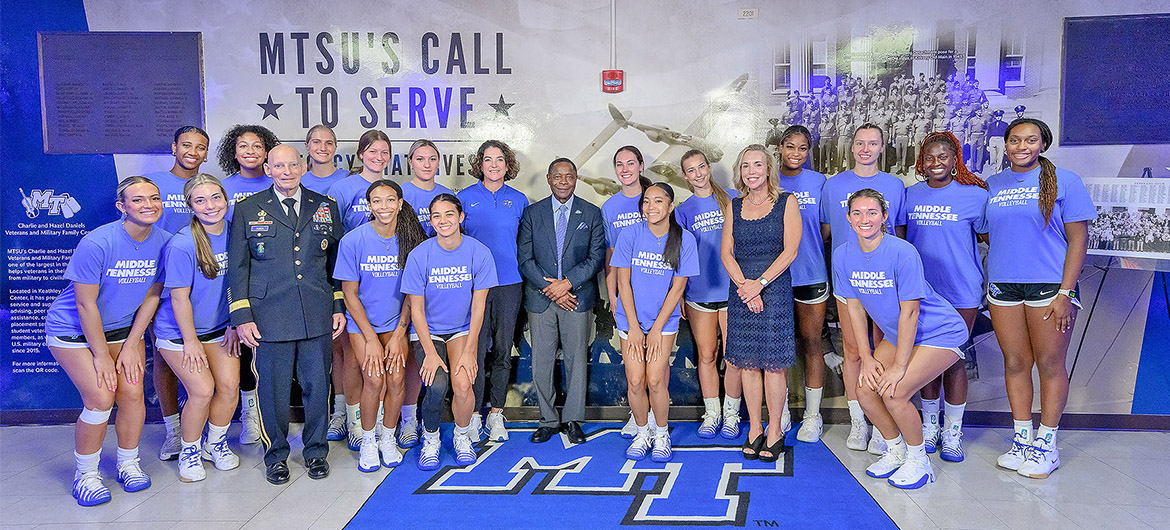
MURFREESBORO, Tenn. — At Middle Tennessee State University, a walk into Alumni Memorial Gym now offers a glimpse into a chapter of campus history that began over 80 years ago and set the stage for strong ties to the military that remain today.


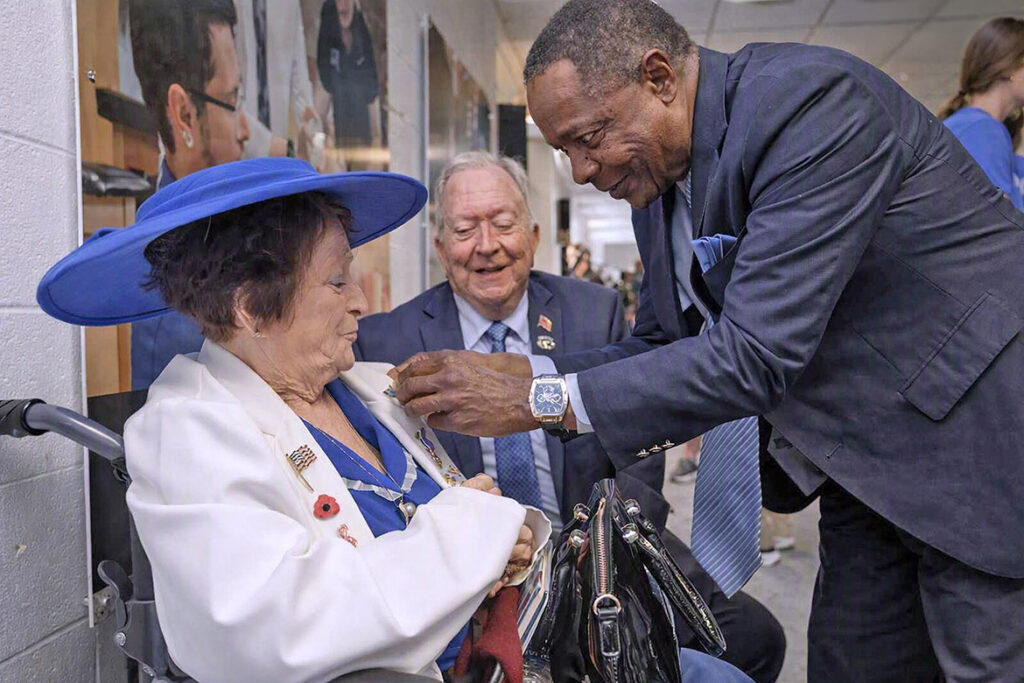
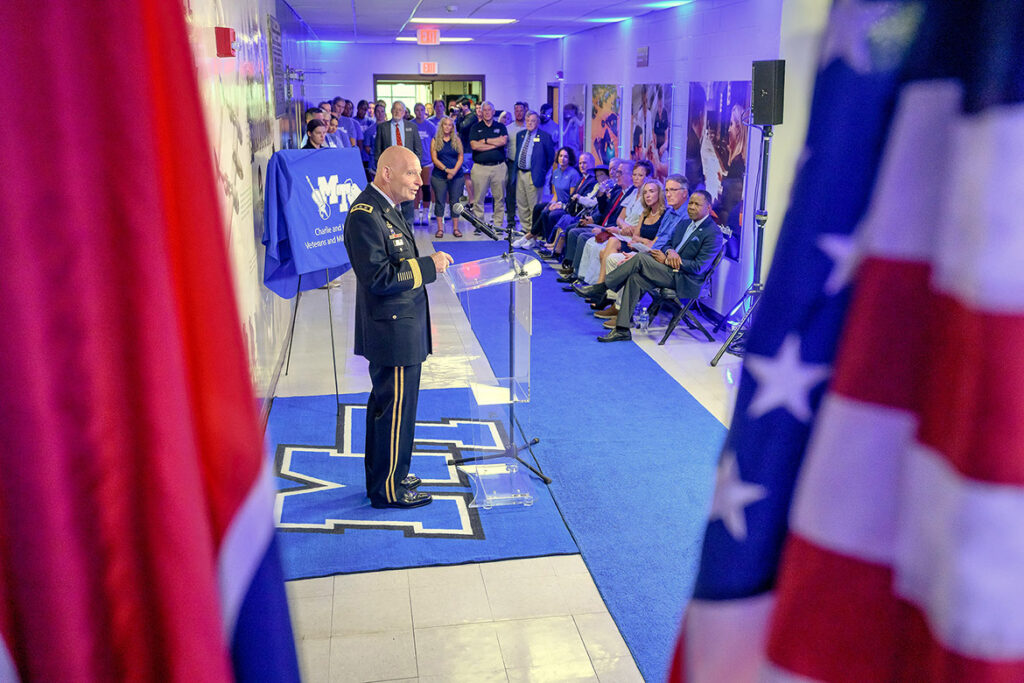
“MTSU’s * Call to Serve * A Legacy That Lives On” is a new World War II Memorial located just inside the gym lobby that was unveiled Wednesday, Sept. 2, in front of a crowd of school administrators, students, faculty, and a whole host of distinguished guests and alumni.
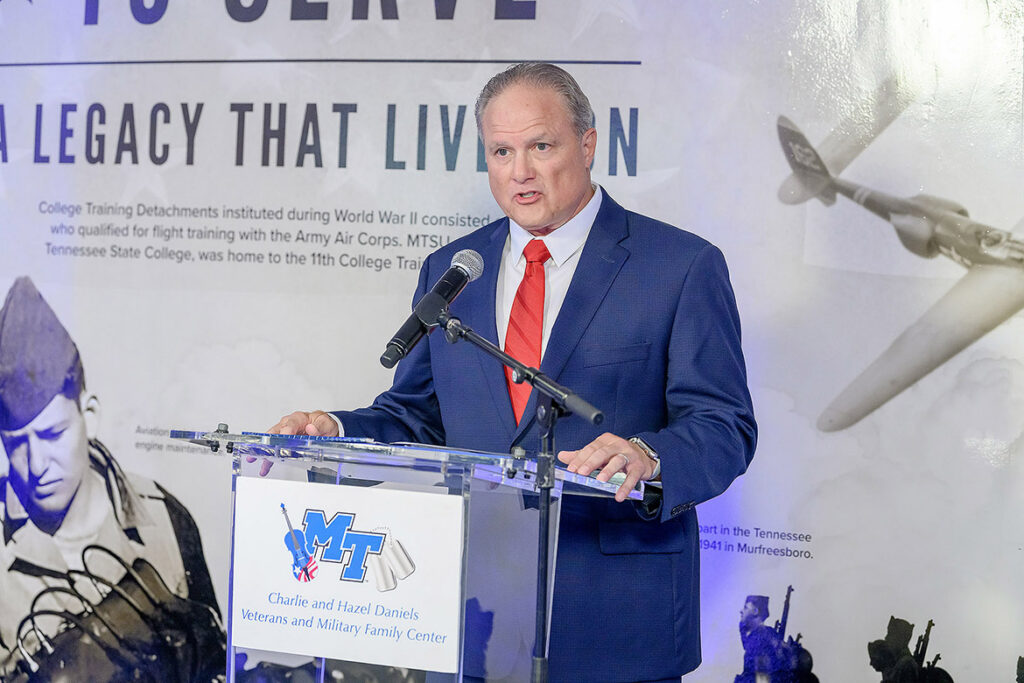
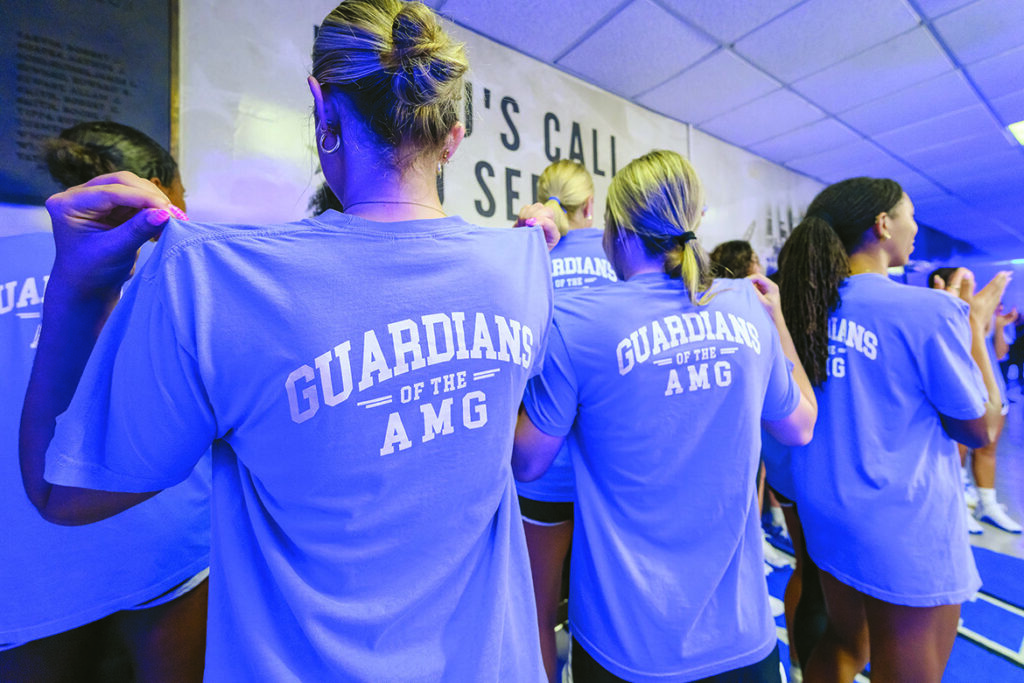
“People probably don’t even realize that AMG stands for Alumni Memorial Gym and they might not understand who was being memorialized,” explained Hilary Miller, director of the Charlie and Hazel Daniels Veterans and Military Family Center at MTSU. “This gives a history of what was happening on campus at that time.”
The mural features historic images from the archives of MTSU’s Albert Gore Research Center spotlighting military service throughout the university’s history, including photographs of students training on campus during World War II and more contemporary images of MTSU alumni who went on to distinguished military careers. A plaque honoring the 37 MTSU student veterans who died in WWII also hangs in the lobby.
Miller highlighted how the original plaque inspired the creation of the modern Veterans Memorial out the Tom H. Jackson Building? and the extensive online Roll of Honor documenting all 71 student veterans who have died in service since MTSU was opened in 1911. The first student veteran died in 1918 during World War I.
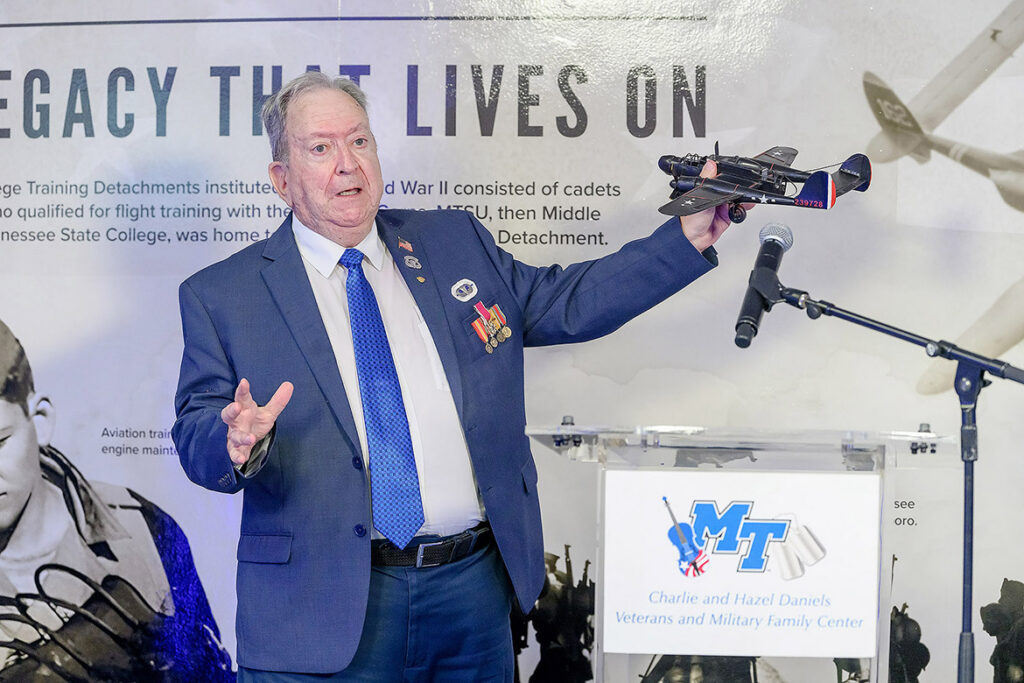
The ceremony included remarks from retired Lt. Gen. Keith M. Huber, MTSU’s senior adviser for veterans and leadership initiatives; volleyball coach Alexa Keckler; retired U.S. Army Col. Robert McCalmont, MTSU ROTC Class of 1973; and Peter Grandjean, dean of the College of Behavioral and Health Sciences, or CBHS.
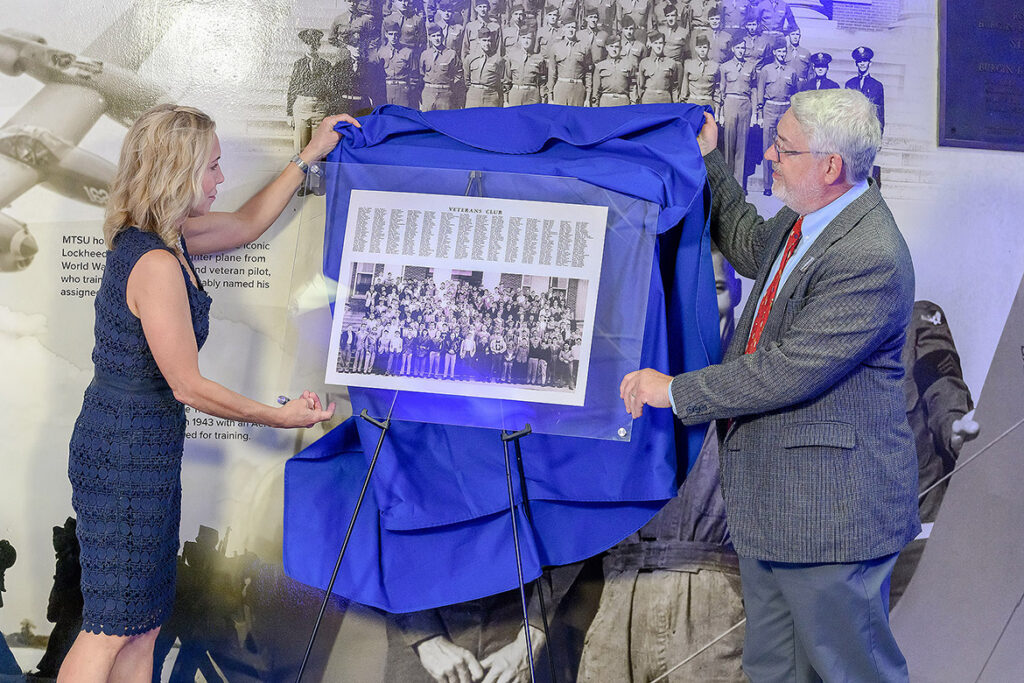
Gore Center Director Louis Kyriakoudes also shared the dramatic impact World War II had on campus life after he and Miller unveiled an enlarged photo from the Midlander yearbook featuring the 1946 Veterans Club members standing on the steps of the Kirksey Old Main building.
“By 1944, only 10% of the university’s enrollment was men because they went off into the military,” Kyriakoudes said. “But that didn’t mean the campus was quiet.”
MTSU became a training site for the Civilian Pilot Training Program, laying the groundwork for today’s nationally recognized Department of Aerospace programs. The university also hosted the 11th College Training Detachment, preparing Army officers for service.
“The campus was very busy doing its part, training people as pilots and as officers for the war,” Kyriakoudes said.
After the war, MTSU welcomed veterans through the Servicemen’s Readjustment Act of 1944, also known as the GI Bill. Many arrived with families, prompting the university to create a veterans village on campus to provide housing for married students.
AMG was built after World War II as a memorial to 36 known MTSU students who died in service during WWII. One additional name — Walter Pinnell Jr., killed in a 1942 training accident — will soon be added to a plaque to supplement the existing version. The facility once served as the site for Blue Raider basketball games before Murphy Center was opened next door in 1972.
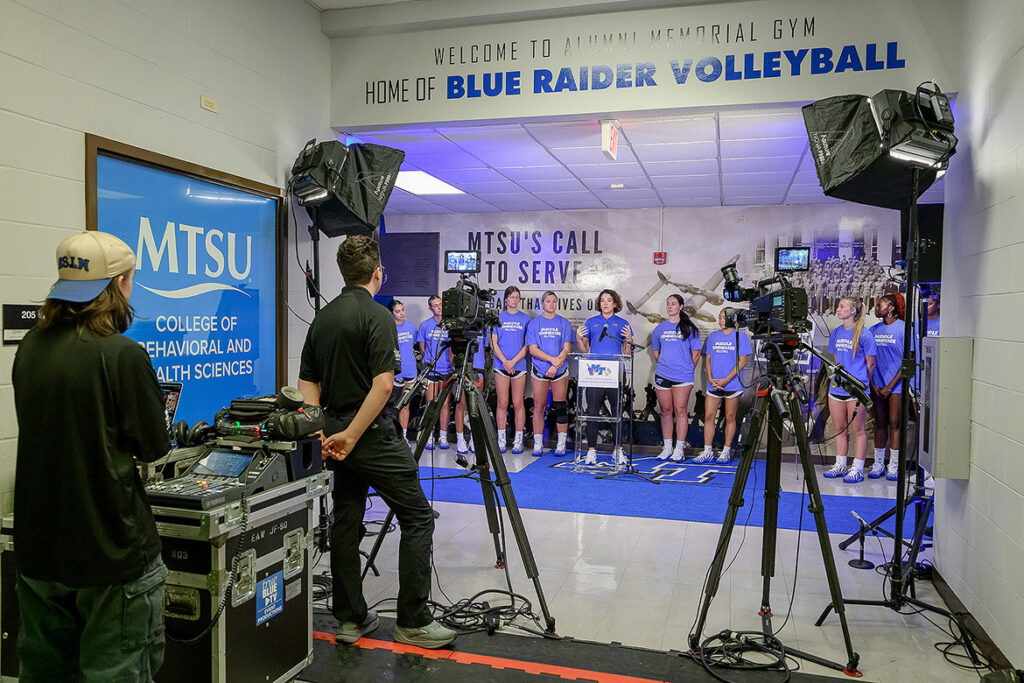
Today, AMG is home to the Blue Raider Volleyball team as well as the Department of Kinesiology and Sports Medicine and Sport and Hospitality Management.
Close military connections also gave a firm foundation for what became the Department of Aerospace, which houses over a half-dozen aviation-related degree concentrations, including the in-demand professional pilot program. Hints of that legacy remain on campus.
“There’s an airplane hangar on campus, the back side of the ROTC building, that people walk by every day and don’t recognize,” Miller noted.
Eventually, MTSU established the Charlie and Hazel Daniels Veterans and Military Family Center, the largest veterans support center at any Tennessee college or university, serving more than 1,200 military-connected students each year,
For Kyriakoudes, preserving those stories is part of the Gore Center’s mission.
“We have the images and the documents,” Kyriakoudes said. “We’re the keepers of the history of the university.”
— Nancy DeGennaro ([email protected])




NO COMMENT