
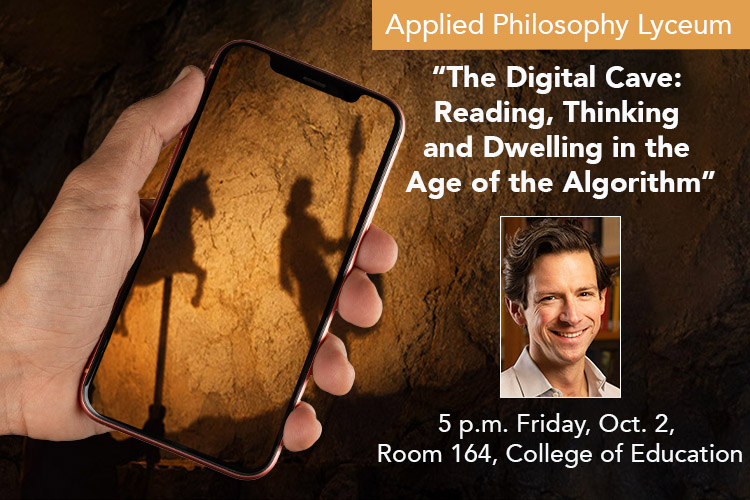
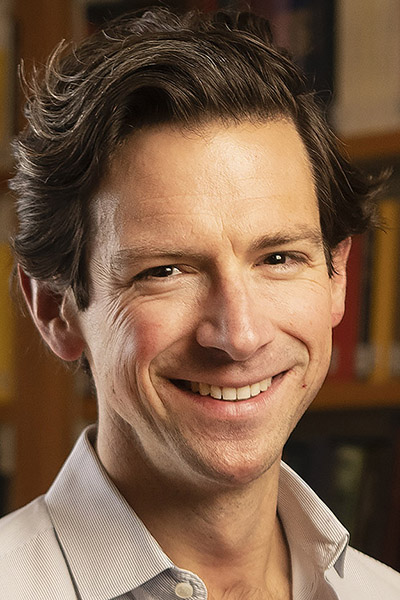
MURFREESBORO, Tenn. — Middle Tennessee State University’s Applied Philosophy Lyceum speaker John Kaag (pronounced kăg) will explore how the digital landscape is manipulating what people think, read and accept as reality.
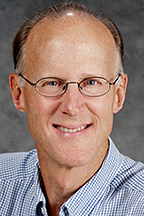
Kaag, Donahue Professor of the Arts and professor of philosophy at the University of Massachusetts Lowell, will speak on “The Digital Cave: Reading, Thinking, and Dwelling in the Age of the Algorithm,” during the free public lecture at 5 p.m. Friday, Oct. 2, in Room 164 of the College of Education.
“It’s hard to think of anything more relevant to the way we live in this age of the algorithm,” said Phil Oliver, event organizer and professor in the Department of Philosophy and Religious Studies in the College of Liberal Arts.
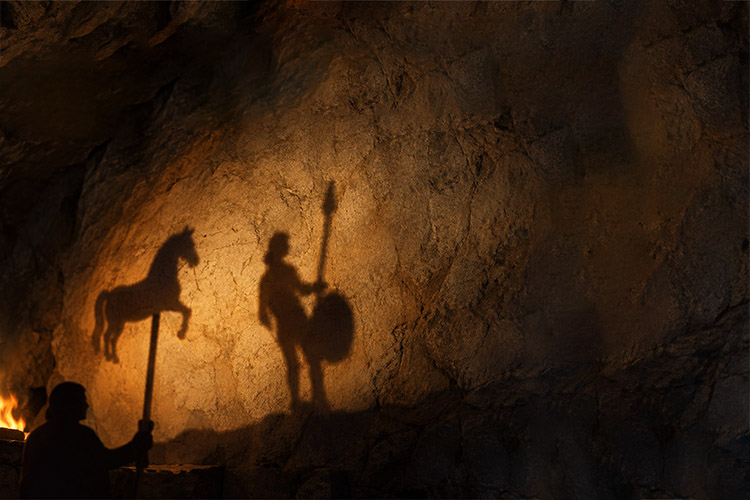
Kaag’s theories connect Plato’s famous allegory of the cave with today’s world of personalized feeds, endless scrolling and artificial intelligence, or AI.
The digital cave
Plato imagined people confined inside a cave, able to see only shadows projected onto a wall. Those shadows became their reality because they had never seen anything else.
Kaag sees a modern version of that cave in the algorithms that increasingly shape what people encounter online in an era of “industrial-scale shadow play.”
His talk will explore how digital technology captures attention and how that constant stream of information can affect the way people think and understand the world. Having access to enormous amounts of information does not necessarily mean understanding it.
“We do seem captive to our screens, just as Plato’s cave dwellers were captive to their shadows. We need help turning more to the ‘real’ light, beyond the dull artificial light of our devices,” Oliver said.
Kaag is the author of “American Philosophy: A Love Story,” “Hiking with Nietzsche: On Becoming Who You Are,” and “Sick Souls, Healthy Minds: How William James Can Save Your Life.” His books have been recognized as NPR Best Books of the Year and New York Times Editors’ Choice selections.
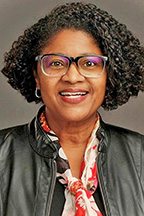
The Applied Philosophy Lyceum brings philosophical ideas and questions to the broader community through public lectures. The MTSU series began in 1992 and has featured scholars examining questions about how people think, live and engage with the world.
“Sometimes we can feel intimidated by Philosophy as an academic area of study because we fear we may not be able to understand it all,” said College of Liberal Arts Dean Leah Tolbert Lyons. “Grappling with complex ideas is an integral part of Philosophy and the Philosophy Lyceum is the perfect way to engage with new ideas presented in a practical way, in a welcoming environment. There is something for everyone and everyone is welcome.”
After-hours parking is free, and a searchable campus parking map is available at bit.ly/2026parkingmap.
For more information about the event, contact Oliver at [email protected].
— Nancy DeGennaro ([email protected])




NO COMMENT